Esta página aún no está disponible en español, así que se muestra en inglés.
Hoshi Onsen Chojukan
法師温泉 長寿館
Hoshi Onsen Chojukan — the entrance in snow · veroyama / CC BY 2.0
A lone Meiji-era inn where the water bubbles up through the stones beneath you — one of Japan's great baths, if you can handle mixed bathing, no air conditioning and autumn stink bugs
Chojukan is the only inn at Hoshi Onsen, at the end of a mountain road in northern Gunma, and its reputation rests on one room: Hoshi-no-yu, an 1895 wooden bathhall where the hot spring rises straight up through the pebbles under you, never touching the air. Japanese guests score the baths higher than anything else — 4.8 on Jalan (1,112 reviews), 4.72 on 一休 and 4.71 on Rakuten, against overall scores of 4.3, 4.25 and 4.39 (521 reviews) — and the 1875 main building, the bathhall and the 1940 annex are all registered cultural properties. Guests love the hearth kept burning all year, the sound of the river and being able to use the bath all night: as one put it, that is 'the privilege of staying'. Hoshi-no-yu remains the top draw, though Tamaki-no-yu, the cypress bath, is increasingly named a favourite. Two things put people off. Hoshi-no-yu is mixed-gender except for women-only time from 20:00 to 22:00, and no swimwear or towels are allowed; several women found it daunting, and recent reviews say women's time is short and crowded, with men lingering, staring and even walking in during women's hours. The inn now holds occasional women-only stay days (September 2026; next 16–17 December 2026), when all three baths are open to women at any time. And these are old buildings: most rooms have only a fan — Room 15, renovated with air conditioning and beds, is the exception — walls are thin, there are stairs and no lift, and autumn reviews count stink bugs by the dozen. Food is hearty mountain cooking — carp, ayu, deer, Joshu beef sukiyaki — and scores lowest, with complaints about dishes arriving all at once or going missing; several 2025–2026 reviews also mention communication gaps with staff, though others praise them.
Últimas novedades
Lo que han añadido las crónicas de estancia, publicaciones y avisos oficiales japoneses más recientes desde que se escribió esta reseña
The inn now holds women-only stay days (September 2026; next 16–17 December 2026) with all three baths open to women at any time, and Room 15 has been renovated with air conditioning and beds.
Guía para elegir habitación
Lo que recomiendan quienes se han alojado aquíRecomendadas
Annex (別館, 1940) river-view rooms
Ten rooms of 8 tatami plus a small entry room, each with its own toilet and a view over the Hoshi River. A summer 2025 guest in one loved it and wanted to come back in autumn or winter — but note it had only a fan, no air conditioning.
Main building (本館, 1875) — for the history
High ceilings and the sound of the river. Room 20 (10+6 tatami, sleeps six) is linked to the poet Yosano Akiko and Room 16 to the painter Higashiyama Kaii. A March 2025 guest in Room 18 (8 tatami, toilet, kotatsu) felt they had 'slipped back in time'. Some main-building rooms now have new washlet toilets, 2026 reviews note.
Mejor evitar
Main-building Rooms 16 and 17, if you want your own toilet
The inn lists their toilets as outside the room. No room at Chojukan has its own bath, so everyone uses the shared baths.
Any older room in midsummer
Reviews from 2024 to 2026 repeat that there is no air conditioning — a fan is 'the lifeline', one blogger joked — and where there is a unit, one found it old and weak. In summer, ask for Room 15 in the main building: it has been renovated with air conditioning, a toilet, twin beds and few steps, close to all the baths, and a 2026 guest chose it for the air conditioning alone. Room 33 (Kunsanso) also has few steps, according to the inn; there is no lift.
¿Ya sabes qué habitación quieres?
Consulta precios y disponibilidad en tiempo real de Hoshi Onsen Chojukan.
Rakuten Travel, una de las mayores webs de reservas de Japón, muestra planes y precios en japonés; el botón de traducción del navegador funciona en ella.
Podemos recibir una comisión si reservas a través de estos enlaces, sin coste adicional para ti. Aviso de afiliación
La cocina a fondo
Consenso sobre el desayuno
4.0/5A Japanese breakfast in the dining hall, around 8:00; reviewers on one site rate it about 4.2 out of 5
Do Hoshi-no-yu late at night or at dawn, when guests have it largely to themselves — one blogger met only six people in 80 minutes. Day visitors come from 11:00 to 13:30 (not on Wednesdays).
Claves de la cena
3.8/5Served in a shared dining hall — one 2025 blogger counted about 30 tables, while a 2024 guest was glad of partitions between tables. Expect mountain cooking: turtle soup, carp sashimi (arai), salt-grilled ayu, deer sashimi, Akagi chicken and Joshu pork, with a Joshu beef sukiyaki upgrade for roughly ¥4,000 more per person. Guests praise its honest flavour, but food is the lowest-rated category (3.99 on 一休): recurring 2025–2026 complaints are everything arriving 'almost at once' and dishes missing, and in January 2025 squid was served to a guest who had declared a squid allergy. State allergies clearly and check each dish. Guests arriving after 19:30 get no dinner.
Onsen y bienestar: la realidad
A calcium-sodium sulfate spring, about 42.7°C at source according to Japan's hot-spring association. In Hoshi-no-yu and Choju-no-yu the water wells up directly through the stones of the bath floor; Tamaki-no-yu uses a simple spring that one blogger reports is heated and partly recirculated.
Hoshi-no-yu is mixed-gender except for women-only time from 20:00 to 22:00. The changing rooms are separate and the hall is dim ('quite fine because it's dark', one woman wrote), but bathing garments and wrapped towels are not allowed, and there are no washing stations. Women always have at least one bath of their own: Tamaki-no-yu, an all-cypress bath with an outdoor tub, is theirs in the afternoon and early morning (15:00–20:00 and 7:00–10:00 on the inn's 2026 timetable, men-only overnight, cleaned 11:00–15:00), and Choju-no-yu alternates between men and women. Exact hours vary — the inn's own pages disagree and it issued a correction in September 2026 — so check the schedule posted at the inn. Recent reviews still complain that women's time is short and crowded, and report men lingering in the mixed bath, glancing, being rude or entering during women's hours; women may prefer to go in pairs or with a partner. Alternatively, book a women-only stay day: at one in September 2026, two women guests praised being able to use Hoshi-no-yu any time, and the next is set for 16–17 December 2026, when only women are accepted and all three baths are open to them at any time (one was also held in June 2025).
Not addressed in any source we read. There are no private baths, so check with the inn before booking.
Advertencias y matices locales
- 01
Getting there: town buses from Jomo-Kogen Station (Joetsu Shinkansen) via Sarugakyo run only twice in the morning and twice in the afternoon; otherwise take a taxi. There is no pickup. By car it is about 40 minutes from Tsukiyono IC. Check-in is 15:00 (earlier arrivals wait in the lobby), check-out 10:30, and guests arriving after 19:30 get no dinner.
- 02
Winter brings about a metre of snow; the inn asks drivers to carry chains or other anti-skid equipment.
- 03
Autumn stink bugs are a recurring complaint in October and November reviews — one guest dealt with more than 20; the inn now leaves instructions for dealing with them.
- 04
Walls are thin and corridors cold in winter; there are no lockable safes in rooms, one blogger noted. Several 2025–2026 reviews mention communication gaps with staff, while others praise them.
- 05
Prices in our sources: ¥29,450 for a solo weekday stay in October 2025, and ¥21,600 per person for two sharing an 8+4.5-tatami Horyuden room in one blogger's stay. Bookings open four months ahead; on women-only stay days (next 16–17 December 2026) only women are accepted.
Antes de tu estancia
Recuerdos de Minakami y ayuda práctica para tu viaje.
Recuerdos de Minakami en Rakuten

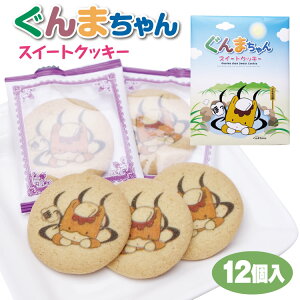
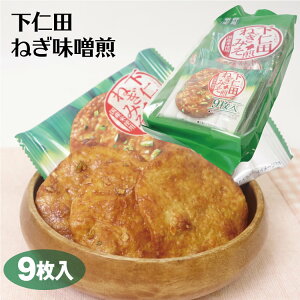
Precios de Rakuten a 21 oct 2026: consulta la tienda para ver el precio y la disponibilidad actuales. Supported by Rakuten Developers Los enlaces de Rakuten son de afiliado: podemos recibir una comisión sin coste adicional para ti.
Fuentes
Los blogs y crónicas de estancia reales en los que se basa este artículo
Aparece en nuestras guías
Comparativas que incluyen este ryokan.

Freezing at a mountain onsen ryokan in Japan? How to stay warm tonight
Cold room, icy corridor or a snowy walk to the outdoor bath? What to ask the front desk for, which inns in our directory run cold and which lend coats, boots or blankets, buying kairo heat packs and warm innerwear at a konbini today, avoiding low-temperature burns, the official advice on bathing in cold weather, ordering warm gear to your ryokan, and winter tyres, chains and shuttles.
Leer la guía
Forgot your towel or brought a swimsuit to an onsen in Japan? What to do
No towel, only a swimsuit, or no shampoo, hair tie or tattoo cover? What public baths sell at the counter, what a ryokan normally provides, where to buy towels and toiletries at a konbini today, why most Japanese baths don't allow swimsuits (and the mixed baths where wraps or bath wear are allowed), tattoo cover stickers, and Amazon or Rakuten delivery to your inn or a konbini.
Leer la guía
Mixed bathing at a ryokan — how konyoku works, and ten inns that still have it
How mixed-gender bathing (konyoku) works at a Japanese inn — robes, wraps, towels and women-only hours — and ten reviewed ryokan with a mixed bath today, each inn's rule exactly as it states it, compared honestly.
Leer la guía
Snow-country ryokan: where to soak in winter
Nine ryokan in Japan's snow country where Japanese stay reports describe bathing from December to March, one that closes for winter, and the winter catches: roads closed to cars, shuttle-only access, chains, cold corridors and baths shut for snow.
Leer la guía
Baths where the spring rises beneath you
Four ryokan where hot-spring water wells up through the floor of the bath itself — no pipes, no tanks — and what Japanese guests say it's really like to bathe in them.
Leer la guíaCréditos de las fotos
- Notoya Ryokan, Ginzan Onsen (Obanazawa, Yamagata) · さかおり / CC BY-SA 4.0
- Tsubame-yu, Ueno, Tokyo · Thirteen-fri / CC BY-SA 3.0
- Takaragawa Onsen Osenkaku in winter, Minakami · kallerna / CC BY-SA 3.0
- Lamp no Yado Aoni Onsen · Raita Futo / CC BY 2.0
- Okutsuso — the Tōwarō building, Okutsu Onsen · Phronimoi / CC BY-SA 3.0
Más informes de consenso
 Foto de la zona
MinakamiPremium
Tanigawa Onsen, Minakami, Gunma — below Mount Tanigawa, about 8 minutes by car from JR Minakami station (free shuttle on request)
10 fuentes
Bettei Senjuan
別邸 仙寿庵
Eighteen rooms, each with its own free-flowing open-air onsen, in a prize-winning earthen-walled building below Mount Tanigawa — a Relais & Châteaux favourite whose kitchen has lately lost some fans
- Habitaciones con onsen privado
- Diseño
MinakamiEconómico
Fujiwara, Minakami, Gunma — un ryokan solitario junto al arroyo Takaragawa, en lo alto del valle del río Tone, a unos 40 minutos en el autobús lanzadera del ryokan desde la estación de shinkansen de Jomo-Kogen
9 fuentes
Takaragawa Onsen Osenkaku
宝川温泉 汪泉閣
470 tatamis de baños al aire libre junto al río, donde todo el mundo lleva la prenda de baño del ryokan — el baño mixto más espectacular de Japón a precio económico, si toleras un edificio antiguo, las multitudes de visitantes de día y los tábanos del verano
- Refugios apartados
Aoni OnsenEconómico
Valle de Aoni, Kuroishi, Aomori — en lo profundo de las montañas al este de Kuroishi; en coche de abril a noviembre (luego, una empinada bajada a pie de 100 m desde el aparcamiento) y todo el año en un autobús lanzadera con reserva previa desde el Michi-no-Eki Niji-no-Ko
9 fuentes
Lamp no Yado Aoni Onsen
ランプの宿 青荷温泉
Un refugio termal de 1929 iluminado por unas 160 lámparas de aceite, sin luz eléctrica, televisión ni cobertura móvil, con cuatro baños de hiba y de roca de agua que fluye sin recircular y platos de Tsugaru explicados en dialecto — una auténtica desconexión digital, si soportas la oscuridad, las paredes finas y el agua templada
- Refugios apartados
 Foto de la zona
Arima OnsenClásico
Arima Onsen, Kita-ku, Kobe, Hyogo — on the far edge of the old town above the Taki River, facing Mt. Ochiba; a steep 10–15-minute walk from Arima Onsen Station (free shuttle 8:00–19:00)
9 fuentes
Arima Onsen Gekkoen Korokan
有馬温泉 月光園 鴻朧館
Kaiseki served course by course in your room at both meals, a wall of mountain view and three bath houses of the inn's own kinsen — at a classic price, but it's a modern block where you fetch your own yukata, and the in-room and private baths aren't onsen
Leer el consenso
Arima OnsenClásico
Arima Onsen, Kobe — in the old town by the Arima River, a few minutes' walk from Arima Onsen Station
11 fuentes
Tosen Goshobo
有馬温泉 陶泉 御所坊
A shadowy, designer-restored wooden inn with centuries of history and a half-mixed bath of rust-red kinsen water — adored for its staff, divisive for its bath and its creaks
- Ryokan históricos
- Diseño
Foto de la zonaArima OnsenClásico
Arima Onsen, Kita-ku, Kobe — a 6-minute walk from Kobe Electric Railway's Arima Onsen Station (free pickup on request), about 30 minutes by car from Sannomiya
9 fuentes
Hyoe Koyokaku
有馬温泉 兵衛向陽閣
Arima's big all-rounder: a 126-room inn with three bath houses of rust-red kinsen, a live-cooking wagyu buffet or charcoal-grill private rooms, and free matcha and drinks — but the baths are partly recirculated, it's a maze, and tattoos are refused
Leer el consensoCréditos de las fotos: Mount Tanigawa, Minakami, Gunma · TANAKA Juuyoh / CC BY 2.0 / Takaragawa Onsen Osenkaku in winter, Minakami · kallerna / CC BY-SA 3.0 / Lamp no Yado Aoni Onsen · Raita Futo / CC BY 2.0 / The Arima River through Arima Onsen, Kobe · Wpcpey / CC BY-SA 4.0 / Tosen Goshobo — the entrance, Arima Onsen · iloverjoa / CC BY 3.0
Hoshi Onsen Chojukan
Compara precios en plataformas de reserva de confianza · Aviso de afiliación