Esta página aún no está disponible en español, así que se muestra en inglés.
Misasa Onsen Izanro Iwasaki
三朝温泉 依山楼 岩崎
Foto de la zona, no del ryokan · The onsen street of Misasa Onsen, Tottori · Miya.m / CC BY-SA 3.0
Misasa's century-old grand inn, host to emperors and writers: a 12-bath garden onsen with free-flowing cave and rock tubs and private-room kaiseki — but it's a big 74-room concrete house with fixed air conditioning, thinning service and towels you carry to the bath yourself
Iwasaki opened in 1920 and later took the name Izanro, given by the head priest of Kyoto's Shokokuji temple. Emperor Showa stayed in 1947, and members of the imperial family have stayed ever since, most recently in October 2026. Visiting writers such as Shimazaki Toson and Yosano Akiko are remembered in a lobby gallery, and the Isuien garden, with a 1930s pavilion built for imperial guests and a thatched tea house, is a protected scenic site. Today it's a 74-room concrete inn of up to eight floors on the Mitoku river. The draw is the Yama-no-yu: 12 baths and a radon steam room laid out as a walk through the garden, in two zones that swap daily. The left zone was renovated in July 2025. The inn says most tubs mix free-flowing and recirculated water. The Nageiredo cave bath, two other tubs, the paid private bath and the 13 rooms with their own open-air baths are free-flowing. Japanese guests rate it 4.43 across 2,246 reviews on one major site (baths 4.59) and 4.5 across 1,984 on another (baths 4.7). A smaller luxury site gives it 4.10 from 71 reviews. Bloggers who stayed in January 2025 and March 2026 loved the baths and the kaiseki, but most recent evidence comes from booking-site reviews. Guests praise the variety of baths, the private dining rooms, the Tottori wagyu shabu-shabu and kind staff. The 2025–2026 complaints: central air conditioning that leaves rooms too cold or too hot, worn tatami and a mouldy fridge, no towels at the baths and no coffee in the room, a ¥100 charge to take lobby drinks away, stairs between the baths, dirty stools and buckets, and service some felt had been cut back. Two-meal plans start around ¥16,000–21,500 per person, and live snow-crab menus reach ¥51,150.
Guía para elegir habitación
Lo que recomiendan quienes se han alojado aquíRecomendadas
Any of the 13 rooms with their own free-flowing open-air bath — Tozankaku open-air rooms (301/401/501, 57㎡, hinoki tub, river view), Futaba semi-open-air rooms (35.2㎡), the junior suites Sasabune and Tsukifune (60㎡) and the suites Kawanami and Kawagiri (84㎡, finished in 2023)
The inn says every in-room open-air bath is free-flowing spring water. A December 2021 blogger in room 501 could adjust the flow to control the temperature, though the separate indoor bath wasn't spring water. A September 2026 reviewer called a Tozankaku bath room 'a very reasonable price', a July 2026 guest upgraded to a Futaba semi-open-air room found the bath big, and a February 2025 family chose one for an older parent — handrails, and a window that closes against the snow. One August 2026 repeat guest loved the bath but couldn't cool the room down afterwards.
Futaba concept-floor Japanese-Western rooms with beds (from the 21㎡ Japanese twin)
A January 2025 blogger slept well in the cheapest Japanese twin: a three-mat tatami area, beds, and a clean bathroom and toilet with no step. A March 2026 travelogue was glad to have a bed (mountain-side view), and an October 2026 family on a cheaper 'room chosen by the inn' plan found it nicely renovated and roomy. One New Year 2026 group of four found a Japanese-Western room cramped.
Mejor evitar
Standard 10–12-mat tatami rooms in Sansuikaku and Tozankaku, and anyone sensitive to temperature
Rooms are on central air conditioning. Guests in April 2026, October 2026 and August 2025 found rooms too cold (one could only pick low, medium or high), and a January 2025 blogger stayed cold until midnight. In May 2026 a guest in a standard room found worn tatami, and in September 2026 another guest found mould on a fridge seal. Main-building rooms have a unit bath. In-room indoor baths and showers use ordinary heated water — only the open-air baths are spring water.
¿Ya sabes qué habitación quieres?
Consulta precios y disponibilidad en tiempo real de Misasa Onsen Izanro Iwasaki.
Rakuten Travel, una de las mayores webs de reservas de Japón, muestra planes y precios en japonés; el botón de traducción del navegador funciona en ella.
Podemos recibir una comisión si reservas a través de estos enlaces, sin coste adicional para ti. Aviso de afiliación
La cocina a fondo
Consenso sobre el desayuno
4.3/5A Japanese set at 7:00–9:00 (last start 8:30): Misasa Koshihikari rice, tofu chikuwa, the inn's plum-only chawanmushi and shijimi miso soup heated at the table, plus squid sashimi — praised as filling, though a 2026 reviewer found it too ordinary
Book the free Kurayoshi shuttle by the day before (pick-ups 14:20–18:00; return runs at 9:00, 10:00 and 11:00). Take towels from your room to the baths — none are provided there. Coffee in the lobby lounge is free, but a take-away cup costs ¥100. Book the private bath by phone, since slots can be gone on the day. Day visitors use the baths on weekdays from 14:00 and weekends until 15:00, so a 2026 reviewer suggests bathing soon after the 15:00 check-in.
Claves de la cena
4.4/5The basic Iwasaki kaiseki is served in the Taishintei dining rooms (some plans use a large hall with no partitions), while the Hanano kaiseki comes course by course in small private rooms named after wildflowers, all with table seating. Shunsai plans are served in a private room or your own room, and a cheaper bento plan is served in your room. Menus centre on Tottori wagyu (soy-milk shabu-shabu or steak), nodoguro, local mosa shrimp and, from 7 November to March, matsuba snow crab. Reviewers praise fresh tempura, food served hot, and menus that change each night on longer stays. Critics in 2025–2026 mention a nodoguro only about 15 cm long, oily tempura one night, crab a blogger took to be frozen in the standard plan, 'nothing special', and pricey drinks.
Onsen y bienestar: la realidad
Misasa's radioactive (radon) sodium chloride–bicarbonate spring; the in-room bath sign in 2021 listed the inn's mixed source at 52.1°C and pH 7.2. The inn says the large baths mostly combine free-flowing and recirculated water, with some fully free-flowing tubs: the Nageiredo cave bath, the Chisha rock open-air bath and the marble Rakusui indoor bath are marked free-flowing, as are the private bath and the in-room open-air baths. A 2025 blogger saw the hinoki Ozan bath posted as recirculated with added water.
The Yama-no-yu has two zones, the left (renovated July 2025, with a cave bath modelled on Mitokusan's cliffside Nageiredo hall, a walking bath and jacuzzi beds) and the retro right (renovated 2019), which swap between men and women overnight. Guests can bathe from check-in to 24:00 and 5:00–10:00, and each zone has a radon steam room with a 30°C cool tub. Guests love the variety but mention stairs between tubs, cold walkways in winter, open-air baths that feel closed in, and two October 2026 complaints about dirty stools and buckets. The barrier-free private bath Dokuzan-no-yu (indoor and open-air, free-flowing) costs ¥1,100 for 45 minutes, for overnight guests only. Non-guests pay ¥1,500 to bathe.
No policy found on the official site or Japanese booking sites — contact the inn.
Advertencias y matices locales
- 01
Check-in 15:00–19:00 (a booking may be cancelled if you haven't arrived or called by 20:00), check-out 11:00. Cancellation for official-site and phone bookings: 20% from 7 days before, 50% on the day, 100% for no-shows.
- 02
It's a large inn whose service has been simplified: drinks are self-service, cars are parked by guests in a lot away from the entrance, and in 2025–2026 several reviewers felt corners were being cut (towels, in-room drinks, front-desk lapses), while many others praised warm, attentive staff.
- 03
The whole inn closes on 22–24 December 2026 and 5–7 January 2027, and day bathing pauses over New Year. The thatched tea house in the garden is under restoration until about 2028.
- 04
Children are welcome: about 70% of the adult rate with a slightly smaller kaiseki, or 50% with a children's set; under-3s stay free. Under Tottori rules children can use the opposite-sex bath only up to age 7.
- 05
A wheelchair-accessible 'Silver Room' with its own barrier-free bath can be booked by phone only. In winter carry snow tyres or chains — the inn suggests the Yonago Expressway and Route 313 when it snows.
Antes de tu estancia
Recuerdos de Misasa Onsen y ayuda práctica para tu viaje.
Recuerdos de Misasa Onsen en Rakuten
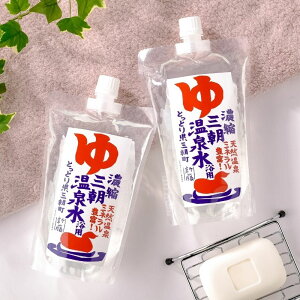
Precios de Rakuten a 18 oct 2026: consulta la tienda para ver el precio y la disponibilidad actuales. Supported by Rakuten Developers Los enlaces de Rakuten son de afiliado: podemos recibir una comisión sin coste adicional para ti.
Fuentes
Los blogs y crónicas de estancia reales en los que se basa este artículo
Aparece en nuestras guías
Comparativas que incluyen este ryokan.
Créditos de las fotos
- Ryokan Ohashi's registered wooden wings on the Mitoku river, Misasa Onsen · Zai零細系統保護協会 / Public domain
Más informes de consenso
 Foto de la zona
Misasa OnsenClásico
Misasa Onsen, Tottori — near the middle of the hot-spring street, backing onto the Mitoku River, about 20 minutes by car from JR Kurayoshi Station (free pickup if you book it)
9 fuentes
Misasa Onsen Kiya Ryokan
三朝温泉 木屋旅館
A 14-room wooden inn listed as a cultural property, with its own very hot radium springs — a free private bath where the water bubbles up through the floor, a radon steam room and a warm-floor rest room — but expect stairs, stink bugs and simple, home-style food
- Ryokan históricos
- Habitaciones con onsen privado
Foto de la zonaMisasa OnsenClásico
Misasa Onsen, Tottori — a large white-walled, castle-style inn on the Mitoku river, about 15 minutes by the inn's free shuttle from JR Kurayoshi Station
10 fuentes
Misasa Onsen Misasakan
三朝温泉 三朝館
Misasa's big, busy all-rounder: three private radon springs, twelve baths around a 1,000-tsubo garden and a crab-heavy table — just reopened after a 2026 refresh, but most rooms are standard Showa-era tatami rooms without spring water
Leer el consenso
Misasa OnsenClásico
Misasa Onsen, Tottori — a 120-metre wooden inn along the Mitoku river, about 20 minutes by the inn's shuttle from JR Kurayoshi Station
9 fuentes
Ryokan Ohashi
旅館大橋
A 1932 riverside inn registered as a cultural property, with a half-underground cave bath where radium and thorium water rises through the rock — unforgettable baths, uneven service
- Ryokan históricos
 Foto de la zona
KamisuwaClásico
Kamisuwa Onsen, Suwa, Nagano — on the lakeshore road facing Lake Suwa, a 10-minute walk (or 5 minutes by free shuttle) from Kami-Suwa Station, about 1.5 hours from Hachiōji on the Chūō Expressway
10 fuentes
Kamisuwa Onsen Shinyu
上諏訪温泉 しんゆ(親湯)
A 39-room lakeside inn with its own jade-tinted spring in Art Deco tiled, tatami-floored baths, every meal in a private dining room and a free guided bus to all four Suwa Taisha shrines — but the shared baths are indoor, recirculated and chlorinated, and only eight suites have their own bath
- Diseño
- Cerca de Tokio
Foto de la zonaKamisuwaClásico
Kamisuwa Onsen, Suwa, Nagano — en la carretera de la orilla frente al lago Suwa, a 8 minutos a pie de la estación de Kami-Suwa y a unas dos horas de Shinjuku en tren expreso limitado
9 fuentes
Suwa Bettei Suhaku
信州上諏訪温泉 諏訪別邸 朱白
Un ryokan onsen a orillas del lago con dos manantiales distintos — uno pardo rojizo y otro transparente — en baños de azotea sobre el lago Suwa, renovado en 2025 con seis habitaciones frente al lago con baño propio; los baños compartidos son de agua recirculada y el resto de habitaciones varía mucho
- Cerca de Tokio

MinakamiEconómico
Fujiwara, Minakami, Gunma — un ryokan solitario junto al arroyo Takaragawa, en lo alto del valle del río Tone, a unos 40 minutos en el autobús lanzadera del ryokan desde la estación de shinkansen de Jomo-Kogen
9 fuentes
Takaragawa Onsen Osenkaku
宝川温泉 汪泉閣
470 tatamis de baños al aire libre junto al río, donde todo el mundo lleva la prenda de baño del ryokan — el baño mixto más espectacular de Japón a precio económico, si toleras un edificio antiguo, las multitudes de visitantes de día y los tábanos del verano
- Refugios apartados
Créditos de las fotos: The onsen street of Misasa Onsen, Tottori · Miya.m / CC BY-SA 3.0 / Ryokan Ohashi's registered wooden wings on the Mitoku river, Misasa Onsen · Zai零細系統保護協会 / Public domain / Kamisuwa Onsen, Suwa, Nagano · 663highland / CC BY 2.5 / Takaragawa Onsen Osenkaku in winter, Minakami · kallerna / CC BY-SA 3.0
Misasa Onsen Izanro Iwasaki
Compara precios en plataformas de reserva de confianza · Aviso de afiliación