Halaman ini belum tersedia dalam bahasa Indonesia, jadi ditampilkan dalam bahasa Inggris.
A lone Meiji-era inn where the water bubbles up through the stones beneath you — one of Japan's great baths, if you can handle mixed bathing, no air conditioning and autumn stink bugs
Chojukan is the only inn at Hoshi Onsen, at the end of a mountain road in northern Gunma, and its reputation rests on one room: Hoshi-no-yu, an 1895 wooden bathhall where the hot spring rises straight up through the pebbles under you, never touching the air. Japanese guests score the baths higher than anything else — 4.8 on Jalan (1,112 reviews), 4.72 on 一休 and 4.71 on Rakuten, against overall scores of 4.3, 4.25 and 4.39 (521 reviews) — and the 1875 main building, the bathhall and the 1940 annex are all registered cultural properties. Guests love the hearth kept burning all year, the sound of the river and being able to use the bath all night: as one put it, that is 'the privilege of staying'. Hoshi-no-yu remains the top draw, though Tamaki-no-yu, the cypress bath, is increasingly named a favourite. Two things put people off. Hoshi-no-yu is mixed-gender except for women-only time from 20:00 to 22:00, and no swimwear or towels are allowed; several women found it daunting, and recent reviews say women's time is short and crowded, with men lingering, staring and even walking in during women's hours. The inn now holds occasional women-only stay days (September 2026; next 16–17 December 2026), when all three baths are open to women at any time. And these are old buildings: most rooms have only a fan — Room 15, renovated with air conditioning and beds, is the exception — walls are thin, there are stairs and no lift, and autumn reviews count stink bugs by the dozen. Food is hearty mountain cooking — carp, ayu, deer, Joshu beef sukiyaki — and scores lowest, with complaints about dishes arriving all at once or going missing; several 2025–2026 reviews also mention communication gaps with staff, though others praise them.
Pembaruan terbaru
Hal-hal yang ditambahkan oleh catatan menginap, unggahan, dan pemberitahuan resmi Jepang yang lebih baru sejak ulasan ini ditulis
The inn now holds women-only stay days (September 2026; next 16–17 December 2026) with all three baths open to women at any time, and Room 15 has been renovated with air conditioning and beds.
Panduan memilih kamar
Rekomendasi nyata dari tamu yang pernah menginap di siniDirekomendasikan
Annex (別館, 1940) river-view rooms
Ten rooms of 8 tatami plus a small entry room, each with its own toilet and a view over the Hoshi River. A summer 2025 guest in one loved it and wanted to come back in autumn or winter — but note it had only a fan, no air conditioning.
Main building (本館, 1875) — for the history
High ceilings and the sound of the river. Room 20 (10+6 tatami, sleeps six) is linked to the poet Yosano Akiko and Room 16 to the painter Higashiyama Kaii. A March 2025 guest in Room 18 (8 tatami, toilet, kotatsu) felt they had 'slipped back in time'. Some main-building rooms now have new washlet toilets, 2026 reviews note.
Sebaiknya dihindari
Main-building Rooms 16 and 17, if you want your own toilet
The inn lists their toilets as outside the room. No room at Chojukan has its own bath, so everyone uses the shared baths.
Any older room in midsummer
Reviews from 2024 to 2026 repeat that there is no air conditioning — a fan is 'the lifeline', one blogger joked — and where there is a unit, one found it old and weak. In summer, ask for Room 15 in the main building: it has been renovated with air conditioning, a toilet, twin beds and few steps, close to all the baths, and a 2026 guest chose it for the air conditioning alone. Room 33 (Kunsanso) also has few steps, according to the inn; there is no lift.
Sudah tahu kamar mana yang Anda mau?
Cek harga dan ketersediaan terkini untuk Hoshi Onsen Chojukan.
Rakuten Travel, salah satu situs pemesanan terbesar di Jepang, menampilkan paket dan harga dalam bahasa Jepang — tombol terjemahan di browser Anda bisa digunakan di sana.
Kami mungkin mendapat komisi jika Anda memesan melalui tautan ini, tanpa biaya tambahan bagi Anda. Pengungkapan afiliasi
Mengulas kulinernya
Konsensus soal sarapan
4.0/5A Japanese breakfast in the dining hall, around 8:00; reviewers on one site rate it about 4.2 out of 5
Do Hoshi-no-yu late at night or at dawn, when guests have it largely to themselves — one blogger met only six people in 80 minutes. Day visitors come from 11:00 to 13:30 (not on Wednesdays).
Catatan soal makan malam
3.8/5Served in a shared dining hall — one 2025 blogger counted about 30 tables, while a 2024 guest was glad of partitions between tables. Expect mountain cooking: turtle soup, carp sashimi (arai), salt-grilled ayu, deer sashimi, Akagi chicken and Joshu pork, with a Joshu beef sukiyaki upgrade for roughly ¥4,000 more per person. Guests praise its honest flavour, but food is the lowest-rated category (3.99 on 一休): recurring 2025–2026 complaints are everything arriving 'almost at once' and dishes missing, and in January 2025 squid was served to a guest who had declared a squid allergy. State allergies clearly and check each dish. Guests arriving after 19:30 get no dinner.
Onsen & relaksasi: kenyataannya
A calcium-sodium sulfate spring, about 42.7°C at source according to Japan's hot-spring association. In Hoshi-no-yu and Choju-no-yu the water wells up directly through the stones of the bath floor; Tamaki-no-yu uses a simple spring that one blogger reports is heated and partly recirculated.
Hoshi-no-yu is mixed-gender except for women-only time from 20:00 to 22:00. The changing rooms are separate and the hall is dim ('quite fine because it's dark', one woman wrote), but bathing garments and wrapped towels are not allowed, and there are no washing stations. Women always have at least one bath of their own: Tamaki-no-yu, an all-cypress bath with an outdoor tub, is theirs in the afternoon and early morning (15:00–20:00 and 7:00–10:00 on the inn's 2026 timetable, men-only overnight, cleaned 11:00–15:00), and Choju-no-yu alternates between men and women. Exact hours vary — the inn's own pages disagree and it issued a correction in September 2026 — so check the schedule posted at the inn. Recent reviews still complain that women's time is short and crowded, and report men lingering in the mixed bath, glancing, being rude or entering during women's hours; women may prefer to go in pairs or with a partner. Alternatively, book a women-only stay day: at one in September 2026, two women guests praised being able to use Hoshi-no-yu any time, and the next is set for 16–17 December 2026, when only women are accepted and all three baths are open to them at any time (one was also held in June 2025).
Not addressed in any source we read. There are no private baths, so check with the inn before booking.
Peringatan & catatan lokal
- 01
Getting there: town buses from Jomo-Kogen Station (Joetsu Shinkansen) via Sarugakyo run only twice in the morning and twice in the afternoon; otherwise take a taxi. There is no pickup. By car it is about 40 minutes from Tsukiyono IC. Check-in is 15:00 (earlier arrivals wait in the lobby), check-out 10:30, and guests arriving after 19:30 get no dinner.
- 02
Winter brings about a metre of snow; the inn asks drivers to carry chains or other anti-skid equipment.
- 03
Autumn stink bugs are a recurring complaint in October and November reviews — one guest dealt with more than 20; the inn now leaves instructions for dealing with them.
- 04
Walls are thin and corridors cold in winter; there are no lockable safes in rooms, one blogger noted. Several 2025–2026 reviews mention communication gaps with staff, while others praise them.
- 05
Prices in our sources: ¥29,450 for a solo weekday stay in October 2025, and ¥21,600 per person for two sharing an 8+4.5-tatami Horyuden room in one blogger's stay. Bookings open four months ahead; on women-only stay days (next 16–17 December 2026) only women are accepted.
Sebelum menginap
Oleh-oleh dari Minakami dan bantuan praktis untuk perjalanan Anda.
Oleh-oleh Minakami di Rakuten

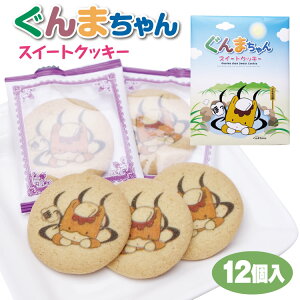
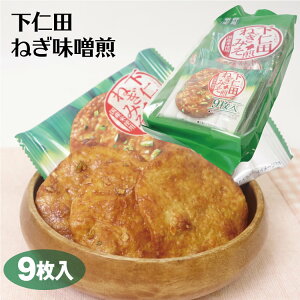
Harga Rakuten per 21 Okt 2026 — cek toko untuk harga dan stok terkini. Supported by Rakuten Developers Tautan Rakuten adalah tautan afiliasi: kami mungkin mendapat komisi tanpa biaya tambahan bagi Anda.
Sumber
Tulisan blog dan catatan menginap asli yang menjadi dasar artikel ini
Tampil di panduan kami
Perbandingan berdampingan yang menyertakan ryokan ini.

Freezing at a mountain onsen ryokan in Japan? How to stay warm tonight
Cold room, icy corridor or a snowy walk to the outdoor bath? What to ask the front desk for, which inns in our directory run cold and which lend coats, boots or blankets, buying kairo heat packs and warm innerwear at a konbini today, avoiding low-temperature burns, the official advice on bathing in cold weather, ordering warm gear to your ryokan, and winter tyres, chains and shuttles.
Baca panduannya
Forgot your towel or brought a swimsuit to an onsen in Japan? What to do
No towel, only a swimsuit, or no shampoo, hair tie or tattoo cover? What public baths sell at the counter, what a ryokan normally provides, where to buy towels and toiletries at a konbini today, why most Japanese baths don't allow swimsuits (and the mixed baths where wraps or bath wear are allowed), tattoo cover stickers, and Amazon or Rakuten delivery to your inn or a konbini.
Baca panduannya
Mixed bathing at a ryokan — how konyoku works, and ten inns that still have it
How mixed-gender bathing (konyoku) works at a Japanese inn — robes, wraps, towels and women-only hours — and ten reviewed ryokan with a mixed bath today, each inn's rule exactly as it states it, compared honestly.
Baca panduannya
Snow-country ryokan: where to soak in winter
Nine ryokan in Japan's snow country where Japanese stay reports describe bathing from December to March, one that closes for winter, and the winter catches: roads closed to cars, shuttle-only access, chains, cold corridors and baths shut for snow.
Baca panduannya
Baths where the spring rises beneath you
Four ryokan where hot-spring water wells up through the floor of the bath itself — no pipes, no tanks — and what Japanese guests say it's really like to bathe in them.
Baca panduannyaKredit foto
- Notoya Ryokan, Ginzan Onsen (Obanazawa, Yamagata) · さかおり / CC BY-SA 4.0
- Tsubame-yu, Ueno, Tokyo · Thirteen-fri / CC BY-SA 3.0
- Takaragawa Onsen Osenkaku in winter, Minakami · kallerna / CC BY-SA 3.0
- Lamp no Yado Aoni Onsen · Raita Futo / CC BY 2.0
- Okutsuso — the Tōwarō building, Okutsu Onsen · Phronimoi / CC BY-SA 3.0
Laporan konsensus lainnya
 Foto area
MinakamiPremium
Tanigawa Onsen, Minakami, Gunma — below Mount Tanigawa, about 8 minutes by car from JR Minakami station (free shuttle on request)
10 sumber
Bettei Senjuan
別邸 仙寿庵
Eighteen rooms, each with its own free-flowing open-air onsen, in a prize-winning earthen-walled building below Mount Tanigawa — a Relais & Châteaux favourite whose kitchen has lately lost some fans
- Kamar dengan onsen pribadi
- Berfokus pada desain
MinakamiHemat
Fujiwara, Minakami, Gunma — sebuah penginapan yang berdiri sendiri di tepi sungai Takaragawa di hulu lembah Sungai Tone, sekitar 40 menit dengan shuttle penginapan dari stasiun shinkansen Jomo-Kogen
9 sumber
Takaragawa Onsen Osenkaku
宝川温泉 汪泉閣
Pemandian terbuka seluas 470 tatami di tepi sungai, tempat semua orang memakai jubah mandi dari penginapan — pemandian campuran paling spektakuler di Jepang dengan harga terjangkau, asal Anda bisa menerima bangunan tua, keramaian pengunjung harian, dan lalat kuda di musim panas
- Tempat menyepi
Aoni OnsenHemat
Lembah Aoni, Kuroishi, Aomori — jauh di pegunungan sebelah timur Kuroishi; dengan mobil April–November (lalu berjalan turun 100 m yang curam dari tempat parkir), dengan antar-jemput khusus reservasi dari Michi-no-Eki Niji-no-Ko sepanjang tahun
9 sumber
Lamp no Yado Aoni Onsen
ランプの宿 青荷温泉
Tempat peristirahatan onsen sejak 1929 yang diterangi sekitar 160 lampu minyak, tanpa lampu listrik, TV, atau sinyal ponsel, dengan empat pemandian kayu hiba dan batu beraliran langsung serta hidangan Tsugaru yang dijelaskan dalam dialek setempat — detoks digital sejati, jika Anda bisa menerima kegelapan, dinding tipis, dan air yang tidak terlalu panas
- Tempat menyepi
 Foto area
Arima OnsenKlasik
Arima Onsen, Kita-ku, Kobe, Hyogo — on the far edge of the old town above the Taki River, facing Mt. Ochiba; a steep 10–15-minute walk from Arima Onsen Station (free shuttle 8:00–19:00)
9 sumber
Arima Onsen Gekkoen Korokan
有馬温泉 月光園 鴻朧館
Kaiseki served course by course in your room at both meals, a wall of mountain view and three bath houses of the inn's own kinsen — at a classic price, but it's a modern block where you fetch your own yukata, and the in-room and private baths aren't onsen
Baca konsensusnya
Arima OnsenKlasik
Arima Onsen, Kobe — in the old town by the Arima River, a few minutes' walk from Arima Onsen Station
11 sumber
Tosen Goshobo
有馬温泉 陶泉 御所坊
A shadowy, designer-restored wooden inn with centuries of history and a half-mixed bath of rust-red kinsen water — adored for its staff, divisive for its bath and its creaks
- Ryokan bersejarah
- Berfokus pada desain
Foto areaArima OnsenKlasik
Arima Onsen, Kita-ku, Kobe — a 6-minute walk from Kobe Electric Railway's Arima Onsen Station (free pickup on request), about 30 minutes by car from Sannomiya
9 sumber
Hyoe Koyokaku
有馬温泉 兵衛向陽閣
Arima's big all-rounder: a 126-room inn with three bath houses of rust-red kinsen, a live-cooking wagyu buffet or charcoal-grill private rooms, and free matcha and drinks — but the baths are partly recirculated, it's a maze, and tattoos are refused
Baca konsensusnyaKredit foto: Mount Tanigawa, Minakami, Gunma · TANAKA Juuyoh / CC BY 2.0 / Takaragawa Onsen Osenkaku in winter, Minakami · kallerna / CC BY-SA 3.0 / Lamp no Yado Aoni Onsen · Raita Futo / CC BY 2.0 / The Arima River through Arima Onsen, Kobe · Wpcpey / CC BY-SA 4.0 / Tosen Goshobo — the entrance, Arima Onsen · iloverjoa / CC BY 3.0
Hoshi Onsen Chojukan
Bandingkan harga di mitra pemesanan tepercaya · Pengungkapan afiliasi