Japan's most photographed milky mixed bath, a thatched samurai-guard house with irori hearths, and rooms from about ¥11,700 — rustic, cold in places, and hard to book
Tsurunoyu is the oldest of Nyuto Onsen's eight inns: an Akita lord came to bathe here in 1638, and it has taken ordinary guests since the late 1600s. Its thatched honjin, once quarters for the lord's guards, and the milky-blue mixed outdoor bath are among the most famous images of rural Japan — and staying the night is the way to enjoy them, because from 10:00 day visitors 'pour in'. Four springs rise within 50 metres, feeding the mixed bath, a women-only outdoor bath, several indoor baths and two private baths; bloggers call the water superb, though several found the baths lukewarm. Dinner is yamanoimo-nabe (a mountain-yam dumpling hotpot), grilled iwana and mountain vegetables, served on lacquer trays or around an irori. This is an inn to go into with eyes open: the mixed bath has no women-only hours and towels aren't allowed; changing rooms and some washrooms are cold; rooms in the cheaper wings have no toilet, no air conditioning and fusuma walls that let through the noise of 24-hour bathers; honjin rooms can't be locked from outside; there's no TV or fridge; and stink bugs appear in autumn. Rooms fill months ahead — bookings open six months out by phone or through the Japan Hitou Association site.
Room Selection Guide
What the guests who stayed here actually recommendRecommended
Honjin (本陣) — the thatched guard house
Five rooms with an irori hearth, toilet and kerosene lamp, each entered from outside — the classic Tsurunoyu experience, from about ¥15,550 per person with two meals. A solo guest in 2025 found one only by phoning after the website showed it full six months ahead. Note the doors can't be locked from outside, so use the free lockers for valuables.
Shin-honjin and Higashi-honjin
The comfortable option (about ¥17,750–24,350 per person): toilet and washbasin, warm in winter, and some rooms (Shin-honjin 5, Higashi-honjin 1 and 5) have an irori. They're in the same building as the guests-only indoor bath and the private baths, so you don't have to go outside in the snow.
Request To Avoid
Wings 2 and 3 (2号館・3号館), if you want comfort
The cheapest rooms (about ¥11,700 per person) are 6 tatami with no toilet — shared toilets and a ground-floor washroom that one January guest found poorly heated, with icy tap water. The steam heaters are powerful, but there's no air conditioning or fan for summer, and thin fusuma let in the sound of people going to the 24-hour baths. Meals are served in honjin rooms rather than your own.
Wing 1 (1号館) — check the current set-up
The official room page says Wing 1 has no toilet, but booking plans say it was renovated with a toilet and washbasin from April 2026. Rooms are all on the second floor. Confirm when you book.
Know which room you want?
Check live rates and availability for Tsurunoyu Onsen.
We may earn a commission if you book through these links, at no extra cost to you. Affiliate disclosure
Dining Deep Dive
Breakfast Consensus
4.0/5A simple Japanese breakfast from 7:00, usually at shared tables in the main hall
Bathe in the mixed outdoor bath early in the morning or in the evening, before the 10:00 rush of day visitors. The outdoor bath is drained for cleaning on Mondays, and the private riverside bath is closed in winter.
Dinner Insights
4.3/5Yamanoimo-nabe — a miso hotpot with chewy mountain-yam dumplings, refills allowed — grilled or raw iwana, soba and mountain vegetables, on local Kawatsura lacquerware. Honjin guests eat around their own irori (lit around 17:15, with dinner at 18:00, 18:30 or 19:00); other buildings get meals in the room or in shared honjin rooms, where guests end up chatting. One blogger called the grilled iwana the best they'd eaten; another found the portions more than two could finish. Complaints: in-room meals can arrive lukewarm, and one guest found sitting at the irori uncomfortable.
Onsen & Wellness Realities
Four springs within 50 metres: Shiro-yu (sulphur with sodium/calcium chloride and bicarbonate, which also feeds the mixed outdoor bath), Kuro-yu (sodium chloride and bicarbonate), Naka-no-yu (bicarbonate with hydrogen sulphide) and Taki-no-yu (a waterfall shower, closed in winter). Free-flowing, with water added according to the Japan Hitou Association.
The famous outdoor bath is mixed with no women-only hours, and towels may not be worn; women enter from their own side, and a screen at the entrance helps, though a 2025 day visitor wished for more screening and found the steps hidden in the cloudy water. There are women-only outdoor baths, a guests-only indoor bath (with the only showers and hairdryer) and two private indoor baths, which get queues. Outer baths have no taps or showers, and changing rooms are cold.
Not addressed in any source we read. The two private baths are the only way to avoid sharing — ask the inn.
Local Warnings & Nuances
- 01
Booking: by phone (0187-46-2139, 7:00–22:00) or through the Japan Hitou Association website; phone bookings open on the 1st of the month six months ahead, and solo stays in the honjin are phone-only. The detached 'Hanare Honjin' is sold only through JR East packages.
- 02
Getting there: an hourly Ugo Kotsu bus from JR Tazawako Station to the Alpa Komakusa stop, where the inn will collect you if you phone ahead with your bus time; the last 3 km by car is a forest road. Check-in 15:00, check-out 10:00. Cards: Visa and Mastercard only.
- 03
A winter heating fee of about ¥1,100–1,320 per room applies roughly from October to May.
- 04
Day visitors bathe 10:00–15:00 (¥700, cash only), closed Mondays.
- 05
Mobile signal is patchy (au and SoftBank especially); Wi-Fi works in the lounge. No elevator, and not accessible for wheelchairs.
Sources
The real blog posts and stay reports this article draws on
- 乳頭温泉郷:鶴の湯温泉!本陣に負けてない?新本陣は最高だった! (やっぱ温泉でしょ。)
- 秋田 乳頭温泉の鶴の湯は温泉が素晴らしい!食事は江戸時代そのままに? (temahime's blog)
- 乳頭温泉・鶴の湯 本陣の予約方法&部屋タイプ完全ガイド (ひとり温泉はじめました。)
- 鶴の湯ひとり温泉旅 お風呂編 (ひとり温泉はじめました。)
- <きちたび>秋田県の旅2025 雪の秘湯「乳頭温泉 鶴の湯」 (吉祥寺@ブログ)
- 鶴の湯温泉 宿泊記 乳頭温泉郷最古の宿で雪見露天風呂を満喫してきた (TAMAISM)
- ぬくもる東北 ②雪の乳頭温泉「鶴の湯」離れ本陣 (4travel.jp)
- 鶴の湯温泉 クチコミ (近畿日本ツーリスト)
- 鶴の湯温泉 (日本秘湯を守る会)
- 乳頭温泉郷 鶴の湯温泉 (公式サイト)
More Consensus Reports
 Area photo
Nyuto OnsenClassic
Nyuto Onsen, Semboku, Akita — on the Sendatsu River in Towada-Hachimantai National Park
9 sources
Taenoyu
乳頭温泉郷 妙乃湯
Nyuto's gentler, more polished alternative — two different springs, a riverside mixed bath with women-only time, and warm service, though the rooms are small and the layout confusing
- Secluded Retreats
KyotoLuxury
Fuyacho-Anekoji, Nakagyo, Kyoto — in the city centre, a short walk from Kyoto City Hall
8 sources
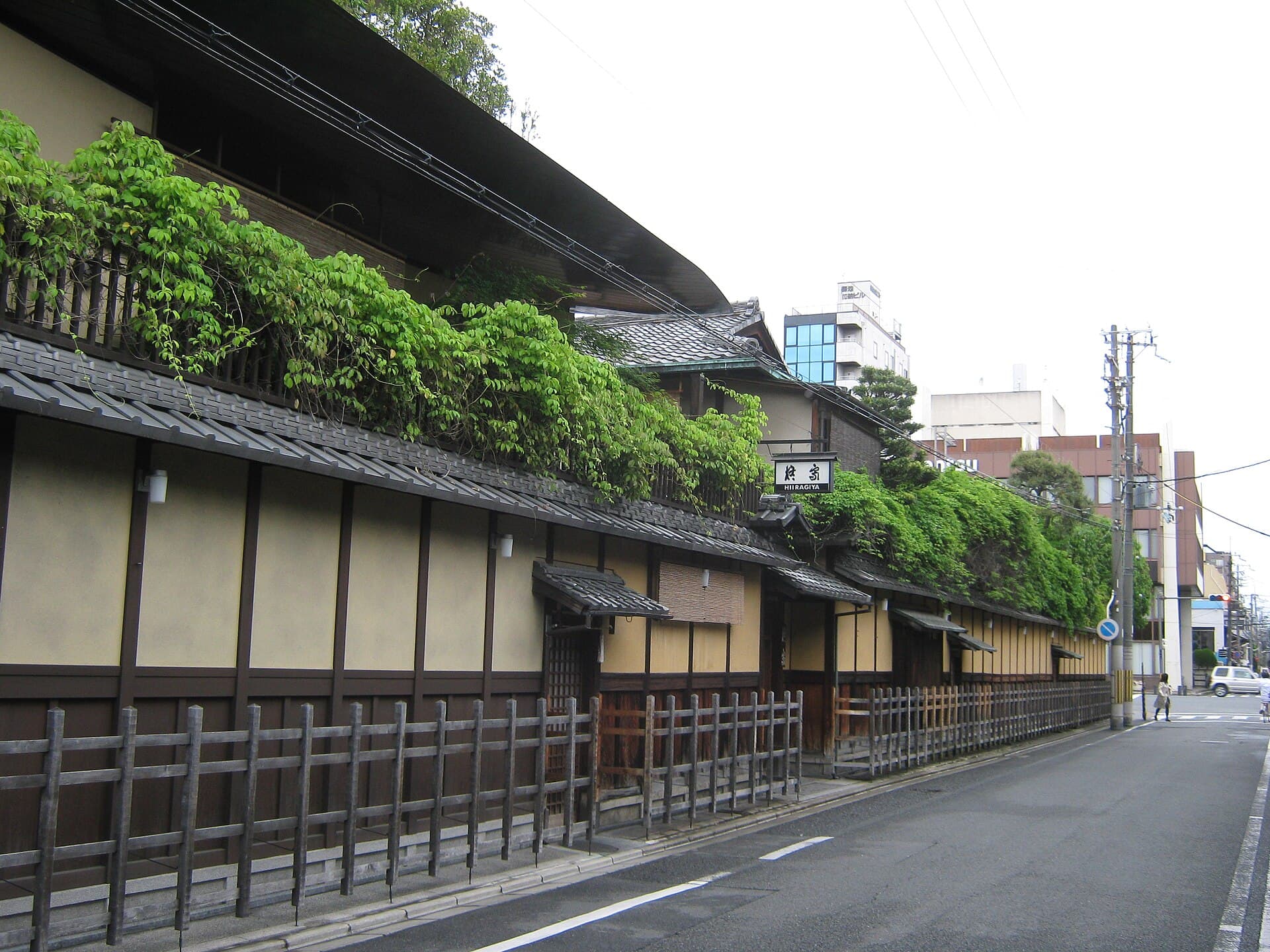
Hiiragiya
柊家
Kyoto's 1818 inn of writers and film stars — near-flawless service and kaiseki, koyamaki-wood baths, and no hot spring
- Historic Ryokan
- Destination Dining

Aizu-WakamatsuClassic
Higashiyama Onsen, Aizu-Wakamatsu, Fukushima — a wooden inn beside the Yukawa river, a minute from the Higashiyama Onsen bus stop
9 sources
Mukaitaki
会津東山温泉 向瀧
Japan's first registered-heritage inn: a former Aizu clan bath retreat with scalding free-flowing water, free private baths and carp dinners in your room — and a lot of stairs
- Historic Ryokan
Photo credits: Autumn on the Sendatsu River, Nyuto Onsen, Akita · lumoplank / CC0 / Hiiragiya — the frontage on Anekoji-dori, Kyoto · Mariemon / CC BY 3.0 / Mukaitaki in the snow, Higashiyama Onsen, Aizu-Wakamatsu · Fumihiko Ueno / CC BY 3.0
Tsurunoyu Onsen
Compare rates across trusted booking partners · Affiliate disclosure