Magoroku Onsen Rokuan
孫六温泉 六庵
Magoroku Onsen in 2020, before its 2025 renovation, Nyūtō Onsen-kyō · Suicasmo / CC BY-SA 4.0
Nyūtō's old self-catering hideaway, reborn in 2025 as a six-room inn with a barrel sauna, robed mixed baths and counter kaiseki — beautiful, remote and pricey, with early reviews still mixed
Magoroku has been a hot-spring retreat at the far end of the Nyūtō valley since a man named Taguchi Kyūkichi built a bathing hut here in 1906; for most of a century it was a famously rustic, inexpensive inn. It closed in 2022 for lack of a successor, and with backing from the other Nyūtō inns it reopened in 2025 under new operators as Magoroku Onsen Rokuan: just six rooms for up to 12 guests — three detached rooms with private open-air baths and three Japanese-Western rooms — each with its own bath, toilet, heating and Simmons beds, a barrel sauna with cold plunge, and a counter-style kaiseki dinner with a sommelier. The baths are the inn's own sulphur and simple springs, free-flowing with water added; the open-air bath and the cave-like Ishi-no-yu are mixed, with bathing robes required, and the hiba-lined Karako-no-yu is separate for men and women. There's no car access: you walk in from the parking or bus stop, about 15 minutes in winter on a snowy path. Early guests rate it 4.38 across 17 reviews on one leading site, praising the setting, rooms and creative dinners, while others found it overpriced for what it delivers — an ordinary breakfast, a counter where every conversation carries, cooking slips, and service still finding its feet. Expect about ¥45,000–76,000 per person with two meals.
Room Selection Guide
What the guests who stayed here actually recommendRecommended
Detached rooms with a private open-air bath — Renkō (漣光), Seon (瀬音), Tamayura (玉響)
New-wood interiors and the sound of the river, with your own open-air bath (from about ¥52,800 per person at opening). Caveats from 2026 guests: no washing area at the outdoor bath, a cramped shower room, a mirror only in the changing area that fogs up, and only geta left out for walking in winter.
Maisonette Japanese-Western rooms Kagetsu (華月) and Suihō (翠峰)
Kagetsu's bedroom has windows on three sides for sky and stars, an August 2025 guest wrote. The third room, Shin'en (心縁), keeps the old beams, with free fridge drinks and Imabari towels — though one guest found the tablet controls for the lights and lock unnecessary.
Request To Avoid
Any room, if walking or winter footing is a problem
Rooms and bathhouses are in separate buildings, so you walk outdoors to bathe — 'hard in winter', one guest wrote — and there's no lift, no barrier-free room, many slopes and steps, and an ambulance takes 30–60 minutes. One November 2025 guest's companion fell into a dark snow pit by the entrance.
Know which room you want?
Check live rates and availability for Magoroku Onsen Rokuan.
We may earn a commission if you book through these links, at no extra cost to you. Affiliate disclosure
Dining Deep Dive
Breakfast Consensus
3.6/5Served 6:30–9:00 at the counter — the most consistent complaint: 'breakfast of a ¥20,000 inn', and weak coffee
Arrive before dark — the forest path has no lights — and book the luggage service: in summer a shuttle meets the Kyūkamura bus stop at set times; in winter staff carry bags from the all-year parking opposite Ōgama Onsen (about 800m on a snowy road; wear boots). The Nyūtō bath-hopping pass (¥2,500, cash) is sold to staying guests.
Dinner Insights
4.1/5All guests start together at 18:00 at an L-shaped counter in the Musubian dining room (a private room may be possible on request), with a sommelier's pairings (one guest paid ¥3,000 for three glasses). Guests praised the creative cooking — a shiitake potage, 'superb' sashimi — and sensible portions, and one called it 'the best if you enjoy wine'. Critics found the open kitchen 'only for show', neighbours' conversations fully audible, a lukewarm soup and fish left sitting (November 2025), and very spicy shrimp and undercooked iwana with no replacement (July 2026).
Onsen & Wellness Realities
The inn's own sulphur and simple springs (sources say three or four), described officially as free-flowing; a booking site lists them as free-flowing with water added. Older guides reverse which bath gets which spring.
The mixed open-air bath and the semi-underground Ishi-no-yu (now set up around the barrel sauna and cold plunges) require the inn's bathing robes — there's no swimsuit option — while Karako-no-yu, relined in Aomori hiba with showers, is separate for men and women. Guest hours are 15:00–23:00 for Karako-no-yu, 15:00–22:00 for the mixed baths and sauna, and 5:00–10:00 for all; the private bath is suspended. Day visitors come 10:00–15:00 (closed Fridays). Temperatures vary: one 2025 guest found the water far too cool, a day visitor measured Ishi-no-yu at 48°C, and the famous blue tint isn't always visible.
No policy found on the official site or Japanese booking sites — contact the inn. The detached rooms' private baths avoid sharing.
Local Warnings & Nuances
- 01
This is the post-2025 Rokuan, not the old rustic inn: there are no room-only or self-catering plans any more, and older reviews (to 2022) describe a different place.
- 02
Getting there: JR Tazawako Station, then the Ugo Kōtsū Nyūtō bus (about 50 minutes) or a 30-minute taxi, then a 5–15 minute walk; cars can't reach the inn. Navigation apps can mislead — call the inn for directions.
- 03
Check-in 15:00, check-out 11:00. Cards and some QR payments are accepted. Children are allowed with conditions — ask.
- 04
No lounge or vending machine, and early reviews mention slow check-in, confusion over winter luggage pick-up and no send-off at departure.
- 05
Bears live in these forests; staff lent one day visitor a bear bell for the path.
Sources
The real blog posts and stay reports this article draws on
More Consensus Reports
 Area photo
Nyuto OnsenClassic
Nyuto Onsen, Semboku, Akita — on the Sendatsu River in Towada-Hachimantai National Park
9 sources
Taenoyu
乳頭温泉郷 妙乃湯
Nyuto's gentler, more polished alternative — two different springs, a riverside mixed bath with women-only time, and warm service, though the rooms are small and the layout confusing
- Secluded Retreats

Nyuto OnsenValue
Nyuto Onsen, Semboku, Akita — at the end of a forest road in Towada-Hachimantai National Park
10 sources
Tsurunoyu Onsen
乳頭温泉郷 鶴の湯温泉
Japan's most photographed milky mixed bath, a thatched samurai-guard house with irori hearths, and rooms from about ¥11,700 — rustic, cold in places, and hard to book
- Historic Ryokan
- Secluded Retreats
KyotoLuxury
Fuyacho-Anekoji, Nakagyo, Kyoto — in the city centre, a short walk from Kyoto City Hall
8 sources
Hiiragiya
柊家
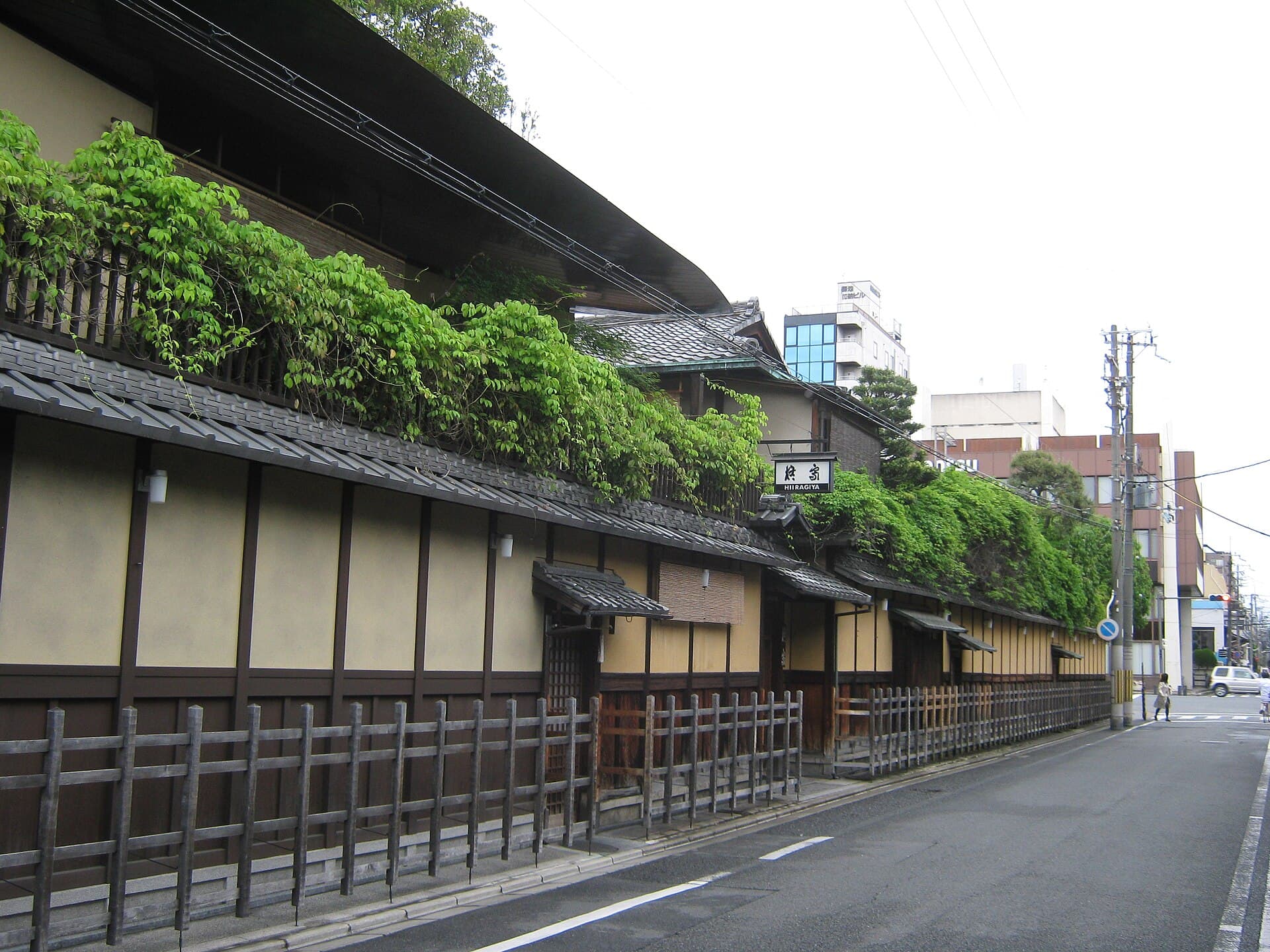
Kyoto's 1818 inn of writers and film stars — near-flawless service and kaiseki, koyamaki-wood baths, and no hot spring
- Historic Ryokan
- Destination Dining
Photo credits: Autumn on the Sendatsu River, Nyuto Onsen, Akita · lumoplank / CC0 / Tsurunoyu — the gate and thatched honjin, Nyuto Onsen · lumoplank / CC0 / Hiiragiya — the frontage on Anekoji-dori, Kyoto · Mariemon / CC BY 3.0
Magoroku Onsen Rokuan
Compare rates across trusted booking partners · Affiliate disclosure