Misasa Onsen Misasakan
三朝温泉 三朝館
Area photo — not the ryokan itself · The onsen street of Misasa Onsen, Tottori · Miya.m / CC BY-SA 3.0
Misasa's big, busy all-rounder: three private radon springs, twelve baths around a 1,000-tsubo garden and a crab-heavy table — just reopened after a 2026 refresh, but most rooms are standard Showa-era tatami rooms without spring water
Misasakan opened in 1938 and grew in the 1970s into a 74-room concrete inn with white walls and tiled roofs, built around a waterfall garden by the Mitoku river. A member of the imperial family stayed in September 2025. It closed for renovation and reopened on 18 July 2026 with a new lobby and welcome-drink bar, a dry sauna and plunge pool, and redesigned twin-bed rooms. The draw is the water: three springs on the property feed twelve baths in two garden bath zones that swap between men and women overnight, plus a hinoki private open-air bath. The inn says the open-air and private baths are free-flowing, while the big indoor baths mix free-flowing and filtered recirculated water. Japanese guests rate it 4.47 across 2,272 reviews on one major site (baths 4.60) and 4.5 across 1,346 on another (dinner 4.7). They praise the many baths, warm and attentive staff, Tottori wagyu and crab dinners, and a breakfast buffet of about 50 dishes with rolled omelette, tempura and rice balls made to order. Bloggers who stayed from 2025 to autumn 2026 say much the same, though most recent detail comes from booking-site reviews. Complaints from 2025 and 2026: ageing standard rooms with dated bathrooms and narrow single beds, lapses in room cleaning, rooms where you can't set the temperature, weak Wi-Fi, buffet dishes running out late in the morning, one scalding-hot waterfall shower and one guest who found the water heavily diluted. Two-meal plans run about ¥17,000–25,000 per person, and crab or seasonal menus cost ¥30,000 or more.
Room Selection Guide
What the guests who stayed here actually recommendRecommended
Concept rooms Mone, Sarasa, Oto, Uru and Soso (45–50㎡, opened 2021)
Japanese-modern rooms with two semi-double beds and a terrace open-air bath (an indoor view bath in Soso) that the inn says is free-flowing from its own spring, plus dinner in a private room. A blogger who stayed in December 2025 called the room spotless and the spring water silky, and a July 2026 family on a booking site used its bath twice. One August 2026 guest in a 45㎡ room thought the water felt heavily diluted. The one-a-day Mizuki suite (90㎡, open-air bath facing the river) sits above these.
Renovated twin-bed Japanese rooms (8 or 10 tatami)
Part of the July 2026 refresh: built-in beds with USB sockets, a step-free route from the tatami to the toilet and washbasin, and a daybed by the window in the 8-mat type. An August 2026 reviewer called the newly redone room very relaxing with a good view, and September 2026 guests in the 10-mat type praised the river and mountain views. The baths in these rooms are not spring water.
Request To Avoid
Unrenovated standard Japanese rooms, and the Bettei Rin maisonettes if you want a free-flowing room bath
Guests in 2025–2026 describe the standard rooms as clean but showing their age: a 'Showa atmosphere', an old and not very clean room bath (August 2026), true single beds (January 2026), temperature you can't adjust (March 2026), few sockets, and on two occasions a dirty teacup or leftover rubbish. The four 120㎡ Bettei Rin maisonettes (2024) are stylish, with a home theatre and two toilets, but the inn lists their terrace onsen bath as recirculated, and a September 2026 regular found one building-side garden cramped.
Know which room you want?
Check live rates and availability for Misasa Onsen Misasakan.
Rakuten Travel, one of Japan's biggest booking sites, lists plans and prices in Japanese — your browser's translate button works on it.
We may earn a commission if you book through these links, at no extra cost to you. Affiliate disclosure
Dining Deep Dive
Breakfast Consensus
4.5/5A buffet of about 50 dishes across six stations, with a live kitchen for rolled omelette made from local eggs, grilled Sakaiminato fish, tempura and rice balls made to order, plus Shiraba milk and yoghurt — widely praised, but go early: one August 2026 guest who came at 8:20 found items gone or running low. It may switch to a set Japanese breakfast when the inn is quiet.
Book the free Kurayoshi shuttle by phone in advance (pick-ups at 14:10, 15:30, 16:20 and 17:30; morning runs at 8:20, 9:30 and 11:00). The private open-air bath (45 minutes, ¥2,200) is first come, first served from 10:00 on the day. Bring your room towels to the large baths. Room-only guests walk about 10 minutes to eat elsewhere.
Dinner Insights
4.4/5Kaiseki built on Tottori wagyu, Japan Sea fish and, from November to March, snow crab: a January 2026 blogger's crab plan (¥33,550 per person) ran from crab sashimi and tempura to crab sukiyaki, and the head chef was named a crab-cuisine master in 2025. Standard plans are served at tables in a large hall (one guest found it cold in December 2025); private dining rooms come with some room types or for ¥1,100 extra per person. In summer there is a dinner buffet. Complaints include an abalone no bigger than a tokobushi (September 2026), a disappointing spiny lobster hotpot and one guest who believed the crab was the cheaper red snow crab.
Onsen & Wellness Realities
Radioactive sodium chloride spring (radon) from three sources on the property. The inn states that the open-air baths and the private bath are free-flowing, while the large indoor baths combine free-flowing and filtered recirculated water. Room baths are spring water only in the concept rooms (free-flowing), the Mizuki suite and Bettei Rin (listed as recirculated); standard rooms have ordinary baths.
Two bath zones in a 1,000-tsubo garden — Niwa-no-yu (a large open-air bath, ceramic pot tubs, a hinoki bath, a waterfall-view indoor bath and a waterfall shower) and Taki-no-yu (an open-air bath under a waterfall of spring water, a garden-view indoor bath and, since 2026, a 90°C dry sauna and plunge pool) — swap between men and women overnight (15:00–24:00, 5:30–9:00), reached along a long tatami corridor with garden views. Bloggers mention a rose bath on the women's side, and guests often have the big baths almost to themselves. The sauna is open to men 15:00–21:00 and to women only 6:00–9:00. There's one hinoki private open-air bath, Tamayura, which costs extra.
Not allowed in the large public baths, whatever the size. The inn suggests the private open-air bath or a room with its own onsen bath instead.
Local Warnings & Nuances
- 01
Check-in 15:00–18:00 on two-meal plans, check-out 10:00 (one extra hour can be paid for). The last dinner start is around 19:00.
- 02
Cancellation: 30% from 3 days before, 50% the day before, 100% on the day; some early-booking plans differ.
- 03
The inn reopened on 18 July 2026 after renovation of the lobby, part of the large baths and some rooms. Many rooms were not redone, and reviews from before then may not match.
- 04
Not fully barrier-free: there is no accessible room, and the route to the large baths includes steps and a tatami corridor. Wheelchairs can be borrowed.
- 05
Children: primary-school children pay the full adult rate and eat the adult menu; ages 3–5 pay 50% with a children's meal. The summer pool, game corner and karaoke room make it popular with multi-generation families, so expect a lively house in holidays.
Before your stay
Souvenirs from Misasa Onsen and practical help for your trip.
Misasa Onsen souvenirs on Rakuten
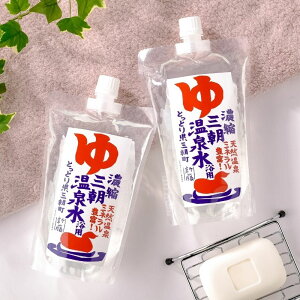
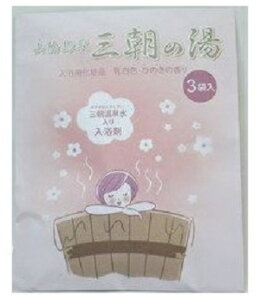
Rakuten prices as of Oct 18, 2026 — check the shop for current price and stock. Supported by Rakuten Developers Rakuten links are affiliate links: we may earn a commission at no extra cost to you.
Sources
The real blog posts and stay reports this article draws on
Featured in our guides
Side-by-side comparisons that include this ryokan.

Best ryokan in Misasa Onsen: 4 inns compared on onsen, food and price
Four Misasa Onsen ryokan compared: radon springs, free-flowing or recirculated baths, private baths, crab dinners, history and value — with the catch at each inn.
Read the guide
What to pack for a ryokan stay in Japan (and what the inn already gives you)
A ryokan packing list based on real inns: what a Japanese inn normally provides (yukata, towels, slippers, toiletries) and the exceptions our research records, what to wear with a yukata, socks for tatami rooms, a small bath bag for onsen towns, the things often missing (toothbrush, hair dryer, sockets, earplugs), cash for bath tax and bath passes, and how to travel light by sending your suitcase ahead.
Read the guide
Forgot or broke your phone charger in Japan? Where to get one today
Left your charger at home or snapped the cable? Where to buy a replacement in Japan today (konbini and electronics stores), whether your own charger works on Japan's 100 V plugs, USB-C or Lightning, next-day Amazon or Rakuten delivery to your hotel or a konbini, what to ask at a ryokan, and the 2026 power bank rules for flying.
Read the guide
Free-flowing or recirculated? How to tell real onsen water before you book
'Hot spring' on a booking page can mean anything from water straight from the source to recirculated, chlorinated tap water in your room. What the Japanese terms mean, and which ryokan in our directory pass the test.
Read the guide
Family-friendly ryokan in Japan — inns that welcome kids, and the ones that don't
Eleven ryokan with real family facilities — kids' baths, playrooms, pools, baby gear — seven where private baths and in-room meals make a stay with children easy, and eleven that restrict children, each rule exactly as the inn states it.
Read the guide
Tattoo-friendly ryokan — and how to soak in Japan when the shared bath says no
Three ryokan that openly accept tattoos, four that allow small covered ones, and eleven that ban tattoos in the shared baths but let you soak in your own room or a private bath — each inn's policy exactly as it states it, and the right room to book.
Read the guidePhoto credits
- Ryokan Ohashi's registered wooden wings on the Mitoku river, Misasa Onsen · Zai零細系統保護協会 / Public domain
- Shibu Onsen, Yamanouchi, Nagano · David McKelvey / CC BY 2.0
- FamilyMart, Izumo, Shimane · MaedaAkihiko / CC BY-SA 4.0
- Mukaitaki in the snow, Higashiyama Onsen, Aizu-Wakamatsu · Fumihiko Ueno / CC BY 3.0
- Otani Sanso — the main building above the Otozure river, Nagato Yumoto Onsen · Raita Futo / CC BY 2.0
- Gora Kadan — the former Kan'in-no-miya imperial villa, Hakone · 663highland / CC BY 2.5
More Consensus Reports
 Area photo
Misasa OnsenClassic
Misasa Onsen, Tottori — near the middle of the hot-spring street, backing onto the Mitoku River, about 20 minutes by car from JR Kurayoshi Station (free pickup if you book it)
9 sources
Misasa Onsen Kiya Ryokan
三朝温泉 木屋旅館
A 14-room wooden inn listed as a cultural property, with its own very hot radium springs — a free private bath where the water bubbles up through the floor, a radon steam room and a warm-floor rest room — but expect stairs, stink bugs and simple, home-style food
- Historic Ryokan
- Private Onsen Rooms
Area photoMisasa OnsenClassic
Misasa Onsen, Tottori — on the Mitoku river by Misasa Bridge in the middle of the hot-spring town, about 20 minutes by the inn's free shuttle (book by the day before) from JR Kurayoshi Station
10 sources
Misasa Onsen Izanro Iwasaki
三朝温泉 依山楼 岩崎
Misasa's century-old grand inn, host to emperors and writers: a 12-bath garden onsen with free-flowing cave and rock tubs and private-room kaiseki — but it's a big 74-room concrete house with fixed air conditioning, thinning service and towels you carry to the bath yourself
- Historic Ryokan
Misasa OnsenClassic
Misasa Onsen, Tottori — a 120-metre wooden inn along the Mitoku river, about 20 minutes by the inn's shuttle from JR Kurayoshi Station
9 sources
Ryokan Ohashi
旅館大橋
A 1932 riverside inn registered as a cultural property, with a half-underground cave bath where radium and thorium water rises through the rock — unforgettable baths, uneven service
- Historic Ryokan
 Area photo
HakoneClassic
Tonosawa, Hakone, Kanagawa — on the Hayakawa River, about 15 minutes' walk from Hakone-Yumoto Station
10 sources
Fukuzumiro
塔之沢温泉 福住楼
A Meiji-era wooden inn where Soseki and Kawabata stayed — in-room kaiseki, a giant round pine bath, no tattoo rules, and shared toilets down the corridor
- Historic Ryokan
- Tattoo-Friendly
Area photoHakonePremium
Miyanoshita, Hakone — built down the side of the Hayakawa gorge, a 3-minute walk from Miyanoshita Station on the Hakone Tozan Railway
9 sources
Hakone Ginyu
箱根吟遊
Hakone's famously hard-to-book inn: 20 rooms, each with a terrace and open-air bath hanging over the Hayakawa gorge — but the room baths are recirculated, and 2026 reviews report long check-in waits, ageing rooms and slipping food
- Private Onsen Rooms
Area photoHakoneClassic
Tonosawa, Hakone — on the Hayakawa river, a 5-minute bus ride from Hakone-Yumoto Station (1 minute's walk from the Kami-Tonosawa stop) or a 10-minute walk from Tonosawa Station on the Hakone Tozan Railway
10 sources
Tonosawa Ichinoyu Honkan
塔ノ沢 一の湯本館
A wooden inn founded in 1630 and now a registered cultural property, run by Hakone's budget Ichinoyu group: free-flowing baths in some rooms, simmered kinmedai and free drinks at low prices — but no lift, no showers in the shared baths, and many rooms share toilets
- Historic Ryokan
- Private Onsen Rooms
Photo credits: The onsen street of Misasa Onsen, Tottori · Miya.m / CC BY-SA 3.0 / Ryokan Ohashi's registered wooden wings on the Mitoku river, Misasa Onsen · Zai零細系統保護協会 / Public domain / Gōra Park, Hakone · Daderot / CC0
Misasa Onsen Misasakan
Compare rates across trusted booking partners · Affiliate disclosure