Misasa Onsen Kiya Ryokan
三朝温泉 木屋旅館
Area photo — not the ryokan itself · The onsen street of Misasa Onsen, Tottori · Miya.m / CC BY-SA 3.0
A 14-room wooden inn listed as a cultural property, with its own very hot radium springs — a free private bath where the water bubbles up through the floor, a radon steam room and a warm-floor rest room — but expect stairs, stink bugs and simple, home-style food
Kiya Ryokan took the trade name of an Edo-period village headman's house and became a full-time inn in 1868. Its Meiji, Taishō and Shōwa wings, joined over the years into a maze of steep stairs, were listed in full as a Registered Tangible Cultural Property in 2010. There are 14 rooms on three floors and no lift. The draw is the water: the inn's own radioactive sodium chloride springs (56–80°C, pH 7.2), all free-flowing. In the private Rakusen-no-yu the spring bubbles up through stones in the floor, and there is a drinking fountain beside it. There is also a second private bath from the Taishō era, separate baths for men and women, a paid radon steam room and a warm-floor room for lying down in your yukata. Japanese guests rate it 4.8 across 400 reviews on one major site, 4.32 across 244 on another (baths 4.64) and 4.56 on a third (baths 4.92). Bloggers in 2023–2024 called it the best and most potent water they had tried. Others praised the in-room dinners, including a stew baked inside a bread 'pot', and staff who explain each bath. Complaints are dated and mostly minor. The springs are so hot you must add cold water, and the floors can burn your feet (2023). Stink bugs got into rooms in February–March 2026, and the car park is hard to find. One May 2026 reviewer found the menu unchanged for months and the staff calls over the PA system intrusive. The private baths are often taken. Basic plans start at ¥18,700–24,200 per person on weekdays, and in 2026 people paid about ¥19,000–29,000.
Room Selection Guide
What the guests who stayed here actually recommendRecommended
Hagi (萩), the Meiji–Taishō Japanese-Western suite (2nd floor, street side)
The only room with beds: a 6-tatami room and an 8-mat twin bedroom joined by a door, in a Taishō-romance style, for up to two people, from ¥24,200 per person on weekdays. A March 2023 blogger stayed here, and ikyu reviewers chose it in 2025 and 2026. It faces the hot-spring street, so expect geta and foot traffic rather than river sounds.
Ran (らん, ground floor, river side) or the 10-tatami Shōwa D rooms Wakaba, Nanten and Tsuki
Ran is the only ground-floor room, with the fewest stairs to the baths. A solo blogger paid ¥25,850 in July 2023 and found it tidy, with a renovated toilet and washbasin, and a June 2026 couple with sore joints picked it for that reason. The D rooms are river-side, sleep up to five and are among the few with their own bath and toilet, so the inn suggests them for families (from ¥22,000 per person for two). It doesn't say whether these room baths use spring water.
Request To Avoid
Upper-floor and 6-tatami rooms (Shōwa B: Yamabuki, Ayame, Nadeshiko) if stairs or insects bother you
It's three floors of steep stairs with no lift, and wheelchairs can't be used. An April 2026 reviewer found the stairs hard and the women's bath easy to get lost on the way to. The B rooms are corner rooms with many windows but only 6 tatami. Most rooms have a toilet but no bath. In February–March 2026 several reviewers found stink bugs in rooms and one heard the wind rattling a river-side room. The inn itself warns that river-side rooms get loud in the rain.
Know which room you want?
Check live rates and availability for Misasa Onsen Kiya Ryokan.
We may earn a commission if you book through these links, at no extra cost to you. Affiliate disclosure
Dining Deep Dive
Breakfast Consensus
4.0/5A set Japanese breakfast in your room (7:30–8:30) of Misasa-grown Koshihikari rice, white miso soup and about nine small dishes such as tofu chikuwa and salt-grilled mackerel. Most found it gentle and enough ('simple but plenty', 2023), but a May 2026 reviewer compared the tableware to a business-hotel breakfast
Ask for the free pickup from Kurayoshi Station the day before. Book the radon steam room (Anagura-no-yu, 25 minutes, ¥2,200) at the front desk on the day — it can't be booked ahead. Booking direct gets a coffee ticket for the inn's café Kigi across the road, where the owner draws portraits for staying guests (8:00–10:00 and 17:00–21:00), and checkout moves to 11:00. Check-in may be staggered so staff can walk you through the baths.
Dinner Insights
4.1/5A monthly creative Japanese menu served in your room or a private room, never a shared dining hall. Its signature is the 'bread pot', a beef or tongue stew baked inside bread (2023), and it ends with a seasonal rice porridge. A July 2023 menu included local sashimi, firefly squid and a bowl of mozuku porridge, plus an extra-cost local rock oyster (¥1,650). Reviewers in 2026 praised festival-themed touches (Hinamatsuri and moon-viewing dishes) and lighter 'smaller dinner' plans. Critics found the food homely, only the sashimi memorable (January 2026) or the menu repeated across visits months apart (May 2026), and bottled beer cost ¥1,000 (2023). Allergies are handled, but no other dietary requests, including gluten-free.
Onsen & Wellness Realities
The inn's own sources of weakly radioactive sodium chloride spring (radon-rich 'radium' water, pH 7.2, 56–80°C), all used free-flowing. The baths aren't recirculated, but the water is so hot that you cool it with tap water. There's also a drinking fountain (the inn suggests up to 500ml a day).
Two free private baths, locked from inside when free and open 24 hours: Rakusen-no-yu, where the spring bubbles up through the stone floor, and the smaller hand-dug Yakushi-no-yu from the Taishō era. The men's Kawase-no-yu (half open-air) and women's Kajika-no-yu (indoor) are open 24 hours and never swap. Then there's the Anagura-no-yu radon steam room (paid, by reservation) and a shared warm-floor 'ondol' room you lie in fully clothed. Reviewers call the water superb but very hot; one 2023 blogger found the unmatted floor too hot to walk on, and children may not cope. The private baths are often occupied (April 2026), and the men's bath is overlooked by a large inn across the river.
No policy found on the official site or Japanese booking sites — contact the inn. The two private baths can be locked from inside when free.
Local Warnings & Nuances
- 01
Check-in 15:00–18:00, check-out 10:00 (11:00 if you book on the official site). Cancellation is 50% the day before and 100% on the day.
- 02
No lift and steep stairs throughout this listed wooden building; wheelchairs can't be used. Ask for Ran, the ground-floor room, if stairs are hard.
- 03
About 14 parking spaces, away from the inn and first-come — several 2026 reviewers found it hard to find; don't park at the neighbouring inn's lot.
- 04
Children are welcome: lower primary pays 50%, upper primary 70%, with children's meals and tableware for toddlers. The springs may be too hot for young children.
- 05
It's an old wooden inn by a river: expect stink bugs in some seasons, river or street noise, and staff calls over the PA system.
Sources
The real blog posts and stay reports this article draws on
- 私の温泉宿100選*****三朝温泉・木屋旅館(鳥取県) (4travel.jp)
- [倉吉〜米子、三朝温泉] ラドンの湯とこだわりの食事が楽しめる木屋旅館 (ゆるりと一人で山へ行く)
- 三朝温泉、木屋旅館に泊まる (4travel.jp)
- 木屋旅館の足元湧出貸切風呂|鳥取県・三朝温泉 (第二遊歩道ノート)
- 鳥取県 三朝温泉 木屋旅館宿泊記 自然湧出のラジウム泉を24時間貸切で楽しめる宿 (山と温泉のきろく)
- 登録有形文化財の宿 木屋旅館 クチコミ (じゃらんnet)
- 登録有形文化財の宿 木屋旅館 クチコミ・レビュー (楽天トラベル)
- 登録有形文化財の宿 木屋旅館 - クチコミ・評判 (一休.com)
- 三朝温泉 古き良き湯の宿 木屋旅館 (公式サイト)
More Consensus Reports

Misasa OnsenClassic
Misasa Onsen, Tottori — a 120-metre wooden inn along the Mitoku river, about 20 minutes by the inn's shuttle from JR Kurayoshi Station
9 sources
Ryokan Ohashi
旅館大橋
A 1932 riverside inn registered as a cultural property, with a half-underground cave bath where radium and thorium water rises through the rock — unforgettable baths, uneven service
- Historic Ryokan
KyotoLuxury
Fuyacho-Anekoji, Nakagyo, Kyoto — in the city centre, a short walk from Kyoto City Hall
9 sources
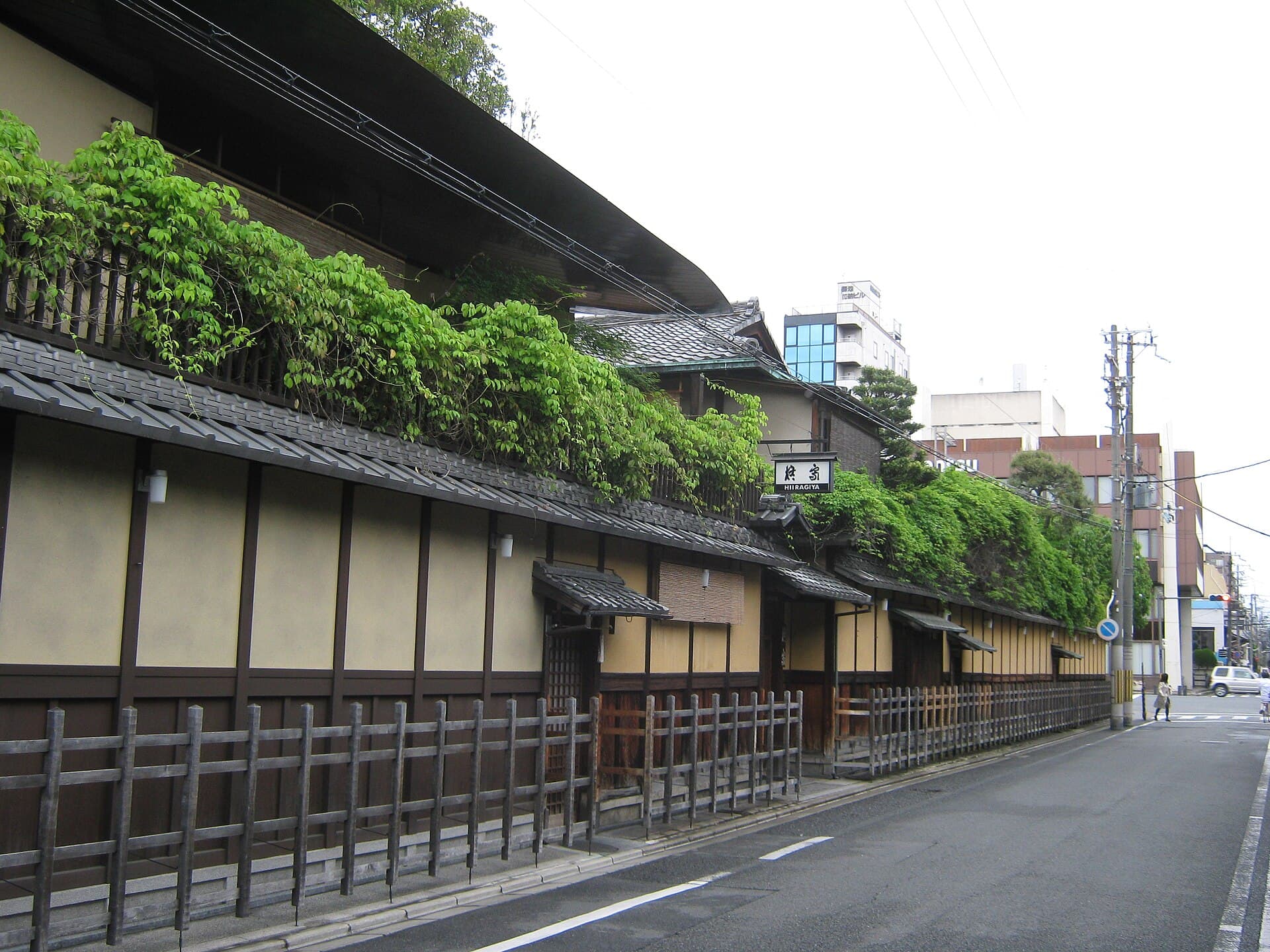
Hiiragiya
柊家
Kyoto's 1818 inn of writers and film stars — near-flawless service and kaiseki, koyamaki-wood baths, and no hot spring
- Historic Ryokan
- Destination Dining

Aizu-WakamatsuClassic
Higashiyama Onsen, Aizu-Wakamatsu, Fukushima — a wooden inn beside the Yukawa river, a minute from the Higashiyama Onsen bus stop
12 sources
Mukaitaki
会津東山温泉 向瀧
Japan's first registered-heritage inn: a former Aizu clan bath retreat with scalding free-flowing water, free private baths and carp dinners in your room — and a lot of stairs
- Historic Ryokan
Photo credits: Ryokan Ohashi's registered wooden wings on the Mitoku river, Misasa Onsen · Zai零細系統保護協会 / Public domain / Hiiragiya — the frontage on Anekoji-dori, Kyoto · Mariemon / CC BY 3.0 / Mukaitaki in the snow, Higashiyama Onsen, Aizu-Wakamatsu · Fumihiko Ueno / CC BY 3.0
Misasa Onsen Kiya Ryokan
Compare rates across trusted booking partners · Affiliate disclosure