A lone Meiji-era inn where the water bubbles up through the stones beneath you — one of Japan's great baths, if you can handle mixed bathing, no air conditioning and autumn stink bugs
Chojukan is the only inn at Hoshi Onsen, at the end of a mountain road in northern Gunma, and its reputation rests on one room: Hoshi-no-yu, an 1895 wooden bathhall where the hot spring rises straight up through the pebbles under you, never touching the air. Japanese guests score the baths higher than anything else — 4.75 on one major booking site and 4.71 across 518 reviews on another — and the 1875 main building, the bathhall and the 1940 annex are all registered cultural properties. Guests love the hearth kept burning all year, the sound of the river and being able to use the bath all night: as one put it, that is 'the privilege of staying'. Two things put people off. Hoshi-no-yu is mixed-gender, with women-only time from 20:00 to 22:00 and no swimwear or towels allowed; several women found it daunting, and recent reviews mention men staring and even walking in during women's hours. And these are old buildings: many rooms have only a fan, walls are thin, there are stairs and no lift, and autumn reviews count stink bugs by the dozen. Food is hearty mountain cooking — carp, ayu, deer, Joshu beef sukiyaki — and scores lowest, with complaints about dishes arriving all at once.
Room Selection Guide
What the guests who stayed here actually recommendRecommended
Annex (別館, 1940) river-view rooms
Ten rooms of 8 tatami plus a small entry room, each with its own toilet and a view over the Hoshi River. A summer 2025 guest in one loved it and wanted to come back in autumn or winter — but note it had only a fan, no air conditioning.
Main building (本館, 1875) — for the history
High ceilings and the sound of the river. Room 20 (10+6 tatami, sleeps six) is linked to the poet Yosano Akiko and Room 16 to the painter Higashiyama Kaii. A March 2025 guest in Room 18 (8 tatami, toilet, kotatsu) felt they had 'slipped back in time'.
Request To Avoid
Main-building Rooms 16 and 17, if you want your own toilet
The inn lists their toilets as outside the room. No room at Chojukan has its own bath, so everyone uses the shared baths.
Any older room in midsummer
Reviews from 2024 to 2026 repeat that there is no air conditioning — a fan is 'the lifeline', one blogger joked — and where there is a unit, one found it old and weak. If you have mobility issues, ask for Room 15 (main building) or Room 33 (Kunsanso), which the inn describes as having few steps; there is no lift.
Know which room you want?
Check live rates and availability for Hoshi Onsen Chojukan.
We may earn a commission if you book through these links, at no extra cost to you. Affiliate disclosure
Dining Deep Dive
Breakfast Consensus
4.0/5A Japanese breakfast in the dining hall, around 8:00; reviewers on one site rate it about 4.2 out of 5
Do Hoshi-no-yu late at night or at dawn, when guests have it largely to themselves — one blogger met only six people in 80 minutes. Day visitors come from 11:00 to 13:30 (not on Wednesdays).
Dinner Insights
3.8/5Served in a shared dining hall — one 2025 blogger counted about 30 tables, while a 2024 guest was glad of partitions between tables. Expect mountain cooking: turtle soup, carp sashimi (arai), salt-grilled ayu, deer sashimi, Akagi chicken and Joshu pork, with a Joshu beef sukiyaki upgrade for roughly ¥4,000 more per person. Guests praise its honest flavour, but food is the lowest-rated category (3.99 on one site): complaints include everything arriving 'almost at once', a forgotten dish, and — in January 2025 — squid served to a guest who had declared a squid allergy. State allergies clearly and check each dish.
Onsen & Wellness Realities
A calcium-sodium sulfate spring, about 42.7°C at source according to Japan's hot-spring association. In Hoshi-no-yu and Choju-no-yu the water wells up directly through the stones of the bath floor; Tamaki-no-yu uses a simple spring that one blogger reports is heated and partly recirculated.
Hoshi-no-yu is mixed-gender, with women only from 20:00 to 22:00. The changing rooms are separate and the hall is dim ('quite fine because it's dark', one woman wrote), but bathing garments and wrapped towels are not allowed, and there are no washing stations. Tamaki-no-yu, an all-cypress bath with an outdoor tub, is men-only from 20:00 to 7:00; Choju-no-yu is for men until 20:00 and women after. Recent reviews complain that women's time is short and crowded, and report men glancing, being rude or entering during women's hours — women may prefer to go in pairs or with a partner. All baths close 10:00–11:00 for cleaning.
Not addressed in any source we read. There are no private baths, so check with the inn before booking.
Local Warnings & Nuances
- 01
Getting there: town buses from Jomo-Kogen Station (Joetsu Shinkansen) via Sarugakyo run only twice in the morning and twice in the afternoon; otherwise take a taxi. There is no pickup. By car it is about 40 minutes from Tsukiyono IC.
- 02
Winter brings about a metre of snow; the inn asks drivers to carry chains or other anti-skid equipment.
- 03
Autumn stink bugs are a recurring complaint in October and November reviews — one guest dealt with more than 20.
- 04
Walls are thin and corridors cold in winter; there are no lockable safes in rooms, one blogger noted.
- 05
Prices in our sources: ¥29,450 for a solo weekday stay in October 2025, and ¥21,600 per person for two sharing an 8+4.5-tatami Horyuden room in one blogger's stay. Bookings open four months ahead.
Sources
The real blog posts and stay reports this article draws on
More Consensus Reports
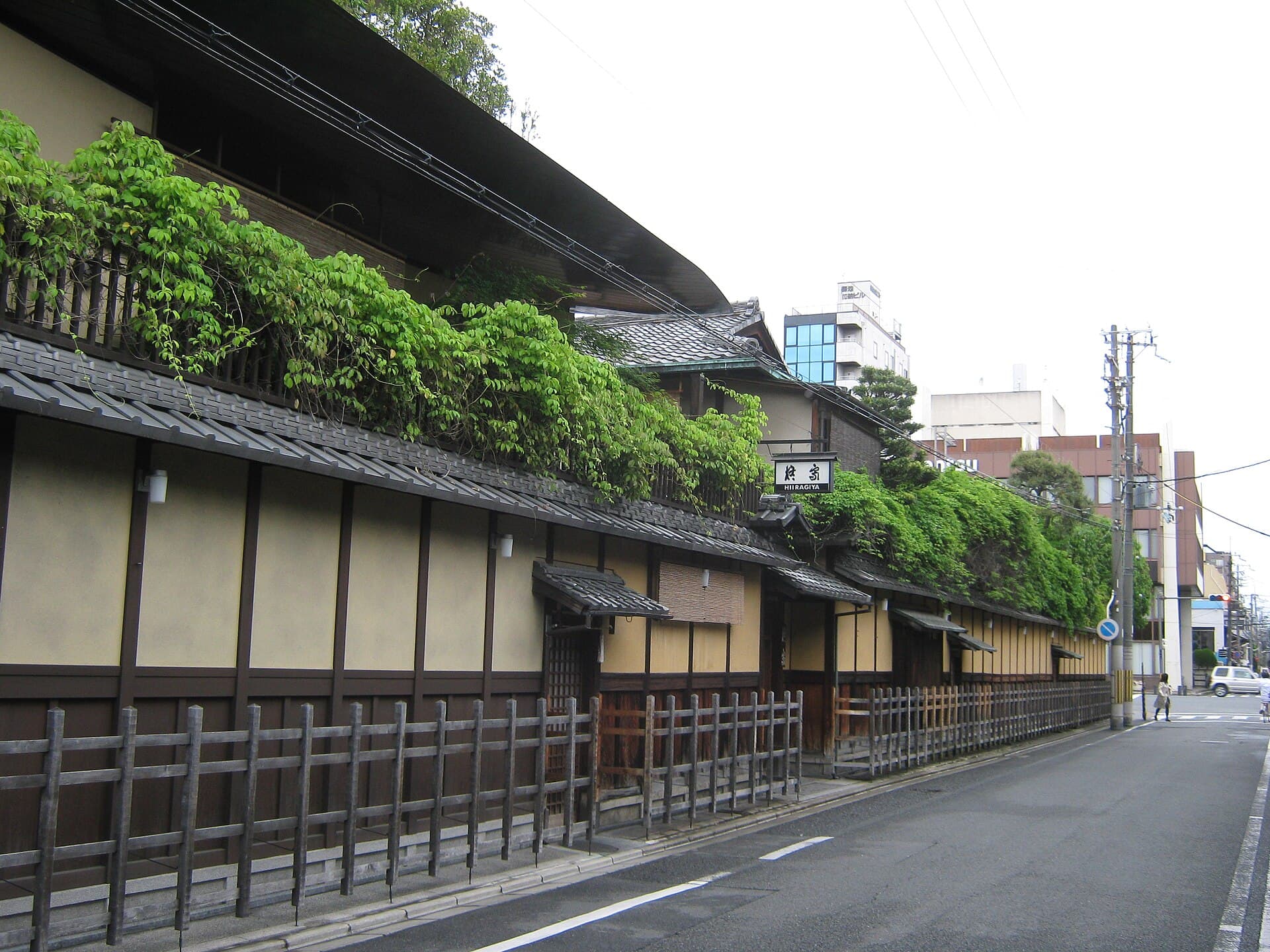
KyotoLuxury
Fuyacho-Anekoji, Nakagyo, Kyoto — in the city centre, a short walk from Kyoto City Hall
8 sources
Hiiragiya
柊家
Kyoto's 1818 inn of writers and film stars — near-flawless service and kaiseki, koyamaki-wood baths, and no hot spring
- Historic Ryokan
- Destination Dining

Aizu-WakamatsuClassic
Higashiyama Onsen, Aizu-Wakamatsu, Fukushima — a wooden inn beside the Yukawa river, a minute from the Higashiyama Onsen bus stop
9 sources
Mukaitaki
会津東山温泉 向瀧
Japan's first registered-heritage inn: a former Aizu clan bath retreat with scalding free-flowing water, free private baths and carp dinners in your room — and a lot of stairs
- Historic Ryokan

Kinosaki OnsenClassic
Yushima, Kinosaki, Toyooka, Hyogo — in the heart of the onsen town, two minutes from Goshonoyu
9 sources
Mikiya
城崎温泉 三木屋
Shiga Naoya's inn, rebuilt in wood in 1927 — some of Kinosaki's warmest service and two free private baths, though winter crab doesn't always live up to the price
- Historic Ryokan
Photo credits: Hiiragiya — the frontage on Anekoji-dori, Kyoto · Mariemon / CC BY 3.0 / Mukaitaki in the snow, Higashiyama Onsen, Aizu-Wakamatsu · Fumihiko Ueno / CC BY 3.0 / Mikiya — the wooden main building, Kinosaki · Ippukucho / CC BY 3.0
Hoshi Onsen Chojukan
Compare rates across trusted booking partners · Affiliate disclosure