Sumiyoshiya
野沢温泉 村のホテル 住吉屋
Area photo — not the ryokan itself · Oyu public bathhouse, Nozawa Onsen, Nagano · 小石川人晃 / CC BY-SA 4.0
An 1869 wooden inn beside Nozawa's boiling Ogama springs — stained-glass baths, near-perfect scores for its local cooking, and water so hot you'll need to go slowly
Sumiyoshiya was founded in 1869 next to the Ogama, the boiling springs where Nozawa villagers cook vegetables, and today takes only about ten groups a night across a wooden main building and a newer annex. Japanese guests rate it extraordinarily highly — 4.90 across 130 reviews on one major site, with a perfect 5.0 for dinner, and 4.91 for food and 4.93 for service on another. The cooking is the draw: seasonal kaiseki built around 'torimawashi-bachi' shared bowls of local dishes, beef grilled on a hoe, charcoal-grilled iwana and Nozawa rice, served in private dining rooms or an 1895 storehouse. The bathhouse, lit by stained glass introduced by a former okami, is fed by the inn's own 90°C springs, cooled by air rather than water — and it is hot: guests describe it as 'just hot', say the rule is ten scoops of water over yourself first, and one found the outdoor bath 'abnormally hot' on a day the temperature control failed. The criticisms: stairs and long corridors that are hard on older guests (no lift, all rooms upstairs), a small bath with few showers, a cramped car park, dinner service that can run two hours, and prices that have climbed with overseas demand — from about ¥22,000 per person in 2023 to over ¥30,000 in 2025–26.
Room Selection Guide
What the guests who stayed here actually recommendRecommended
Main-building tatami rooms (e.g. Momiji, Myoko, Yunoka)
The wooden main building holds the character: Momiji (41㎡) has two rooms, a sunroom and a kotatsu; Myoko (34㎡) has a coffered ceiling and is the least altered room; Yunoka (35㎡) overlooks the Ogama. Every room has a washlet toilet, fridge and TV, with a kotatsu and humidifier in winter.
Ajisai or Hakuro, for easier access
Japanese-Western rooms with beds (42–43㎡) that the inn recommends for guests with limited mobility — though there is still no lift and every room is on the second floor or above.
Request To Avoid
Yubae and Wakana, if you want onsen in the room
These 47㎡ rooms have a sawara-wood bath, but it's heated tap water, not hot-spring water. The shared baths and the private bath are the onsen.
Several rooms, if travelling with children
Children under junior-high age aren't accepted in Togakushi, Myoko, Hakuro, Asagiri, Sawarabi or Yubae, and children pay the full adult rate. There's no children's menu.
Know which room you want?
Check live rates and availability for Sumiyoshiya.
We may earn a commission if you book through these links, at no extra cost to you. Affiliate disclosure
Dining Deep Dive
Breakfast Consensus
4.6/5A Japanese breakfast with more torimawashi-bachi dishes and an egg cooked in the Ogama spring — rated 4.88 on one major site
Book the private stone-and-wood bath (¥4,000 an hour, fed by a different spring) — guests who book direct can reserve it in advance. And collect a free pickup from the Nozawa Onsen bus stop by phoning the day before.
Dinner Insights
4.8/5Seasonal kaiseki at 18:00 or 18:30 in a private dining room or the 1895 storehouse, built around torimawashi-bachi — eight small shared bowls of local specialities rotated between dinner and breakfast — plus dishes such as Shinshu salmon with seared scallop, Shinshu beef or local chicken grilled on a hoe, charcoal-grilled iwana, Nozawa rice and nozawana pickles. Reviewers give it a perfect score on one site. The small complaints: portions are large, one guest wanted fruit for dessert, and one 2025 dinner took two hours. Some allergies can't be accommodated, and in winter the inn may offer room-only stays.
Onsen & Wellness Realities
The inn's own two self-flowing sources (the inn says 90°C; an owner reply says about 82°C at the outlet), a weakly alkaline sodium-calcium sulphate spring, cooled by air rather than added water and drained daily.
One large bath with an outdoor tub and one small bath, both lit by stained glass, swapping between men and women around 18:30; open all day except 10:00–14:00. The water is very hot — pour ten scoops over yourself first, guests are told — the outdoor tub is small, and there are only about three washing stations. In winter one guest found the indoor bath cold from ventilation, and another was nearly scalded by steam from a drain. A new stone-and-wood private bath (¥4,000 per hour) opened in 2024. Guests also recommend Nozawa's free public soto-yu baths.
No policy stated on the official site or Japanese booking sites. The private bath avoids sharing — contact the inn.
Local Warnings & Nuances
- 01
Getting there: from JR Iiyama Station take the Nozawa Onsen Liner bus (25 minutes) to the terminus and walk 5 minutes, or book the free pickup from the bus stop. A taxi costs about ¥6,500 (¥8,000 in winter). Car sat-navs often give wrong routes — follow the inn's route map — and cars can't move in the village 21:00–8:30.
- 02
Winter: studless tyres from mid-November to late March, parking only from noon in busy periods, and the English site has offered ski-season stays only as prepaid packages of three nights or more.
- 03
Check-in from 13:00 (the English site says noon), check-out 11:00; you can still use the baths on check-out day.
- 04
Stairs and long corridors are a recurring complaint from older guests; the car park is narrow and needs staff guidance.
- 05
Prices on one Japanese booking site have risen from about ¥22,000–24,000 per person with two meals in 2023 to over ¥30,000 in 2025–26.
Sources
The real blog posts and stay reports this article draws on
- 「野沢温泉 村のホテル 住吉屋」泊 お料理が美味しくステンドグラスが特徴的な木造旅館の宿泊記。 (しろいるか旅行記)
- 村のホテル 住吉屋【長野県 野沢温泉】~郷土の味と素材が活かされた美食の宿~ (いい温泉宿、おいしい料理宿)
- さらっと野沢温泉 | 村のホテル住吉屋 (4travel.jp)
- 野沢温泉・住吉屋で2連泊し、お酒で水分補給しながら外湯を全制覇するの巻 (4travel.jp)
- 29歳。友ふたり温泉旅。野沢温泉にて。 (Go NAGANO, 長野県公式観光サイト — 依頼記事)
- 村のホテル 住吉屋 クチコミ (一休.com)
- 村のホテル 住吉屋 クチコミ・感想 (楽天トラベル)
- 村のホテル 住吉屋 クチコミ (じゃらんnet)
- 野沢温泉 村のホテル 住吉屋 (公式サイト)
More Consensus Reports
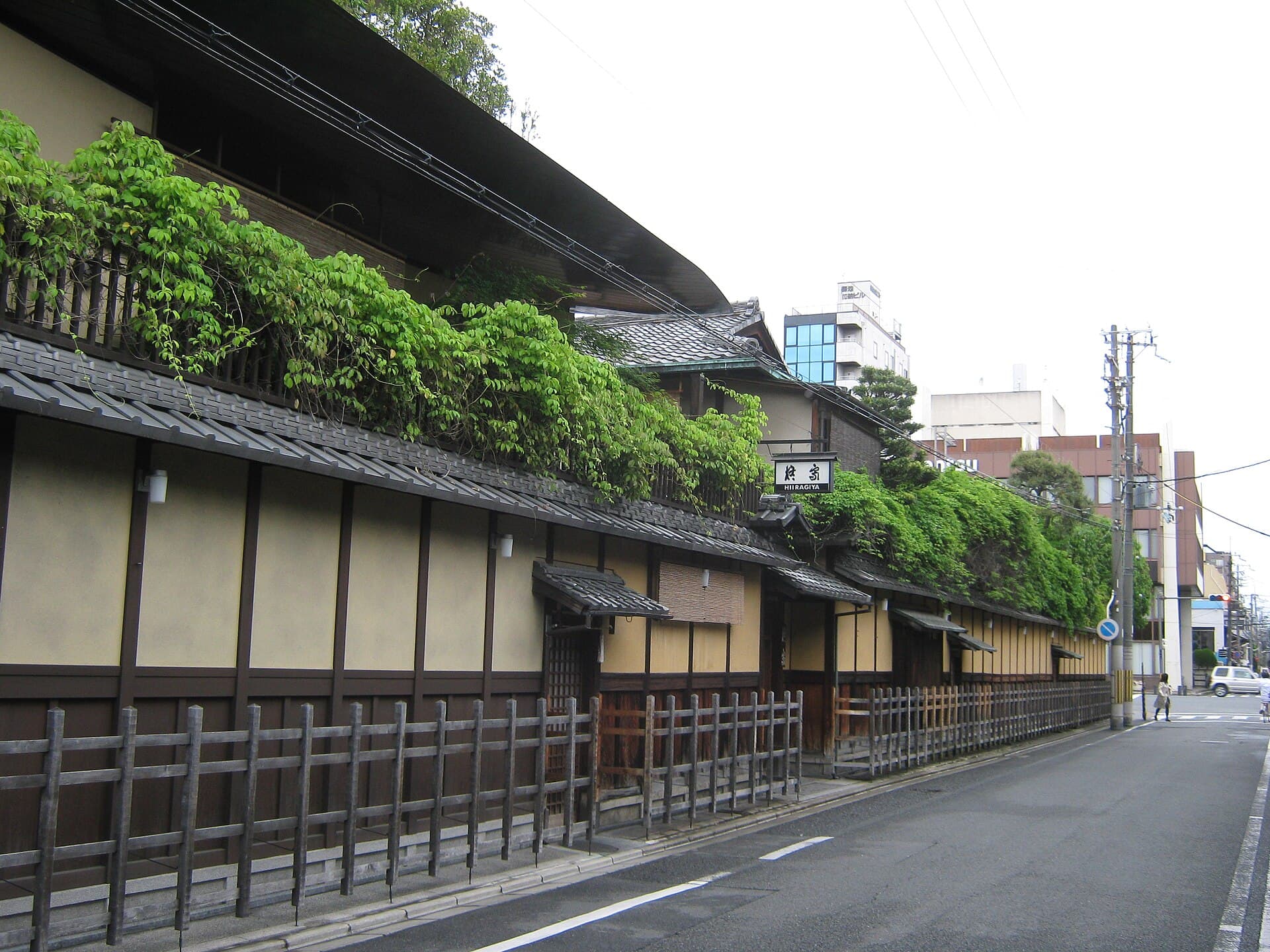
KyotoLuxury
Fuyacho-Anekoji, Nakagyo, Kyoto — in the city centre, a short walk from Kyoto City Hall
8 sources
Hiiragiya
柊家
Kyoto's 1818 inn of writers and film stars — near-flawless service and kaiseki, koyamaki-wood baths, and no hot spring
- Historic Ryokan
- Destination Dining

Aizu-WakamatsuClassic
Higashiyama Onsen, Aizu-Wakamatsu, Fukushima — a wooden inn beside the Yukawa river, a minute from the Higashiyama Onsen bus stop
9 sources
Mukaitaki
会津東山温泉 向瀧
Japan's first registered-heritage inn: a former Aizu clan bath retreat with scalding free-flowing water, free private baths and carp dinners in your room — and a lot of stairs
- Historic Ryokan

Kinosaki OnsenClassic
Yushima, Kinosaki, Toyooka, Hyogo — in the heart of the onsen town, two minutes from Goshonoyu
9 sources
Mikiya
城崎温泉 三木屋
Shiga Naoya's inn, rebuilt in wood in 1927 — some of Kinosaki's warmest service and two free private baths, though winter crab doesn't always live up to the price
- Historic Ryokan
Photo credits: Hiiragiya — the frontage on Anekoji-dori, Kyoto · Mariemon / CC BY 3.0 / Mukaitaki in the snow, Higashiyama Onsen, Aizu-Wakamatsu · Fumihiko Ueno / CC BY 3.0 / Mikiya — the wooden main building, Kinosaki · Ippukucho / CC BY 3.0
Sumiyoshiya
Compare rates across trusted booking partners · Affiliate disclosure