Caught a cold or feeling sick in Japan? Where to buy medicine and how to find a doctor
Sore throat, fever or a cold on your Japan trip? Why you need a drugstore rather than a konbini, how Japan's first-, second- and third-class over-the-counter medicines and the pharmacist counter work, the limits on bringing your own medicine, how to find a clinic that speaks your language, the Japan Visitor Hotline, travel insurance you can buy after arrival, and what to ask your ryokan.
Updated Nov 7, 2026
Catching a cold on holiday is miserable, and being unsure where to buy medicine in a foreign country makes it worse. In Japan the answer is usually a drugstore (ドラッグストア) or a pharmacy (薬局), not a convenience store: very few konbini are licensed to sell medicine. Below we explain where to go today, how Japan sorts over-the-counter medicines into classes and who at the counter can help you, what you may bring from home, and how to find a doctor and get help by phone in English, Chinese or Korean. This guide doesn't give medical advice or recommend any medicine; for that, ask a pharmacist or a doctor.
Some things you might want while you rest aren't medicines at all: masks, a thermometer, cooling gel sheets, throat sweets, an oral rehydration drink. Konbini carry some of these, and Amazon.co.jp or Rakuten can send the rest to your inn or to a konbini near it; for how that works, see our guide to delivery to your ryokan. We also cover the ryokan side: telling the front desk, resting, keeping the room warm and moist, and when to skip the onsen. Rules and phone services can change, so check the linked official pages before you rely on them.
Feeling unwell today? Head to a drugstore or pharmacy, not a konbini
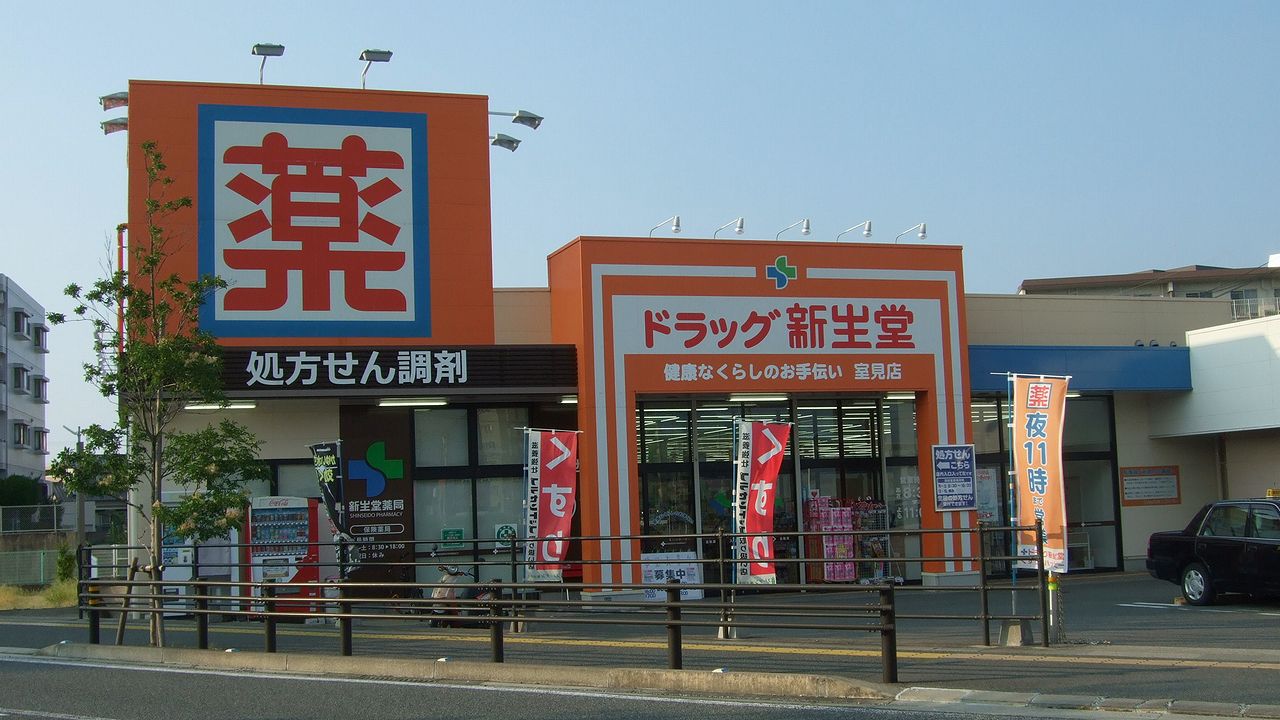
Over-the-counter (OTC) medicine in Japan is sold by pharmacies (薬局, yakkyoku) and by drugstores licensed to sell it, and a pharmacist (薬剤師) or a registered seller (登録販売者, tōroku hanbaisha) handles the sale. Japan's national tourism organisation (JNTO) points visitors who don't need a doctor to a nearby pharmacy or drugstore, suggests consulting the pharmacist or registered sales clerk if necessary, and warns that some types of medicine can't be bought when the pharmacist isn't there.
Don't count on a convenience store. In a March 2022 submission to the government's regulatory reform council, Lawson said that only 400 of Japan's 57,323 konbini (0.7%, as of the end of February 2022) sold medicine. The same submission found that only a small share of the big drugstore chains' branches in Tokyo were open 24 hours, and none of the branches it counted in Tottori and Kumamoto prefectures, so late at night your options are limited; see the section on finding a doctor below for the phone lines that run around the clock.
JNTO's guide for when you feel ill also links to an English-language search of OTC medicines sold in Japan, searchable by name, affected body part or purpose, which can help you show the staff what you are looking for.
Masks, a thermometer and drinks: what a konbini can do

A konbini is still useful for the non-medicine basics. FamilyMart's own daily-goods range, for example, lists non-woven masks (不織布マスク) at 30 for ¥598 including tax, alongside plasters and towels. FamilyMart notes that prices can vary by region and that not every store carries every item.
Konbini are also the easiest place to pick up drinks, soft food and tissues at any hour. If you need a thermometer (体温計, taionkei), cooling gel sheets (冷却シート) or a humidifying mask, a drugstore has a wider choice, or you can order them online (see below).
Search in Japanese shops
- Disposable masksAmazon.co.jpRakuten
- ThermometersAmazon.co.jpRakuten
- Oral rehydration drinksAmazon.co.jpRakuten
Rakuten links are affiliate links: we may earn a commission at no extra cost to you. As an Amazon Associate, OKU earns from qualifying purchases.
How Japanese OTC medicine works: first, second and third class
Every OTC medicine in Japan carries its risk class on the outer package, and the class decides who may sell it and how. Fukuoka City's public health centre summarises the system. Medicines requiring guidance (要指導医薬品) are sold only face to face by a pharmacist. First-class medicines (第1類医薬品) are those with a particularly high risk; only a pharmacist may sell them, the pharmacist must explain them to you, and they are kept behind the counter or in a locked case where you can't pick them up yourself.
Second-class medicines (第2類医薬品) carry a relatively high risk and are sold by a pharmacist or registered seller, who should try to give you information; Fukuoka City's table lists most cold medicines and fever and pain relievers as examples. Designated second-class items (指定第2類医薬品), which need particular care, must be displayed within 7 m of the counter where staff give advice. Third-class medicines (第3類医薬品) carry a relatively low risk. Whatever the class, the pharmacist or registered seller must answer if you ask them a question.
In practice: tell the staff your symptoms, any medicine you already take and any allergies, and ask which product suits you. A useful question is 薬剤師さんはいますか? (yakuzaishi-san wa imasu ka? Is there a pharmacist here?). Read the leaflet in the box, and ask the staff if you can't read it. Japanese law also allows OTC medicine to be sold online under the same rules, with a pharmacist or registered seller answering by email first, but delivery takes time; this guide links only to non-medicine items.
Bringing your own medicine into Japan
Japan's Ministry of Health, Labour and Welfare (MHLW) lets you bring medicine for your own use without paperwork up to these amounts: prescription drugs (and poisons or powerful drugs), up to a one-month supply; medicines for external use, up to 24 of each item; injectable drugs with their syringes (only pre-filled syringes or self-injection kits), up to a one-month supply; and other medicines and quasi-drugs, up to a two-month supply. Disposable contact lenses are allowed up to a two-month supply, and one set of a household medical device.
For more than that, you must apply for an Import Confirmation (輸入確認証, formerly called Yakkan Shoumei), receive it before you leave home and show it at customs on arrival; MHLW says some applications can now be made online. Narcotics such as morphine and fentanyl, and stimulants' raw materials such as lisdexamfetamine, are prohibited unless a patient has a prescription and has received permission from the director of a Regional Bureau of Health and Welfare before entering Japan. Prohibited and controlled drugs can't be brought in at all. MHLW also restricts products sold abroad with claims to boost brain function or other mental effects that contain certain designated ingredients.
Rules can change, so check MHLW's page and its Q&A before you fly; it lists the regional bureaus to contact. Bringing what you normally use also means you don't have to search for an equivalent in a Japanese drugstore.
Search in Japanese shops
- Pill organisersAmazon.co.jpRakuten
- Medicine pouchesAmazon.co.jpRakuten
Rakuten links are affiliate links: we may earn a commission at no extra cost to you. As an Amazon Associate, OKU earns from qualifying purchases.
Need a doctor? Finding a clinic, phone help, costs and travel insurance
JNTO's guide for when you feel ill lets you search medical institutions by prefecture, language and department, and suggests contacting the clinic before you go, since services and languages vary and treatment can't always be provided. Its symptom table sends fever, sore throat, cough and runny nose to internal medicine (内科, naika), ear, nose and throat problems to otorhinolaryngology (耳鼻咽喉科, jibi-inkōka) and children's illnesses to paediatrics (小児科, shōnika). JNTO says to visit a clinic or general hospital during regular hours, or the after-hours reception, which varies by region, if you need a doctor.
For phone help, JNTO's Japan Visitor Hotline (050-3816-2787, or +81-50-3816-2787 from overseas) runs 24 hours a day, 365 days a year in English, Chinese and Korean and covers emergencies such as illness, including introductions to medical institutions where you can consult in a foreign language. In Tokyo, the Tokyo Metropolitan Government's HIMAWARI service (03-5285-8181, every day 9:00–20:00) answers in English, Chinese, Korean, Thai and Spanish about which medical institutions can help in your language, what treatment might cost without Japanese insurance and how the medical system works. The service is free, but you pay for the call. In an emergency, call 119 for an ambulance; JNTO suggests showing 救急車を呼んでください (Please call an ambulance) to someone nearby.
At the clinic, JNTO says to ask reception for a rough estimate of the cost, fill in the medical sheet, see the doctor and pay. Only major hospitals take credit cards; clinics generally accept cash only. If you get a prescription, you take it to a pharmacy and pay for the medicine separately, though some clinics hand out medicine themselves.
Without insurance you may be charged the full cost. JNTO notes that some travel insurance can be bought online even after you have entered Japan, with cover of up to ¥10 million, interpretation, help arranging a medical institution and cash-free payment, where the bill goes to the insurer instead of you; conditions vary by insurer. JNTO cites cases in which surgery, a hospital stay and the flight home cost ¥7.5 million and ¥10 million, and warns that visitors who don't pay their medical bills may be refused entry to Japan in the future.
At the ryokan: tell the front desk, rest, keep warm and skip the onsen with a fever
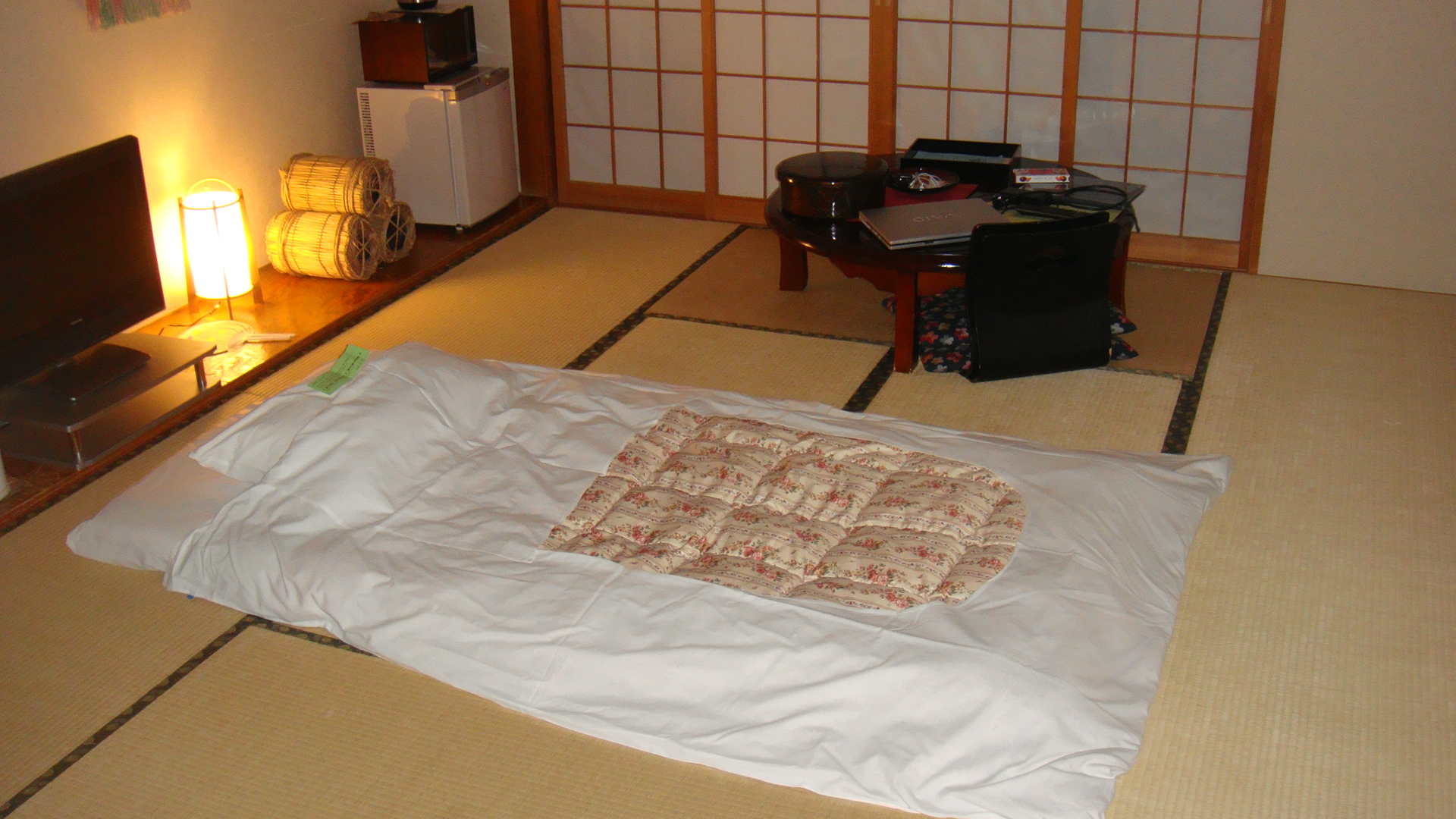
If you feel ill at an inn, tell the front desk early and ask for help finding a clinic or calling ahead. At Ikaho's Omori, an April 2026 family praised staff for finding a paediatric clinic when a child fell ill, and at Takayama's Hiranoya Kofukan a May 2026 guest said the room's reclining beds let an unwell friend rest properly. Some plans allow for illness: Gero's Ogawaya offers a baby plan with no cancellation fee if the baby falls ill. Ask about your own booking's cancellation terms.
If the room feels dry, ask about a humidifier. Some inns provide them: Nozawa Onsen's Sumiyoshiya puts a kotatsu and a humidifier in every room in winter, and the single rooms at Iwaki's Iwaso come with a humidifier. If yours has none, a humidifying mask is one option. Remote inns can be far from any shop: at Gōra's Hanaougi, for instance, there are no vending machines nearby, while Awara's Mimatsu is near shops and a drugstore. Buy what you need before you arrive.
Go easy on the onsen. The bathing notes that Japan's Environment Ministry set for hot-spring facilities (as reproduced by the Hokkaido Government) list the active phase of an illness, especially when you have a fever, among the general reasons not to bathe. They also say to rest when you are very tired, to drink a glass of water before and after bathing, to get out slowly and lie down if you feel dizzy or unwell, and to keep warm and rest for about 30 minutes afterwards.
Search in Japanese shops
- Humidifying masksAmazon.co.jpRakuten
- Cooling gel sheetsAmazon.co.jpRakuten
- Throat sweetsAmazon.co.jpRakuten
- Disposable heat packsAmazon.co.jpRakuten
Rakuten links are affiliate links: we may earn a commission at no extra cost to you. As an Amazon Associate, OKU earns from qualifying purchases.
 Area photo
Ikaho OnsenClassic
Ikaho Onsen, Shibukawa, Gunma — high on the hill in front of the Ikaho Ropeway station and the Ikaho Onsen bus terminus, a 5-minute walk from the middle of the Ishidan stone steps
9 sources
Ikaho Onsen Nagomigokoro no Yado Omori
伊香保温泉 和心の宿 大森
A family-run, barefoot-on-tatami inn with two rooftop open-air baths 800 m up and Akagi-beef kaiseki, right by the bus terminus — but the water is the clear, recirculated Shirogane spring, you wash downstairs, and budget rooms have no bath
- Historic Ryokan
 Area photo
TakayamaClassic
Hon-machi, Takayama, Gifu — at the foot of the red Nakabashi bridge on the Miyagawa river, across the road from its sister inn Kachoan; a minute's walk from Takayama Jinya and the Jinya morning market, three minutes from the old merchant streets and about 10 minutes' walk (or a free three-minute pickup) from JR Takayama Station
10 sources
Honjin Hiranoya Kofukan
飛騨高山 本陣平野屋 光風館
Kachoan's larger, cheaper sister by the red Nakabashi bridge: a taiko drum to greet you, names remembered and Hida-beef kaiseki in private dining rooms — but the rooms are plain, none of the in-room baths is described as onsen, and women get no open-air bath
Read the Consensus Area photo
Gero OnsenClassic
Gero Onsen, Gifu — a 120-room inn on the Hida river in the middle of the hot-spring town, about seven minutes' walk from JR Gero Station
11 sources
Gero Onsen Ogawaya
下呂温泉 小川屋
Gero's big bath-hopping inn: a 100-tatami 'tatami bath', five shared baths, nine private ones and a menu of Hida-beef dinners in the middle of town — but it's a 120-room maze, the private baths cost extra, and 2026 reviews complain of queues and uneven service
Read the Consensus Area photo
Nozawa OnsenClassic
Nozawa Onsen, Nagano — beside the Ogama hot-spring cauldrons, a couple of minutes' walk from the Yu-road to the ski slopes
12 sources
Sumiyoshiya
野沢温泉 村のホテル 住吉屋
An 1869 wooden inn beside Nozawa's boiling Ogama springs — stained-glass baths, near-perfect scores for its local cooking, and water so hot you'll need to go slowly
- Historic Ryokan
- Destination Dining
 Area photo
Iwaki YumotoValue
Iwaki-Yumoto Onsen, Iwaki, Fukushima — on a quiet side street of the hot-spring town, a 6-minute walk from JR Yumoto Station on the Jōban Line (about 2 hours 10 minutes from Ueno by limited express) and about 10 minutes' drive from Spa Resort Hawaiians
10 sources
Iwaki Yumoto Onsen Iwaso
いわき湯本温泉 心やわらぐ宿 岩惣
A former kappō inn in Iwaki-Yumoto reborn as a bargain onsen stay: a top-floor, free-flowing sulphur bath open all night and the okami's homemade-jam breakfast — but there's no dinner, no private bath, and it's an old building with dark corridors at night
- Easy From Tokyo
 Area photo
HakonePremium
Gora, Hakone, Kanagawa — high on the slope by Sōunzan cable-car station, with the inn's own inclined lift and a call-on-arrival car from Gora Station
9 sources
Gora Hanaougi
強羅花扇
Twenty compact rooms, each with an open-air bath of the inn's own reddish spring, tatami corridors you walk barefoot, staff who remember your name — and one of the few Hakone ryokan that openly welcomes tattoos
- Private Onsen Rooms
- Tattoo-Friendly
Order online: humidifier, thermometer and comfort items to your inn
If you have a few days left, Amazon.co.jp and Rakuten can send non-medicine items such as a compact humidifier, a thermometer or a neck warmer to your inn or a konbini nearby. Check the delivery date at checkout before you order; our guide to delivery to your ryokan explains how it works for visitors.
Ask the ryokan before you send anything. Yamato Transport says it delivers to a hotel or ryokan if the accommodation is willing to accept the parcel, asks that it be sent at least two days before check-in (three, depending on distance), and notes that some inns restrict where and when you can collect parcels. If you're ill and staying deep in the mountains, buying in town on the way is often quicker.
Search in Japanese shops
- Compact humidifiersAmazon.co.jpRakuten
- Neck warmersAmazon.co.jpRakuten
- Soft tissuesAmazon.co.jpRakuten
Rakuten links are affiliate links: we may earn a commission at no extra cost to you. As an Amazon Associate, OKU earns from qualifying purchases.
We may earn a commission if you book through these links, at no extra cost to you. Affiliate disclosure
Sources
- JNTO: For safe travels in Japan — Guide for when you are feeling ill (medical institution search, travel insurance, emergency contacts)
- JNTO: Japan Visitor Hotline
- 厚生労働省 (MHLW): Information for those who are bringing medicines for personal use into Japan
- 福岡市保健所: 医薬品販売制度に関する情報ページ (一般用医薬品の分類と情報提供)
- 内閣府 規制改革推進会議 医療・介護WG (2022年3月15日): 株式会社ローソン「一般用医薬品の規制緩和について」
- 内閣府 規制改革推進会議 医療・介護WG (2022年3月15日): 株式会社ローソン 参考資料 (営業時間の比較)
- ファミリーマート 商品情報: 日用品
- 東京都保健医療局: Medical information service for foreign patients (HIMAWARI)
- 北海道: 温泉入浴施設において安全に入浴するための注意事項 (環境省 掲示基準より抜粋)
- Yamato Transport FAQ: Can I send parcels to a hotel or ryokan?
Photo credits
- Shinseido drugstore and pharmacy, Muromi (Sawara Ward, Fukuoka) · Muyo / CC BY-SA 4.0
- A 7-Eleven convenience store in central Kyoto · Japanexperterna / CC BY-SA 3.0
- Nukumori-no Yado Furukawa, Jozankei Onsen (Sapporo, Hokkaido) · David McKelvey / CC BY 2.0
- The Ishidan stone steps, Ikaho Onsen, Gunma · Abasaa / Public domain
- Sanmachi Suji old town, Takayama, Gifu · Ankur P from Pune, India / CC BY 2.0
- Gero Onsen and the Hida River, Gifu · Asturio Cantabrio / CC BY-SA 4.0
- Oyu public bathhouse, Nozawa Onsen, Nagano · 小石川人晃 / CC BY-SA 4.0
- Iwaki Yumoto Onsen, Iwaki, Fukushima · Altomarina / CC BY-SA 3.0
- Gōra Park, Hakone · Daderot / CC0