Ryokan Ohnuma
旅館大沼
An outdoor bath at Ryokan Onuma, Naruko Onsen · Jpatokal / CC BY-SA 3.0
Eight free-flowing baths of two baking-soda springs, four of them free private baths you just lock, a hillside garden bath and famous house natto — a modern tōji inn at old-fashioned prices, with stairs and shared toilets
Ohnuma has been a tōji (hot-spring cure) inn at Higashi-Naruko for over a century and is now run by the fifth-generation yumori, Ōnuma Shinji; it belongs to the Japan Association of Secluded Hot Spring Inns. Its draw is variety: two sodium bicarbonate ('baking soda') springs — its own pale, woody Ōnuma-no-yu and a clear, salty shared source — run through eight baths, all free-flowing with no added water or heating. There's a large mixed bath under a mural of celestial maidens, a women-only bath, four private baths (including a clothed hot-spring ondol and a one-person tub for guests who need help) that are free and need no booking, and the paid Mori-no-yu garden bath on the hill behind the inn. Japanese guests rate it 4.7 across 383 reviews on one major site, with service at 4.8, and 4.59 across 621 on another. They praise the staff (an elderly okami in kimono sees guests off), the skin-softening water, the moving between baths, and a breakfast of house-made natto from local soybeans and hot-spring tofu. The catches: 20 rooms in two old buildings with no lift, many rooms sharing toilets, thin walls in places, private baths on the fourth floor that may be taken when you've climbed there, bath temperatures that vary, and dinners too big for some. Two-meal stays run about ¥10,700–19,600 per person; self-catering tōji stays are cheaper still.
Room Selection Guide
What the guests who stayed here actually recommendRecommended
Main-building rooms renovated in February 2023 (new Japanese rooms, Tsukushi, rooms with toilet)
Local wood and plaster walls, their own toilet and sink, and 2023 soundproofing — 'smelling of wood' and clean, 2025–2026 reviewers wrote. Ask for a room near the ground-floor baths if stairs are hard. The one suite, Asunaro, has Simmons beds but one 2023 couple heard machinery and bath voices behind the bed.
Tōji-kan room 401 — the fourth-floor corner
Renovated in 2023 and on the same floor as the free private baths In-no-yu and Yō-no-yu, with a view of the Rikuu East line trains from the baths. Stairs only. Self-catering guests use the Tōji-kan's shared kitchens and free washing machine.
Request To Avoid
Shared-toilet Japanese rooms, if you want hotel comforts
The cheapest rooms have no toilet or sink; one 2026 guest noticed an old smell on entering, and a 2022 blogger heard neighbours through thin walls (before the 2023 soundproofing). With no lift, guests with bad knees found the climbs to the upper-floor baths a strain — and only discovered the private bath was taken once they got there.
Know which room you want?
Check live rates and availability for Ryokan Ohnuma.
We may earn a commission if you book through these links, at no extra cost to you. Affiliate disclosure
Dining Deep Dive
Breakfast Consensus
4.5/5House-made natto from a local soybean and tofu simmered in hot-spring water — praised again and again, with good Naruko rice
Book Mori-no-yu, the hillside garden bath (30 minutes, ¥1,650 per person, guests only), as soon as you arrive — it fills on busy weekends. The indoor private baths need no booking: just lock the door. Check the women-only time in the mixed bath on arrival (blogs reported 19:30–21:00).
Dinner Insights
4.3/5Served at tables in the dining room (in your room for ¥1,000 extra): courses from a light one-soup-five-dish menu for longer stays up to nine dishes with Sendai beef and marbled beef tongue, always with Naruko rice, farmhouse miso and a daily medicinal hotpot. Guests call the big courses too much to finish and even the light one filling. Complaints: poorly cooked rice and brown rice (2025–2026), an unmemorable dinner (2023), and a loud dining room when groups are in. Halal and vegan meals aren't offered.
Onsen & Wellness Realities
Two sodium bicarbonate springs: the inn's own pure-bicarbonate Ōnuma-no-yu (pH 7.0, pale tea colour, woody scent, high in metasilicic acid) and the shared Karatake-no-yu with added salt (pH 7.4). All baths are free-flowing, with no added water, heating or chlorine.
Eight baths: the large mixed Yakushi Sennin-buro (with a women-only time slot), the women-only Tennyo-buro, a Taishō-era stone courtyard foot bath (closed in winter), four free private baths — In-no-yu and Yō-no-yu on the fourth floor, the one-person Akari-no-yu and the clothed Fukashi-buro steam ondol — and the paid hillside Mori-no-yu. Indoor baths are open around the clock except for cleaning. Guests say temperatures vary (some lukewarm, the big bath almost too hot) and fourth-floor changing rooms are cold in winter. Mori-no-yu closed in late 2025 over bears and reopened by mid-December.
No policy found on the official site or Japanese booking sites — contact the inn. The free private baths avoid sharing.
Local Warnings & Nuances
- 01
Getting there: Tōhoku Shinkansen to Furukawa, then the JR Rikuu East line to Naruko-Gotenyu Station and a 5-minute walk (pickup available); about 30 minutes by car from Furukawa IC. Free parking for 15 cars, though it's hard to find.
- 02
Check-in 14:00, check-out 10:00. Bath tax ¥150 and Miyagi's lodging tax ¥300 per adult.
- 03
No lift; two buildings joined on the second floor.
- 04
No day-trip bathing. Rooms have no baths of their own.
- 05
Self-catering tōji stays (booked by phone) start around ¥6,600–11,000 per person per night, with shared kitchens and a ¥550 rice-and-miso set.
Sources
The real blog posts and stay reports this article draws on
More Consensus Reports
KyotoLuxury
Fuyacho-Anekoji, Nakagyo, Kyoto — in the city centre, a short walk from Kyoto City Hall
8 sources
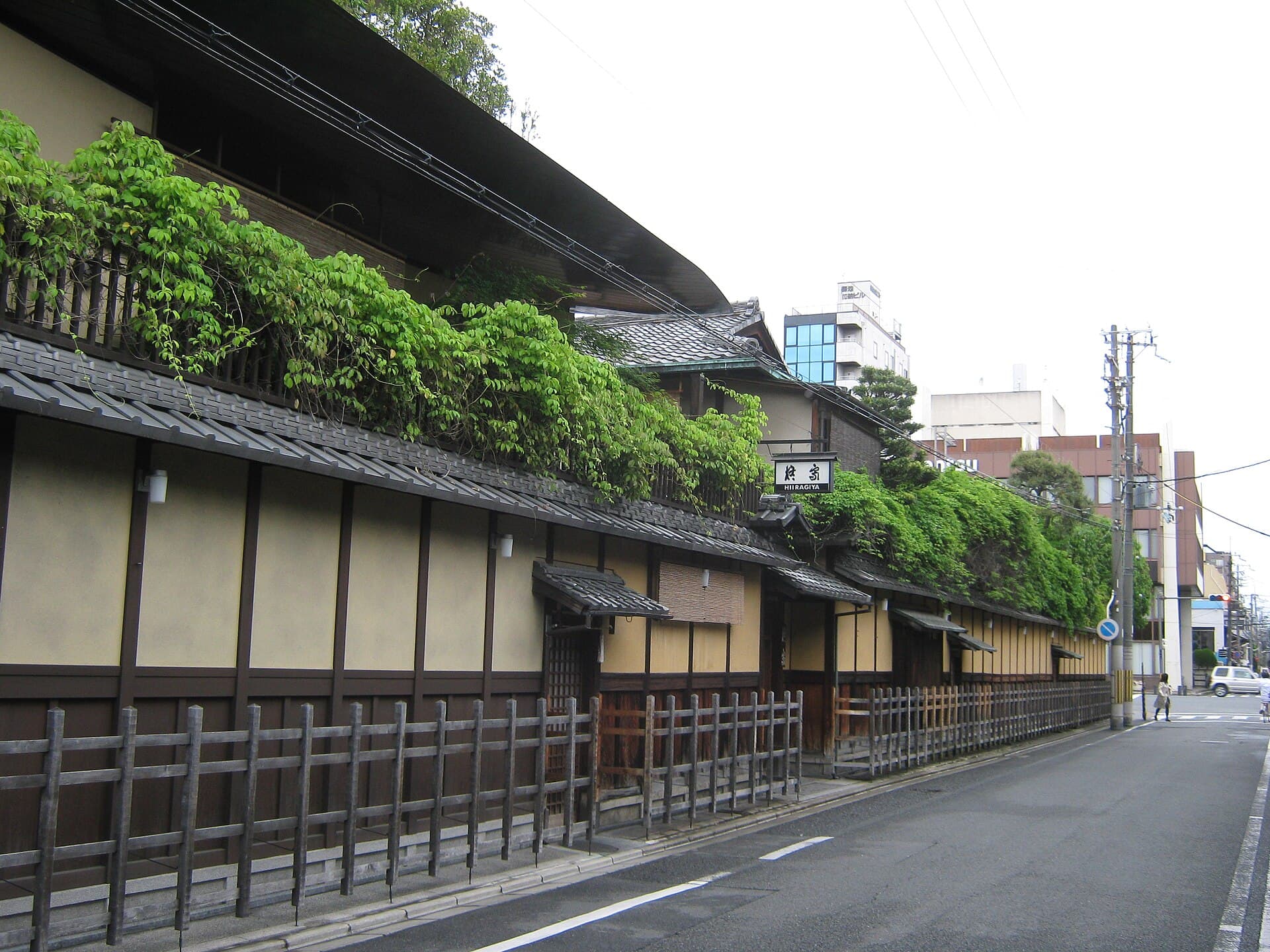
Hiiragiya
柊家
Kyoto's 1818 inn of writers and film stars — near-flawless service and kaiseki, koyamaki-wood baths, and no hot spring
- Historic Ryokan
- Destination Dining

Aizu-WakamatsuClassic
Higashiyama Onsen, Aizu-Wakamatsu, Fukushima — a wooden inn beside the Yukawa river, a minute from the Higashiyama Onsen bus stop
9 sources
Mukaitaki
会津東山温泉 向瀧
Japan's first registered-heritage inn: a former Aizu clan bath retreat with scalding free-flowing water, free private baths and carp dinners in your room — and a lot of stairs
- Historic Ryokan

Kinosaki OnsenClassic
Yushima, Kinosaki, Toyooka, Hyogo — in the heart of the onsen town, two minutes from Goshonoyu
9 sources
Mikiya
城崎温泉 三木屋
Shiga Naoya's inn, rebuilt in wood in 1927 — some of Kinosaki's warmest service and two free private baths, though winter crab doesn't always live up to the price
- Historic Ryokan
Photo credits: Hiiragiya — the frontage on Anekoji-dori, Kyoto · Mariemon / CC BY 3.0 / Mukaitaki in the snow, Higashiyama Onsen, Aizu-Wakamatsu · Fumihiko Ueno / CC BY 3.0 / Mikiya — the wooden main building, Kinosaki · Ippukucho / CC BY 3.0
Ryokan Ohnuma
Compare rates across trusted booking partners · Affiliate disclosure