Myoken Ishiharaso
妙見石原荘
Area photo — not the ryokan itself · Steam rising over the Kirishima hot springs, with Sakurajima beyond · 663highland / CC BY 2.5
Seven private springs of fizzy, untouched water, a 1931 stone rice warehouse turned into river-side suites, and a riverbank bath under a great muku tree — Kyushu's finest onsen inn, if you choose your room carefully
Ishiharaso sits on the Amori river gorge, facing its sister inn Gajoen across the water. Founded in 1966, it's built around its water: seven sources on site, each feeding its own bath, a bicarbonate spring cooled through heat exchangers so the carbonation survives, with no added water, no reheating and no chlorine — guests describe the fizz, a faint iron smell and warmth that lasts. The showpiece is Ishikura, a 1931 rice warehouse moved stone by stone and reopened in 2007 as four river-side rooms with open-air onsen baths; in 2023 four main-building rooms were redesigned by architect Sei Takeyama. Japanese guests rate it 4.79 across 80 reviews on one leading site, with baths at 4.89, and 4.67 across 103 on another, and it took Fujingaho's onsen-inn grand prix in 2024. Kaiseki is served in semi-private booths in the warehouse basement, with a vast shochu list and a much-praised breakfast. The weak points: only 10 of 18 rooms have onsen in the room, mountain-side rooms face a busy national road, the cheapest rooms feel dated, the baths are reached by outdoor stairs, the riverbank bath closes when the river rises, and there's no free pickup since the shuttle taxi ended in March 2026. Expect about ¥42,000 per person with two meals in the main building and around ¥65,000 in Ishikura.
Room Selection Guide
What the guests who stayed here actually recommendRecommended
Ishikura (石蔵) stone-warehouse rooms — Urara, Sarara, Yurara, Kirara
The guest favourite: 65–85㎡ river-side rooms designed under Takashi Sugimoto, each with an open-air bath overflowing with its own spring and the sound of the river below. A May 2025 blogger paid ¥65,000 per person with two meals (¥130,000 for two) for Urara over Golden Week; another guest found the bath and living room completely private from the gorge. Expect some insects — mosquito coils are supplied.
River-side renewal rooms (Ōni 黄丹, Suō 蘇芳) and the special rooms Rurimurasaki and Tsubaki
The 2023 renewal rooms have two double beds, an open-air bath and a steam-sauna shower. The two special rooms have the best in-room water: a 2026 guest called Rurimurasaki's semi-open-air bath the best spring they'd ever had in a room, and a 2025 guest found Tsubaki's 'far better than the shared baths'. Tsubaki starts from about ¥136,000 for two.
Request To Avoid
Mountain-side rooms (Chigusa, Hanezu, Ai and others) and the cheapest main-building rooms
'More road side than mountain side,' wrote a May 2025 guest in the renewal room Chigusa, hearing cars from the terrace and the bath; others agree it's surprisingly un-quiet, though one found it fine at night. The cheapest rooms feel dated to some guests, and the river-side sukiya rooms have a toilet but no bath. One blogger found that Ai's in-room bath uses groundwater, not onsen. A 2024 reviewer in a lower grade felt a 'gap' — paid fridge and plainer loungewear.
Know which room you want?
Check live rates and availability for Myoken Ishiharaso.
We may earn a commission if you book through these links, at no extra cost to you. Affiliate disclosure
Dining Deep Dive
Breakfast Consensus
4.6/5A generous breakfast in the warehouse — carrot juice with black vinegar, house-made satsuma-age fish cakes and tofu, grilled fish and rice cooked in a kettle as you sit down — 'nothing skimped', one blogger wrote, though several found it too much
Book the free private bath Nanami-no-yu on the day (from 9:00 by phone), and try the paid Mutsumi-no-yu (¥1,000 per 30 minutes), whose LED lighting shows the bubbles. Evenings bring free shochu and marshmallows to roast by the hearth.
Dinner Insights
4.6/5A monthly-changing kaiseki in semi-private booths at river level, on artists' and antique tableware: bloggers describe hamo and small ayu, Akune prawns, Amakusa sea urchin, black Satsuma chicken grilled over charcoal, a black-pork and wagyu hotpot with the inn's yuzu-kosho, clay-pot rice and a monaka ice cream developed over two years, with a long list of shochu. Most call the portions just right. The critics wanted a stronger main dish, found several fried dishes early on too heavy, or noticed a fishy soup; elderly guests found it too much, and voices carry between the doorless booths. In-room dining is possible only in Ishikura, Tsubaki and Rurimurasaki, arranged in advance.
Onsen & Wellness Realities
A sodium-calcium-magnesium bicarbonate spring (2,264 mg/kg) from seven sources on site, rich in metasilicic acid; the roughly 56°C water is cooled to 42°C through heat exchangers without contact with air, with no added water, no reheating and no chlorine. Each bath has its own source and refills in about an hour.
Through a gate and down a covered outdoor walkway: the Amoriden main baths (men's and women's, not swapped, with sauna and a cold bath of spring water at about 16°C; 6:00–23:30), the riverbank Mukunoki open-air bath under a great muku tree (mixed for staying guests 15:00–24:00 and 6:00–10:00, with a bathing dress for women at the front desk; men only 11:00–15:00 for day visitors), the free private Nanami-no-yu (30-minute slots, same-day booking) and the paid Mutsumi-no-yu. Mukunoki closes when the river is high — guests in May 2024 and June 2026 couldn't use it — and one reviewer found nowhere to change near it.
No policy on the official or Japanese booking sites — contact the inn. The ten rooms with their own onsen and the private baths avoid sharing.
Local Warnings & Nuances
- 01
Getting there: the fixed-fare shuttle taxi ended on 31 March 2026. The inn will book a taxi (about ¥4,500 each way from Kagoshima Airport or Hayato Station) but warns drivers are scarce; the Myoken route bus from the airport costs ¥560. Free parking for 50 cars.
- 02
Check-in 14:00, check-out 11:00 per the official site (booking sites list other times).
- 03
The baths are reached by outdoor stairs and slopes — hard in rain, winter or with bad legs. Reviewers in 2025 also mentioned cobwebs and leaves on the paths.
- 04
Day visitors bathe 11:30–15:00 (¥1,800, cash).
- 05
No bathrobes, and samue loungewear costs extra in cheaper rooms. Solo travellers get a limited choice of rooms, and rooms book up well ahead.
Sources
The real blog posts and stay reports this article draws on
More Consensus Reports
 Area photo
KirishimaPremium
Myoken Onsen, Kirishima, Kagoshima — relocated thatched farmhouses beside the Amori River, 15 minutes by car from Kagoshima Airport
9 sources
Wasurenosato Gajoen
妙見温泉 忘れの里 雅叙苑
A hamlet of thatched farmhouses where chickens roam and every room has a rock-hewn onsen — 'as if time stopped fifty years ago', and priced accordingly high
- Private Onsen Rooms
- Secluded Retreats
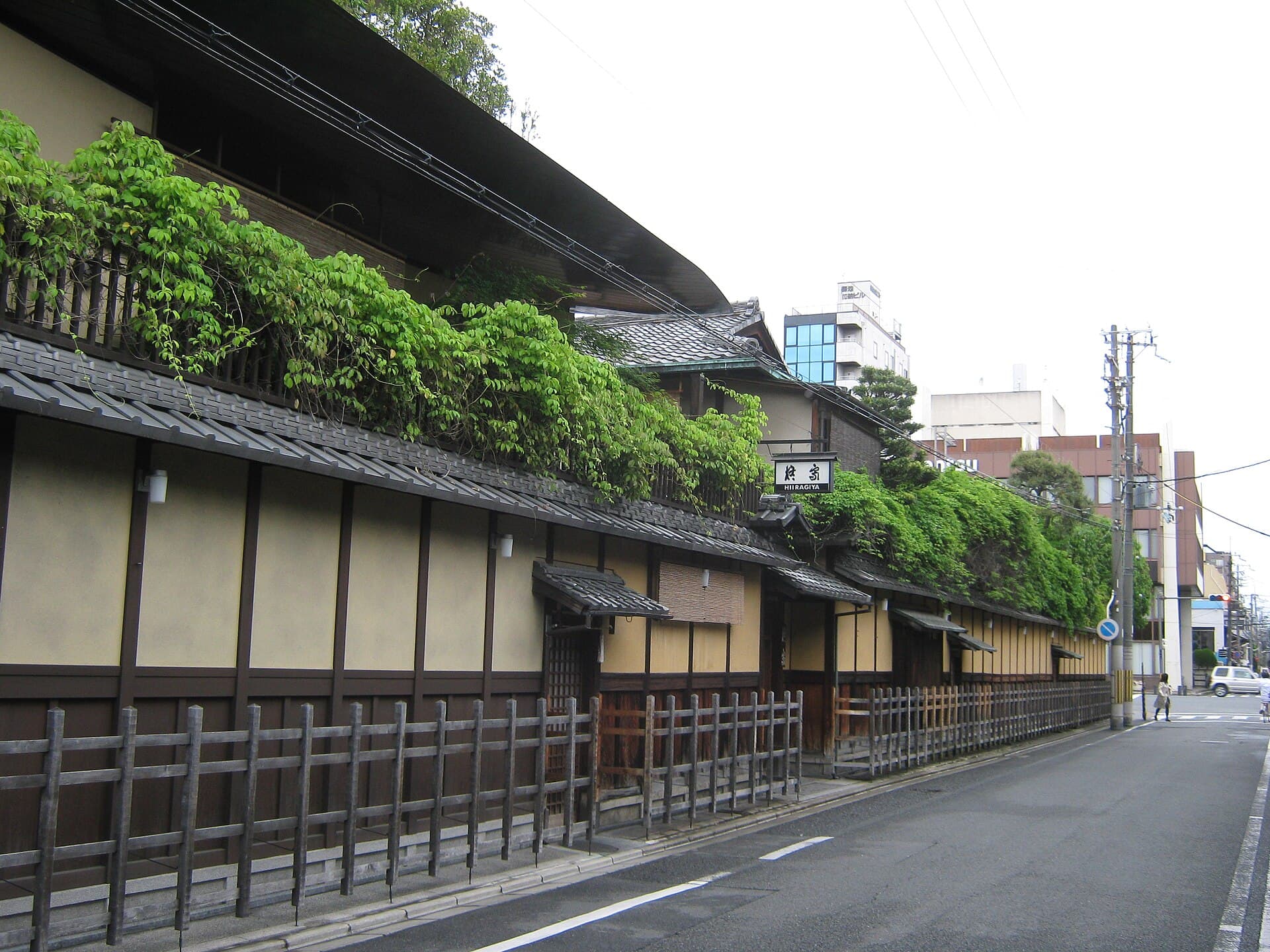
KyotoLuxury
Fuyacho-Anekoji, Nakagyo, Kyoto — in the city centre, a short walk from Kyoto City Hall
8 sources
Hiiragiya
柊家
Kyoto's 1818 inn of writers and film stars — near-flawless service and kaiseki, koyamaki-wood baths, and no hot spring
- Historic Ryokan
- Destination Dining

Aizu-WakamatsuClassic
Higashiyama Onsen, Aizu-Wakamatsu, Fukushima — a wooden inn beside the Yukawa river, a minute from the Higashiyama Onsen bus stop
9 sources
Mukaitaki
会津東山温泉 向瀧
Japan's first registered-heritage inn: a former Aizu clan bath retreat with scalding free-flowing water, free private baths and carp dinners in your room — and a lot of stairs
- Historic Ryokan
Photo credits: Steam rising over the Kirishima hot springs, with Sakurajima beyond · 663highland / CC BY 2.5 / Hiiragiya — the frontage on Anekoji-dori, Kyoto · Mariemon / CC BY 3.0 / Mukaitaki in the snow, Higashiyama Onsen, Aizu-Wakamatsu · Fumihiko Ueno / CC BY 3.0
Myoken Ishiharaso
Compare rates across trusted booking partners · Affiliate disclosure