Gero Onsen Suimeikan
下呂温泉 水明館
Area photo — not the ryokan itself · Gero Onsen and the Hida River, Gifu · Asturio Cantabrio / CC BY-SA 4.0
Gero's grand ryokan since 1932: four wings, three big baths of silky alkaline water and Hida beef everywhere — choose the Rinsenkaku wing for onsen in your room, and expect crowds and tired rooms elsewhere
Suimeikan opened in 1932 beside the Hida river, two years after the railway reached Gero, and has grown into a 264-room resort in four wings on more than 10,000 tsubo of grounds — complete with a noh stage, five restaurants, a pool and a restored 1953 sukiya annex, Seiransō. The water is Gero's famous alkaline simple spring (pH 9.4), piped from the town's central supply; the inn's own legally required notice says the baths are free-flowing with partial recirculation, cooled with tap water and chlorinated as Gifu rules require. All guests can use three large baths — the hinoki Shimodame-no-yu, a rock-built open-air bath and a ninth-floor view bath — and it's three minutes from the station. Japanese guests rate it 4.36 across 6,295 reviews on one major site and 4.3 across 5,158 on another, with the baths scoring highest. The key to a good stay is the wing: every room in Rinsenkaku has an onsen bath, the top-floor rooms were renewed in 2024 and only Rinsenkaku offers in-room dinner, while the budget Hisenkaku and Sansuikaku rooms mostly have ordinary bathrooms and draw complaints about age and smells. Hida beef steak is the dinner everyone remembers. Expect tour groups, busy breakfasts, long walks and occasionally cold front-desk service. Weekday rates start around ¥16,500–20,350 per person with two meals.
Room Selection Guide
What the guests who stayed here actually recommendRecommended
Rinsenkaku (臨川閣) — open-air-bath rooms and the renewed 12th floor
Every Rinsenkaku room has an onsen bath; the 83㎡ open-air-bath rooms (from ¥40,700 per person) and the four 12th-floor special rooms renewed in May 2024 (from ¥55,000) have baths officially fed straight from the source — hot enough that guests add cold water. A February 2025 blogger soaked at sunrise; a family member with limited mobility could bathe in the room. Rinsenkaku is the only wing with in-room dinner.
Seiransō (青嵐荘) — the restored sukiya annex
Five rooms named after chapters of The Tale of Genji, in a 1953 building restored as part of the inn, all with onsen in kōyamaki tubs and two with private open-air baths. A 2021 couple paid ¥187,000 for two and loved running the raw source water themselves. From about ¥66,000 per person.
Request To Avoid
Standard Hisenkaku (飛泉閣) and Sansuikaku (山水閣) rooms
The cheapest rooms (twins from ¥16,500) — but the official room table shows ordinary in-room baths rather than onsen in most of them, and 2026 reviewers found rooms 'old and disappointing', worn in places, with a tobacco smell from the air conditioner in a non-smoking room. Room numbers can't be chosen, walks to the baths are long, and one Sansuikaku blogger warned of a low ceiling.
Know which room you want?
Check live rates and availability for Gero Onsen Suimeikan.
We may earn a commission if you book through these links, at no extra cost to you. Affiliate disclosure
Dining Deep Dive
Breakfast Consensus
3.9/5A buffet of about 30 dishes in the Tokiwa dining room — French toast cooked to order, Hida apple juice and Gero tomato juice — though it's crowded on tour-group days
Check the weekly cleaning schedule (each large bath closes one weekday 8:00–17:00) and book the private baths (¥3,300 for 60 minutes, 10:00–21:00). Note the inn refuses tattoos outright — stickers included.
Dinner Insights
4.1/5Choose between in-room kaiseki (Rinsenkaku only), the open-kitchen Tokiwa, Hida-style kaiseki around the irori at Kitanoryō, Cantonese at Ryūyūri and French at Baden-Baden. Hida beef steak is praised again and again — the in-room 'Hida beef' menu serves it as nigiri, hotpot, braise and steak — and the Chinese restaurant draws good reviews. Critics found starters and sashimi thin for the price, dinner a little salty, and the 'French with chopsticks' course awkward.
Onsen & Wellness Realities
Gero's alkaline simple spring (about 56°C at source, pH 9.4) from the town's central supply. The inn's official notice: free-flowing with partial recirculation and filtration, tap water added to keep tubs at 42°C, no heating, chlorinated as required by Gifu prefecture.
Three large baths open to every guest: the hinoki Shimodame-no-yu with saunas (guests only, 5:00–24:00), the rock-built open-air bath (men's Ryūjin-no-yu and women's Kannon-no-yu; 5:00–24:00) and the glass-walled ninth-floor view bath (24 hours). Day visitors use the open-air and view baths 11:00–14:00. A 2021 blogger found the women's open-air bath much smaller than the men's, and a 2026 reviewer said the open-air bath can be seen from some guest-room windows. Two private baths are 100% spring water.
Tattoos are refused in all shared baths, Western or Japanese style; stickers and body paint aren't accepted, and guests found with tattoos are asked to leave without a refund. Rooms with their own onsen avoid the issue.
Local Warnings & Nuances
- 01
Getting there: three minutes' walk from JR Gero Station (about 90 minutes by limited express from Nagoya); a free shuttle meets limited-express trains, with fixed runs back to the station.
- 02
Check-in 14:00 (last 22:00), check-out 11:00; last dinner start 19:30.
- 03
A big resort: expect tour groups, two breakfast sittings, long walks (sometimes with stairs) and many overseas staff.
- 04
Recent reviews mention cold front-desk service, thin towels and occasional cleaning lapses.
- 05
Barrier-free support includes wheelchair loans, handrails in the large baths and some step-free rooms.
Sources
The real blog posts and stay reports this article draws on
More Consensus Reports

Gero OnsenClassic
Gero Onsen, Gifu — on the wooded hillside above the town, with a free shuttle from JR Gero Station
10 sources
Yunoshimakan
下呂温泉 湯之島館
A 1931 wooden resort inn that hosted two emperors — red-carpeted corridors, a Showa-era bar and Hida beef at 4.9 — but also a maze of stairs and a persistent musty smell
- Historic Ryokan
KyotoLuxury
Fuyacho-Anekoji, Nakagyo, Kyoto — in the city centre, a short walk from Kyoto City Hall
8 sources
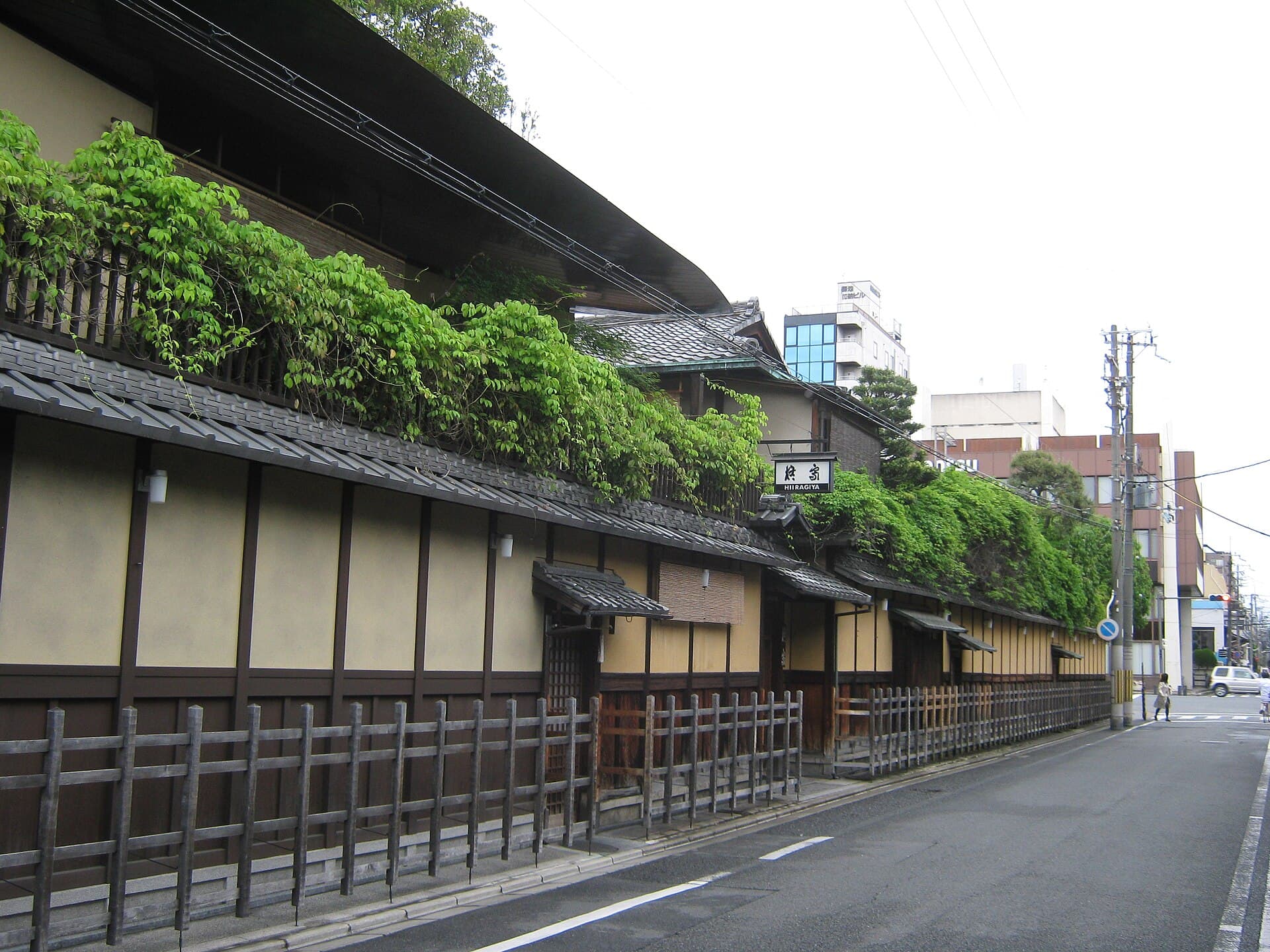
Hiiragiya
柊家
Kyoto's 1818 inn of writers and film stars — near-flawless service and kaiseki, koyamaki-wood baths, and no hot spring
- Historic Ryokan
- Destination Dining

Aizu-WakamatsuClassic
Higashiyama Onsen, Aizu-Wakamatsu, Fukushima — a wooden inn beside the Yukawa river, a minute from the Higashiyama Onsen bus stop
9 sources
Mukaitaki
会津東山温泉 向瀧
Japan's first registered-heritage inn: a former Aizu clan bath retreat with scalding free-flowing water, free private baths and carp dinners in your room — and a lot of stairs
- Historic Ryokan
Photo credits: Yunoshimakan — the registered-heritage main building, Gero · 大野 一将 / CC BY-SA 4.0 / Hiiragiya — the frontage on Anekoji-dori, Kyoto · Mariemon / CC BY 3.0 / Mukaitaki in the snow, Higashiyama Onsen, Aizu-Wakamatsu · Fumihiko Ueno / CC BY 3.0
Gero Onsen Suimeikan
Compare rates across trusted booking partners · Affiliate disclosure