Tsuta Onsen Ryokan
蔦温泉旅館
The facade of Tsuta Onsen Ryokan, Towada · Yuichi Kosio / CC BY 2.0
Hot water that rises through the floorboards under a 1918 wooden inn in the beech forest — superb baths, small dinners, and thin walls in the old wing
Tsuta Onsen is one of the few inns in Japan where the spring rises directly beneath the tubs: the water wells up through gaps in the wooden floor of the bath, never pumped or recirculated, and Japanese guests rate the baths 4.9 out of 5 across 377 reviews on one major site. A bathhouse is recorded here in 1147; the present inn dates from 1909, and its two-storey wooden main building from 1918. The writer Ōmachi Keigetsu lived and died here, and lyricist Okamoto Osami's 1969 honeymoon here inspired the 1972 hit 'Tabi no Yado'. There are 35 rooms in three very different places: the atmospheric 1918 main building (adults only, mostly shared toilets, thin sliding-door walls — two bloggers could hear the room across the corridor), the 1989 concrete West Wing with warmer, renovated rooms, and three detached villas added in 2022 that are the only rooms with their own spring-water bath. The old Kyūan-no-yu bath has no showers at all — you wash with water scooped from the overflow — and alternates between men and women; the newer Senkyō-no-yu has a ceiling 12 metres high. Dinner, served in the restaurant, uses local produce such as Mutsu Bay scallops, Lake Towada wakasagi and Ogawara-ko beef, but portions are the most common complaint, from 2022 to September 2026. The inn is seasonal and closes in winter.
Room Selection Guide
What the guests who stayed here actually recommendRecommended
West Wing Japanese-modern twin (西館 和モダンツイン)
Ten tatami with beds, a toilet and washbasin, renovated in 2021–22 and served by a lift. Staff recommended it to a November 2023 guest as warmer and newer than the main building, and a November 2025 guest found the heating almost too warm. One 2025 guest paid ¥33,000 booking direct with an early-bird discount (the post doesn't say whether that was per person or per room).
The three detached villas (離れ: 月寛, 薬鶴, 瓢箪)
Added in 2022 and designed by 松葉啓: 87–99㎡ for two to four guests, floor heating, a wood deck and the only in-room baths on site fed with the spring (semi-open-air). Villa guests eat a separate kaiseki in a private room. Only one 2026 review covers a villa so far; it notes the bath faces the main building, so it is screened with cloth.
Request To Avoid
Main building (本館) rooms without a toilet
The 1918 wing is the reason many come, and one 2022 guest found the shared toilets spotless — but rooms open onto the corridor with sliding doors, and guests in 2022 and 2024 both heard neighbours talking. A 2024 guest found the six-tatami room cramped with little space beyond the futon. Earplugs are provided. The main building is for adults only.
West Wing special rooms, if you want an in-room onsen
Katsura, Shakunage, Nanakamado and 鶴寛 have their own bathrooms, but the inn states these baths are not hot-spring water. Only the three villas have spring water in the room.
Know which room you want?
Check live rates and availability for Tsuta Onsen Ryokan.
We may earn a commission if you book through these links, at no extra cost to you. Affiliate disclosure
Dining Deep Dive
Breakfast Consensus
4.4/5A local buffet — apple curry, kaiyaki miso (egg and scallop cooked in a shell), grilled scallops and grated yam
Kyūan-no-yu switches between men and women: women have it 21:30–9:00 and 10:00–12:00, men 13:00–21:00 — check the board at check-in so you don't miss the old bath. Senkyō-no-yu is open around the clock except 9:00–10:00. The private bath costs ¥4,000 for 50 minutes and is booked on the day at the front desk.
Dinner Insights
3.9/5Kaiseki in the restaurant Tsuta-no-ki between 18:00 and 21:00 (no in-room meals): Mutsu Bay scallop sashimi, Lake Towada wakasagi, salt-grilled iwana, Ogawara-ko beef cooked yaki-shabu style, Tenju rice cooked with local water, and Denshu (田酒) sake. Bloggers liked the local character, and apple juice is free in the afternoon. But 'not enough food' is the steadiest complaint: a 2022 guest called it short on volume, a 2024 guest found it lacking in both quality and quantity, and four reviews from July to September 2026 say the portions or the beef were small, one also mentioning a pre-set dish that had gone cold.
Onsen & Wellness Realities
A sodium-calcium sulphate-bicarbonate-chloride spring (neutral, about 45–47°C) rising naturally beneath the baths. The inn calls it 'source-welling' (源泉湧き流し): the tubs sit directly on the source and water comes up through the floorboards. It is not recirculated; forest spring water is added to cool it.
Kyūan-no-yu, the old mixed bath rebuilt in 1990, now alternates between men and women and has no showers — you wash with water scooped from the overflow — plus a 13°C cold plunge. Senkyō-no-yu has separate men's and women's baths with showers under a 12-metre ceiling. A paid private bath (¥4,000 / 50 minutes) is also water from beneath the floor. Photography is banned in the public baths, day visitors come 10:00–15:00, and one 2024 guest found the men's bath crowded on a morning when Kyūan was reserved for women. The water is hot — 'not for long soaks', as one blogger put it — and bath towels have to be carried from your room.
No policy found on the official site or Japanese booking sites — contact the inn. The paid private bath is the only way to bathe alone unless you book a villa.
Local Warnings & Nuances
- 01
Seasonal: the inn closes for winter. The 2025 season ended on 24 November and bookings for 2026 opened from 17 April. Winter tyres are requested from October, and the Hakkoda road from Sukayu closes from late November to April.
- 02
Getting there: a free shuttle from Shichinohe-Towada Station (Tohoku Shinkansen) leaves at 15:00 and must be booked three days ahead; the return leaves the inn at 9:30. Otherwise the JR bus from Aomori Station takes about two hours, or drive about 90 minutes from Shin-Aomori.
- 03
Check-in 15:00, check-out 10:00 (late check-out on request). Room curfew is 22:00. Cards are accepted, debit cards are not.
- 04
Children: the main building is adults only; children are welcome elsewhere at 30–70% of the adult rate depending on meals and bedding.
- 05
Fireflies appear around the inn in July, and in autumn-leaf season, one 2025 guest found inn guests could arrange early-morning entry to the Tsuta Numa viewing deck at check-in — rules change yearly, so ask the inn.
Sources
The real blog posts and stay reports this article draws on
More Consensus Reports
KyotoLuxury
Fuyacho-Anekoji, Nakagyo, Kyoto — in the city centre, a short walk from Kyoto City Hall
8 sources
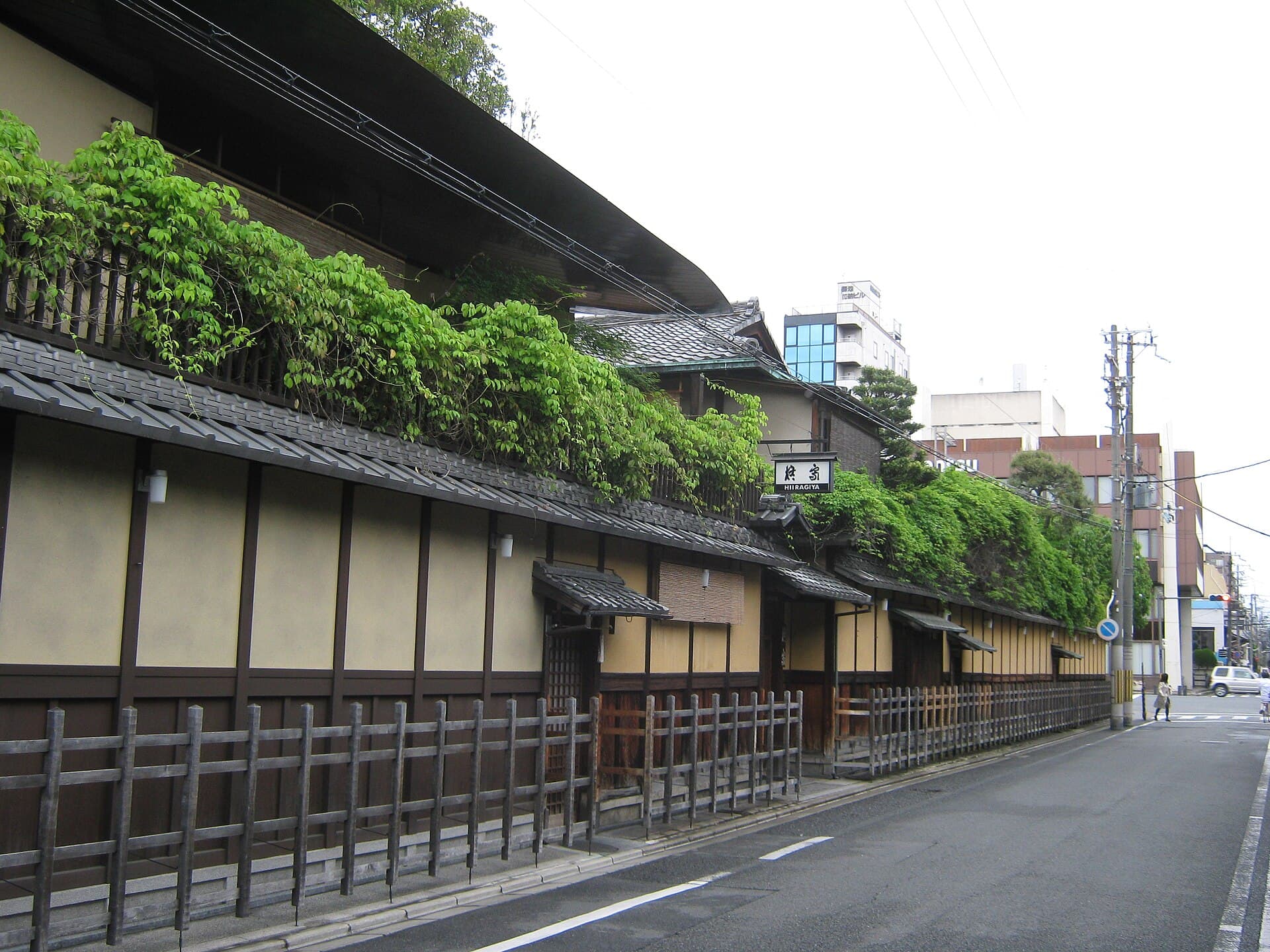
Hiiragiya
柊家
Kyoto's 1818 inn of writers and film stars — near-flawless service and kaiseki, koyamaki-wood baths, and no hot spring
- Historic Ryokan
- Destination Dining

Aizu-WakamatsuClassic
Higashiyama Onsen, Aizu-Wakamatsu, Fukushima — a wooden inn beside the Yukawa river, a minute from the Higashiyama Onsen bus stop
9 sources
Mukaitaki
会津東山温泉 向瀧
Japan's first registered-heritage inn: a former Aizu clan bath retreat with scalding free-flowing water, free private baths and carp dinners in your room — and a lot of stairs
- Historic Ryokan

Kinosaki OnsenClassic
Yushima, Kinosaki, Toyooka, Hyogo — in the heart of the onsen town, two minutes from Goshonoyu
9 sources
Mikiya
城崎温泉 三木屋
Shiga Naoya's inn, rebuilt in wood in 1927 — some of Kinosaki's warmest service and two free private baths, though winter crab doesn't always live up to the price
- Historic Ryokan
Photo credits: Hiiragiya — the frontage on Anekoji-dori, Kyoto · Mariemon / CC BY 3.0 / Mukaitaki in the snow, Higashiyama Onsen, Aizu-Wakamatsu · Fumihiko Ueno / CC BY 3.0 / Mikiya — the wooden main building, Kinosaki · Ippukucho / CC BY 3.0
Tsuta Onsen Ryokan
Compare rates across trusted booking partners · Affiliate disclosure