Chigira Jinsentei
伊香保温泉 千明仁泉亭
Chigira Jinsentei — the entrance, Ikaho Onsen · Qurren / CC BY-SA 4.0
Ikaho's oldest inn on the stone steps, with free, unbookable private baths of rust-gold water — a bath-lover's favourite whose food divides opinion
Chigira Jinsentei has stood on Ikaho's famous stone steps for about 500 years by its own account (bloggers date it to 1502), and it was the novelist Tokutomi Roka's regular inn — the opening of his novel Hototogisu is set here, and a copy sits in every room. Japanese guests love it for the water: the inn draws only Ikaho's brown 'golden' kogane-no-yu and says every bath is free-flowing with no added water or recirculation. Baths score highest on both major booking sites (4.9 on one, 4.70 across 599 reviews on the other). The favourite feature is four private baths that are free and need no booking — just walk in if one is empty — alongside two large indoor baths that swap around 1am and separate open-air baths. Criticism centres on the food and the building. Some guests find the in-room kaiseki generous and good value; others found it homely, ordinary or rushed, with little local character. It is a maze of stairs where sound carries, private baths are hard to get in the evening, and one guest noticed cigarette smoke in a room with an open-air bath. It is not cheap — bloggers paid from about ¥27,500 to ¥33,000 per person.
Room Selection Guide
What the guests who stayed here actually recommendRecommended
Main-building rooms with a view (e.g. Room 381)
Standard rooms of 8–12 tatami, some renovated. A December 2024 guest in Room 381 had no private bath but loved the 'spectacular view from the window' and made full use of the free private baths. Meals are usually served in your room.
Rooms 155–157 or the Tsuru-no-i annex, for your own onsen
Rooms 155–157 in the main building have a semi-open-air bath and are wheelchair-accessible; the Tsuru-no-i annex (2002) has four corner rooms with a free-flowing open-air bath and an 11:00 check-out. A 2022 annex guest paid ¥33,150 per person and found the tub too hot at night.
Request To Avoid
Tsuru-no-i annex, if you're sensitive to smoke or stairs
The annex still allows smoking (the main building became fully non-smoking in February 2026), there's no lift to its second floor, and its guests eat in a private dining room in the main building. A 2022 annex guest left unhappy with both the food and the service.
Rooms above the entrance, if you're a light sleeper
The inn itself warns that sound carries in the wooden building, and a September 2026 guest in a room above the entrance was bothered by noise. Guests also describe the building as 'like a maze'.
Know which room you want?
Check live rates and availability for Chigira Jinsentei.
We may earn a commission if you book through these links, at no extra cost to you. Affiliate disclosure
Dining Deep Dive
Breakfast Consensus
4.3/5A Japanese kaiseki-style breakfast, usually in your room; one guest missed coffee
The four free private baths (Megumi, Sei, Ikoi and Izumi, 15:00–9:30) can't be booked — they're first come, first served, and busy in the evening. Try before dawn, when they're often empty. Sei is the largest and hardest to get; Megumi has the best view, one blogger says.
Dinner Insights
4.0/5In-room kaiseki for main-building guests, with dishes such as Joshu or Akagi beef sukiyaki, grilled ayu, Uonuma Koshihikari rice and an apple gratin. Reviewers are split: some praise the portions and value, others found the menu 'like food we make at home', sashimi not properly chilled, drinks slow, or — in a 2022 private-room dinner — 'ordinary dishes' with almost nothing local. Portions are large; the inn says it can reduce them on request.
Onsen & Wellness Realities
Ikaho's brown kogane-no-yu (calcium-sodium sulphate-bicarbonate-chloride spring), about 41°C and near-neutral. The inn says all baths are 100% free-flowing with no added water or recirculation; one 2021 blogger reported it is heated in winter only.
Two large indoor baths — Megumi-no-yu (5m by 3m, 1m deep) and the retro Taki-yu — swap between men and women around 1am (open 15:00–9:30). Separate men's and women's open-air baths with indoor tubs are open 15:00–21:00 and 6:00–9:30; one guest found the outdoor bath too cool, another too dark at night. The sauna is currently closed. Four private baths are free, reached by stairs only.
No policy stated on the official site, its terms of stay or Japanese booking sites. The free private baths and rooms with their own bath avoid sharing — contact the inn.
Local Warnings & Nuances
- 01
No day-bathing — the baths are for overnight guests only.
- 02
Getting there: bus from JR Shibukawa Station (about 30 minutes) or the highway bus from Shinjuku (about 2h40) to the Ishidan-gai, then about 5 minutes on foot; staff will drive you to bus stops in town. Free parking.
- 03
Check-in 15:00 (last 19:00), check-out 10:00, or 11:00 for the annex and semi-open-air-bath rooms.
- 04
Wheelchairs, canes and bath chairs can be borrowed and there's a slope at the entrance, but the building has many stairs.
- 05
Prices in our sources: ¥55,000 for two with two meals at New Year 2021, ¥33,150 per person in the annex in 2022, and ¥30,000–50,000 per person on a 2026 family trip. The bar charges a table fee.
Sources
The real blog posts and stay reports this article draws on
- 「千明仁泉亭」泊 石段街の中腹にある伊香保一の老舗旅館!黄金の湯の貸切風呂入り放題が最高すぎた。 (しろいるか旅行記)
- 千明仁泉亭【群馬県 伊香保温泉】 (いい温泉宿、おいしい料理宿)
- 伊香保温泉千明仁泉亭(ちぎらじんせんてい)①~到着と部屋 (いい風よ吹け♬)
- 千明仁泉亭【ちぎらじんせんてい】(伊香保温泉) (tantanlovejapanが伝えたい話)
- 石段街に佇む創業500年の老舗名建築宿で美人の湯を堪能 伊香保温泉千明仁泉亭宿泊記 (植竹深雪)
- 伊香保温泉⑤本当に良かった千明仁泉亭のお湯処 (アウトドアとおうち時間)
- 千明仁泉亭 クチコミ・感想 (楽天トラベル)
- 千明仁泉亭 クチコミ (じゃらんnet)
- 伊香保温泉 千明仁泉亭 (公式サイト)
More Consensus Reports
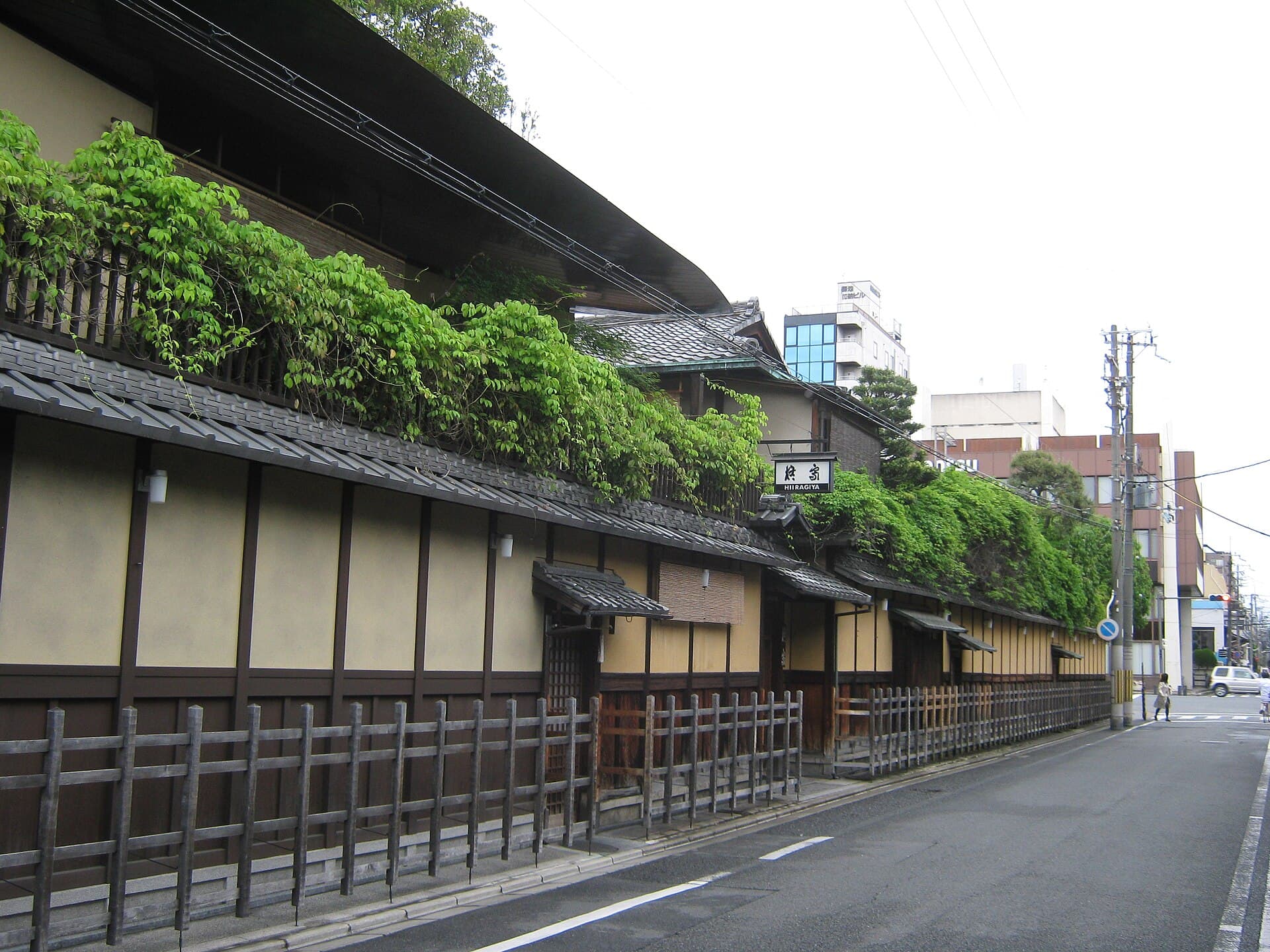
KyotoLuxury
Fuyacho-Anekoji, Nakagyo, Kyoto — in the city centre, a short walk from Kyoto City Hall
8 sources
Hiiragiya
柊家
Kyoto's 1818 inn of writers and film stars — near-flawless service and kaiseki, koyamaki-wood baths, and no hot spring
- Historic Ryokan
- Destination Dining

Aizu-WakamatsuClassic
Higashiyama Onsen, Aizu-Wakamatsu, Fukushima — a wooden inn beside the Yukawa river, a minute from the Higashiyama Onsen bus stop
9 sources
Mukaitaki
会津東山温泉 向瀧
Japan's first registered-heritage inn: a former Aizu clan bath retreat with scalding free-flowing water, free private baths and carp dinners in your room — and a lot of stairs
- Historic Ryokan

Kinosaki OnsenClassic
Yushima, Kinosaki, Toyooka, Hyogo — in the heart of the onsen town, two minutes from Goshonoyu
9 sources
Mikiya
城崎温泉 三木屋
Shiga Naoya's inn, rebuilt in wood in 1927 — some of Kinosaki's warmest service and two free private baths, though winter crab doesn't always live up to the price
- Historic Ryokan
Photo credits: Hiiragiya — the frontage on Anekoji-dori, Kyoto · Mariemon / CC BY 3.0 / Mukaitaki in the snow, Higashiyama Onsen, Aizu-Wakamatsu · Fumihiko Ueno / CC BY 3.0 / Mikiya — the wooden main building, Kinosaki · Ippukucho / CC BY 3.0
Chigira Jinsentei
Compare rates across trusted booking partners · Affiliate disclosure