Mukaitaki
会津東山温泉 向瀧
Mukaitaki in the snow, Higashiyama Onsen, Aizu-Wakamatsu · Fumihiko Ueno / CC BY 3.0
Japan's first registered-heritage inn: a former Aizu clan bath retreat with scalding free-flowing water, free private baths and carp dinners in your room — and a lot of stairs
Mukaitaki began as 'Kitsune-yu', a bath retreat of the Aizu domain, and has been run by the Hirata family as an inn since 1873. In 1996 it became the first property registered under Japan's new tangible cultural property system — the entrance, the detached Hanare and two guest wings — and its garden is registered too; a prince once asked that it never be rebuilt in concrete. Japanese guests adore it: a perfect 5.0 across 355 reviews on one major site, with 5.0 for both baths and cleanliness, and 4.90 for service on another. The water is the draw: every bath is 100% free-flowing from the inn's own naturally rising spring, with no heating, added water or recirculation. Kitsune-yu is famously hot (44–45°C) with no taps; Saru-no-yu is gentler, and three private baths are free with no booking. Dinner and breakfast come to your room, built on Aizu staples — sweet-simmered carp, kozuyu soup, herring pickled with sansho — with no shrimp, crab or tuna. The complaints: stairs everywhere and no barrier-free access, a 10:00 check-out, no non-smoking rooms reported, no in-room fridge or dryer in some rooms, trainee staff, pricey drinks, homely food for some, and stink bugs in winter. Official rates start around ¥27,850 per person with two meals.
Latest updates
What newer Japanese stay reports, posts and official notices have added since this review was written
Nothing material changed: the official site still lists 24 rooms and the same prices, and the 2026–27 snow-candle season runs 19 December to 28 February (lighting from 16:30, from 17:00 in February; cancelled without snow). We added the rooms with their own free-flowing onsen bath, which the official site sells from about ¥31,150 per person.
Room Selection Guide
What the guests who stayed here actually recommendRecommended
Courtyard rooms (e.g. Suisen 水仙, Sumire, Yuri 百合)
The rooms to book for the garden — and in winter for the 'Yukimi Rousoku' snow-candle display, which you watch from rooms and corridors (Suisen, Sumire and Yuri are popular). A 2024 guest in Suisen (8 + 3 tatami, second floor) booked on the official site and got their first choice; Yuri has 'few stairs and is close to the baths', a 2024 blogger wrote.
Hanare (はなれ) — the special detached room
The single detached room designated by the Imperial Household Agency, part of the registered heritage. About ¥46,550 per person for two, falling to ¥35,550 per person for six to eight guests.
Rooms with their own onsen bath (e.g. the Hanare, Matsu, Take)
The official site sells 'rooms with onsen' — a private bath fed from the same free-flowing source — from about ¥31,150 per person, versus about ¥27,850 for a standard room; the detached Hanare has its own source-spring bath. A 2026 note blogger names the Hanare, Matsu and Take as rooms with private baths. The site also lets you filter for rooms with fewer stairs.
Request To Avoid
River-side rooms and upper rooms
A blogger found the river-side rooms look onto a car park. The building has big level changes — 'when I'm older I'll need a lower room', one wrote — and there's no barrier-free access; wheelchairs can't be used inside. Book on the official site to request fewer stairs or a specific room.
Know which room you want?
Check live rates and availability for Mukaitaki.
Rakuten Travel, one of Japan's biggest booking sites, lists plans and prices in Japanese — your browser's translate button works on it.
We may earn a commission if you book through these links, at no extra cost to you. Affiliate disclosure
Dining Deep Dive
Breakfast Consensus
4.5/5An Aizu breakfast served in your room, starting between 7:30 and 8:30 — rated 4.9 on one major site
Visit between mid-December and February for the snow-candle evenings (about 120 candles, lit roughly 16:30–18:30; cancelled if there's no snow). Bring your own toothbrush and hairdryer — free toothbrushes were dropped in 2022, and dryers are in the bath changing rooms or on loan.
Dinner Insights
4.5/5Dinner in your room (start by 18:30), built on Aizu ingredients with no MSG and no shrimp, crab or tuna: sweet-simmered carp (leftovers are vacuum-packed for you to take home), kozuyu scallop-and-vegetable soup, herring pickled with sansho, carp sashimi and miso soup, Aizu river ayu rice and Fukushima wagyu. Most guests love it; a few found it 'too much like home cooking', the carp bony, or three soups too many, and one 2026 guest had an allergy mix-up. Drinks cost about three times retail, one reviewer noted.
Onsen & Wellness Realities
A weakly alkaline sodium-calcium sulphate-chloride spring (56.2°C at source), rising naturally on the premises and 100% free-flowing — no heating, no added water, no recirculation.
Two large baths, each with separate men's and women's sides: Kitsune-yu, a white-granite tub at about 44–45°C with no shower or taps ('unbelievably hot', one guest wrote; another skipped it), and Saru-no-yu, a marble tub at 41–42°C with big windows and showers. Three private baths — Tsuta, Hisago and Suzu, about 42–43°C — are free and need no booking. Baths are drained and cleaned daily (roughly 9:30–14:30), and there's no day bathing for non-guests.
No policy on the official or Japanese booking sites — contact the inn. The three free private baths avoid sharing. (A tourism page listing Mukaitaki as tattoo-friendly mixes up this inn with the unrelated Hotel Mukaitaki in Tsuchiyu Onsen — don't rely on it.)
Local Warnings & Nuances
- 01
Not on Agoda. The 'Hotel Mukaitaki' listed there is a different inn in Tsuchiyu Onsen, Fukushima City. Solo travellers can book only on Mukaitaki's own website.
- 02
Getting there: from Aizu-Wakamatsu Station take the Haikara-san or Akabe loop bus to the Higashiyama Onsen stop, then walk a minute; there's no shuttle. By car it's about 15 minutes from Aizu-Wakamatsu IC, and staff will park for you.
- 03
Check-in 15:00–17:30, check-out 10:00 — earlier than some guests would like.
- 04
Winter reviews mention stink bugs; one December 2025 guest counted thirty.
- 05
Children are welcome; under-sevens can share bedding.
Before your stay
Souvenirs from Aizu-Wakamatsu and practical help for your trip.
Aizu-Wakamatsu souvenirs on Rakuten


Rakuten prices as of Oct 18, 2026 — check the shop for current price and stock. Supported by Rakuten Developers Rakuten links are affiliate links: we may earn a commission at no extra cost to you.
Things to do nearby
Aizu-Wakamatsu: sights, experiences and seasonal events from Trip Gacha, our sister site.

Ouchi-juku Thatched-Roof Post Town
See on Trip Gacha
Tsuruga Castle (Aizu-Wakamatsu Castle)
See on Trip GachaPhoto credits
- Tsuruga Castle (Aizu-Wakamatsu Castle): Asturio Cantabrio / CC BY-SA 4.0, Wikimedia Commons
Sources
The real blog posts and stay reports this article draws on
Featured in our guides
Side-by-side comparisons that include this ryokan.

Send a package to your hotel or ryokan in Japan before you arrive: what to order and how to address it
A pre-trip checklist for having Amazon.co.jp or Rakuten orders waiting at your first ryokan or hotel in Japan: what is worth sending ahead (onsen and toiletry items, adapters, snacks, baby supplies, rain gear), how to write the address with your name and check-in date, why to ask the inn first, when to time delivery, what carriers won't take, and how to forward luggage between inns.
Read the guide
Need a power adapter in Japan? Plug won't fit or adapter forgotten: where to get one today
Already in Japan and your plug doesn't fit the socket? Japan's Type A two-pin outlets and 100 V explained, how to read your charger's voltage label, why a plug adapter doesn't convert voltage (hair dryers and straighteners), where to buy an adapter today, charging by USB instead, next-day Amazon.co.jp or Rakuten delivery to your hotel or a konbini, and what to ask at a ryokan.
Read the guide
What to pack for a ryokan stay in Japan (and what the inn already gives you)
A ryokan packing list based on real inns: what a Japanese inn normally provides (yukata, towels, slippers, toiletries) and the exceptions our research records, what to wear with a yukata, socks for tatami rooms, a small bath bag for onsen towns, the things often missing (toothbrush, hair dryer, sockets, earplugs), cash for bath tax and bath passes, and how to travel light by sending your suitcase ahead.
Read the guide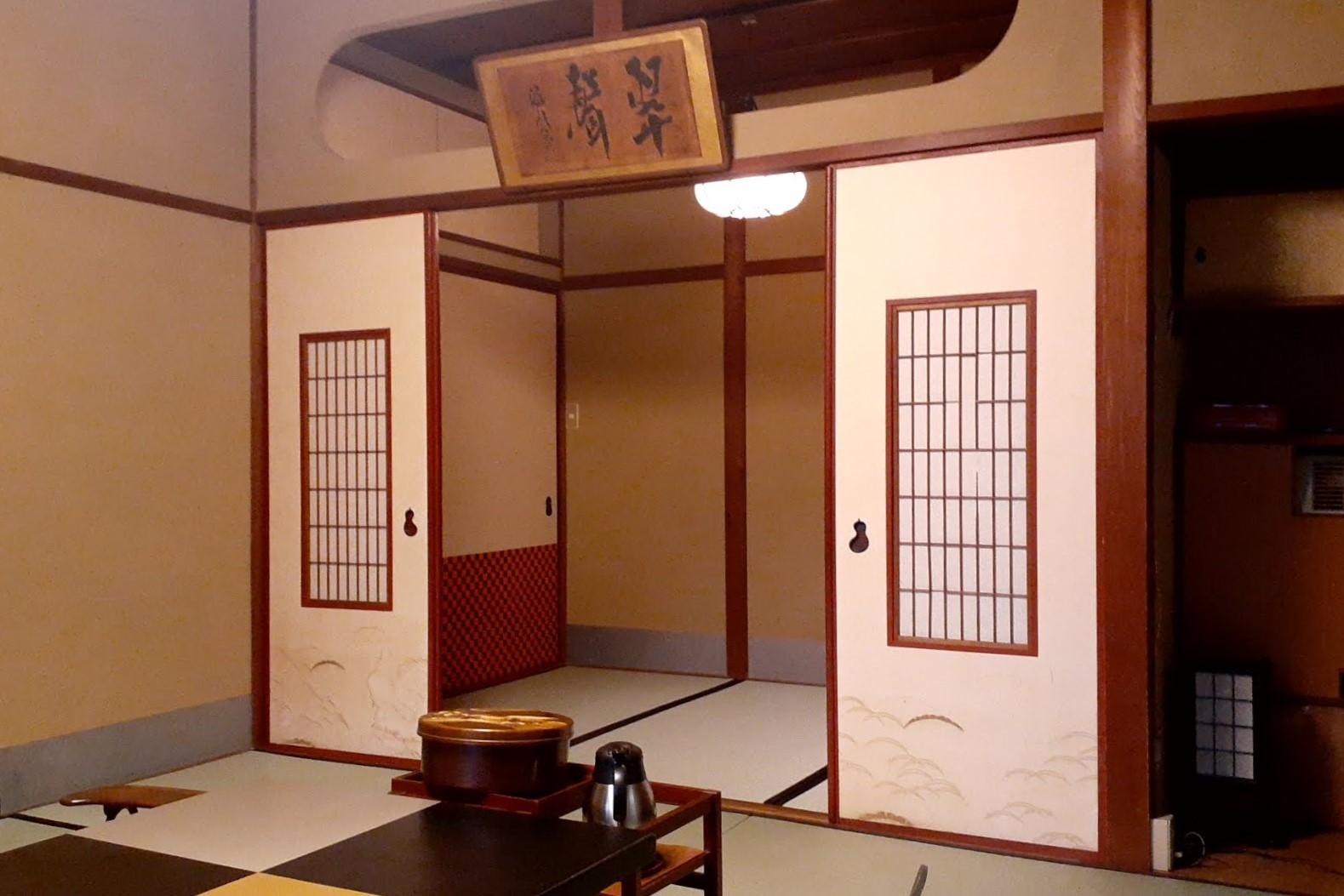
No toothbrush at your hotel or ryokan in Japan? Why, and where to get one tonight
Since Japan's 2022 plastics law, many hotels and ryokan no longer leave free toothbrushes, razors, combs or hairbrushes in the room. Why it happens, how to ask at the front desk or amenity corner, what konbini, drugstores and 100-yen shops sell tonight, Amazon or Rakuten delivery to your inn or a konbini, and a small kit to pack next time.
Read the guide
Free-flowing or recirculated? How to tell real onsen water before you book
'Hot spring' on a booking page can mean anything from water straight from the source to recirculated, chlorinated tap water in your room. What the Japanese terms mean, and which ryokan in our directory pass the test.
Read the guidePhoto credits
- Ryokan room, Japan · ㇹヮィㇳ / CC BY 2.0
- Lawson convenience store, Kasugai, Aichi · KKPCW(Kyu3) / CC BY-SA 4.0
- Shibu Onsen, Yamanouchi, Nagano · David McKelvey / CC BY 2.0
- Senzairo, Yoro, Gifu · Asturio Cantabrio / CC BY-SA 4.0
- Mukaitaki in the snow, Higashiyama Onsen, Aizu-Wakamatsu · Fumihiko Ueno / CC BY 3.0
More Consensus Reports
 Area photo
Aizu-WakamatsuValue
Higashiyama Onsen, Aizu-Wakamatsu, Fukushima — across a bridge on the Yukawa river, a 3-minute walk up the onsen street from the Higashiyama Onsen-eki bus stop
13 sources
Kutsurogijuku Shintaki
会津東山温泉 くつろぎ宿 新滝
A big, well-run riverside inn with four truly free-flowing baths — including the Aizu lords' rock bath fed from the bedrock beneath it — free sake in the lounge and Aizu-style dinners at a fair price; it's busy, dim and full of stairs, and private baths cost extra
- Historic Ryokan
Area photoAizu-WakamatsuClassic
Higashiyama Onsen, Aizu-Wakamatsu, Fukushima — strung along the Yugawa stream beside Fushimi-ga-taki falls at the entrance to the spa town, about 10 minutes by car from central Aizu-Wakamatsu, with the 'Takinoyu-mae' bus stop at the door
10 sources
Shosuke no Yado Takinoyu
会津東山温泉 庄助の宿 瀧の湯
A big riverside inn on the spot where Higashiyama Onsen began, with open-air baths beside a floodlit waterfall, seven private baths and famous breakfast mochi — but the cheaper rooms are cramped, the building is full of steps, and 2026 reviews flag smells and patchy upkeep
Read the Consensus
Echigo-Nagano OnsenClassic
Echigo-Nagano Onsen, Sanjō, Niigata — a lone inn on a mountain stream, about 45 minutes by car (or the inn's once-daily shuttle) from Tsubame-Sanjō Station on the Joetsu Shinkansen
9 sources
Rankeiso
妙湶和樂 嵐渓荘
A riverside secluded-onsen inn with a registered cultural-property wooden building, salty therapeutic water, free private baths and mountain-village kaiseki of carp and wild vegetables — but the spring is heated and recirculated, and the old wing carries sound
- Historic Ryokan
- Secluded Retreats
 Area photo
Gero OnsenClassic
Yunoshima, Gero, Gifu — on the Hida River beside the JR Takayama Line bridge, about 15 minutes' walk from Gero Station (free shuttle) and about 10 minutes on foot from the centre of the onsen town
10 sources
Gero Onsen Bosenkan
下呂温泉 望川館
A friendly, family-minded Gero inn founded in 1818, with a 1,100-tsubo garden, a big riverside open-air bath, Hida beef hoba-miso dinners in private rooms and trains rumbling over the bridge outside — but the building is old, the baths are partly recirculated and down a steep flight of stairs
- Historic Ryokan
Area photoGero OnsenClassic
Gero Onsen, Gifu — a 120-room inn on the Hida river in the middle of the hot-spring town, about seven minutes' walk from JR Gero Station
11 sources
Gero Onsen Ogawaya
下呂温泉 小川屋
Gero's big bath-hopping inn: a 100-tatami 'tatami bath', five shared baths, nine private ones and a menu of Hida-beef dinners in the middle of town — but it's a 120-room maze, the private baths cost extra, and 2026 reviews complain of queues and uneven service
Read the ConsensusArea photoGero OnsenClassic
Mori, Gero, Gifu — on a small hill on the station side of the Hida River, looking across at the onsen town; free taxi transfer from JR Gero Station, and a 5–6-minute walk from the town's municipal car park
9 sources
Gero Onsen Sasara
下呂温泉 紗々羅
Gero's self-styled 'art inn' on the hill: antique-crammed lobbies, 20 of 44 rooms with their own open-air onsen, in-room Hida-beef dinners and a top-floor bath over the town lights — but breakfast underwhelms, the Moriyama wing is a long walk from the baths, and renovation noise runs until the end of 2026
- Design-Led
Photo credits: Cherry blossom at Tsuruga Castle, Aizu-Wakamatsu, Fukushima · SQZ / CC BY 4.0 / Rankeiso, Echigo-Nagano Onsen · Bernie Ongewe / CC BY-SA 4.0 / Gero Onsen and the Hida River, Gifu · Asturio Cantabrio / CC BY-SA 4.0
Mukaitaki
Compare rates across trusted booking partners · Affiliate disclosure