Wataya Bessou
和多屋別荘
Wataya Bessou on the Ureshino river, Ureshino Onsen · STA3816 / CC BY-SA 4.0
A sprawling riverside resort reinventing itself with tea, books, a Pierre Hermé shop and workspaces around a 1977 Kisho Kurokawa tower — great water and dinners, but choose a renovated room
Wataya Bessou spreads across 20,000 tsubo on both banks of the Ureshino river, with 102 rooms in several buildings: a 12-storey tower designed by Kisho Kurokawa in 1977, the open-air-bath rooms of Miyabikan and Kachōen, the Taishō-retro Onsenkyō wing, and the detached Suimeisō around a relocated Nabeshima-domain villa where the Shōwa emperor and empress stayed. The inn has been reinventing itself: former guest rooms are now satellite offices, and the grounds host a book-and-tea shop, a Made in Pierre Hermé café, a tea salon, a whisky bar and well-being programmes from riverside sauna to tea courses. The water — Ureshino's silky sodium bicarbonate-chloride spring from the inn's own source — flows into the baths with water added only to cool it. Japanese guests rate it 4.12 across 1,191 reviews on one major site and 4.0 across 244 on another, scoring dinner, service and the water well and rooms and facilities lowest. Dinners centred on Ureshino onsen-yudōfu and Saga beef or Wakakusu pork shabu-shabu are generous. The complaints concentrate in unrenovated tower rooms — age, smells, mould, air conditioning that won't cool — plus maze-like walks with stairs to the main bath, weak showers, private baths closed for now and facilities such as the Suimeisō sauna out of action without notice. Tower rooms with breakfast start around ¥21,780 for two; one couple paid about ¥75,000 for two with two meals in a top-floor room.
Room Selection Guide
What the guests who stayed here actually recommendRecommended
Suimeisō (水明荘) — the detached annex
Seven rooms around the special Senshin suite (a relocated Nabeshima villa with an 872㎡ garden), all with hinoki baths fed straight from the source and some with open-air baths; meals come to the room and guests get the private bathhouse Shinshō free. 2025–2026 guests praised the attentiveness and in-room kaiseki, though one noticed mustiness in a corridor and two found the bathhouse sauna out of service.
Miyabikan (みやび館) and Kachōen (花鳥苑) open-air-bath rooms; the renovated Onsenkyō rooms
Bamboo-fenced open-air baths and moon-viewing decks (Miyabikan) or renovated rooms with a bedroom (Kachōen's Sasa). Onsenkyō's Shiobara has an indoor bath whose windows open fully — 'more open than a semi-open-air bath', a September 2026 guest wrote. Expect compact rooms and, in Miyabikan, fiddly bath taps and weak showers.
Request To Avoid
Unrenovated standard tower rooms
The cheapest way in, and the source of most complaints in 2025–2026: old fittings, creaking floors, an 'old ryokan smell', a strong mould smell in one case, and air conditioning that left one July room at about 30°C. The top-floor 'Japanese-modern twin' is huge but has a Western unit bath beside the toilet. Rooms sold as having an onsen bath (e.g. the Aomori-hiba rooms) do run spring water.
Know which room you want?
Check live rates and availability for Wataya Bessou.
We may earn a commission if you book through these links, at no extra cost to you. Affiliate disclosure
Dining Deep Dive
Breakfast Consensus
4.0/5A Japanese-Western buffet with the signature Ureshino onsen-yudōfu — wide variety, though one guest missed freshly brewed coffee
Book the free shuttle from Ureshino-Onsen Station or the IC in advance (through the inn's app from April 2026). Allow time for the walk to the main bath — it's long and involves stairs, with a stair lift on part of the route.
Dinner Insights
4.3/5Seasonal kaiseki built on Saga beef, Wakakusu pork, Saga rice and fish from the Genkai Sea and Ariake Sea, served at the Japanese restaurant Rikyū (with sake and tea pairings on white porcelain) or Risōan (on Risō kiln ware); Suimeisō guests eat in their rooms. The most-booked plans pair onsen-yudōfu with Saga beef or pork shabu-shabu, praised for volume and tender meat. One 2026 reviewer found the yudōfu portion small.
Onsen & Wellness Realities
A sodium bicarbonate-chloride spring (weakly alkaline, about 85°C at source) from the inn's own well — one of Japan's 'three great beauty baths'. The inn says every bath is fed directly from its source; one booking site notes water is added to cool it. No heating or recirculation is mentioned.
The main Mikagaden baths (granite and hinoki, men's and women's, each with a sauna) and a riverside rock-garden open-air bath; the women's outdoor bath is small. Suimeisō's Shinshō bathhouse (open-air bath, mist sauna, cold plunge) is free for annex guests and ¥1,100 for others, 15:00–21:00. The private baths are closed for the time being. Bath hours aren't clearly published — confirm at check-in.
No official policy found; one 2026 guest wrote that tattooed guests can't use the main bath. Confirm with the inn; rooms with their own bath avoid the issue.
Local Warnings & Nuances
- 01
Getting there: free shuttle at fixed times from Ureshino-Onsen Station and Ureshino IC (reservation required), or a ¥4,000 limousine taxi from Saga Airport. Free parking.
- 02
Check-in from 15:00 (the latest time varies by plan), check-out 10:00.
- 03
Not barrier-free overall, though tower room 1127 is; walks to the main bath are long with stairs.
- 04
Facilities change often: the private baths and foot bath are closed, and the Suimeisō sauna was out of service in August–September 2026 without notice online.
- 05
Riverbank construction noise disturbed some guests in autumn 2025; skincare in the bath changing rooms is only on request.
Sources
The real blog posts and stay reports this article draws on
More Consensus Reports
 Area photo
Ureshino OnsenValue
Ureshino Onsen, Saga — on the river in the old spa town, about 5 minutes by car from Ureshino-Onsen shinkansen station
9 sources
Ryokan Omuraya
旅館 大村屋
Ureshino's oldest inn, reinvented around records and books, with silky 'beauty' water and a breakfast of tofu melted in hot-spring water — great value in the renovated rooms, less so in the old washitsu
- Historic Ryokan
KyotoLuxury
Fuyacho-Anekoji, Nakagyo, Kyoto — in the city centre, a short walk from Kyoto City Hall
8 sources
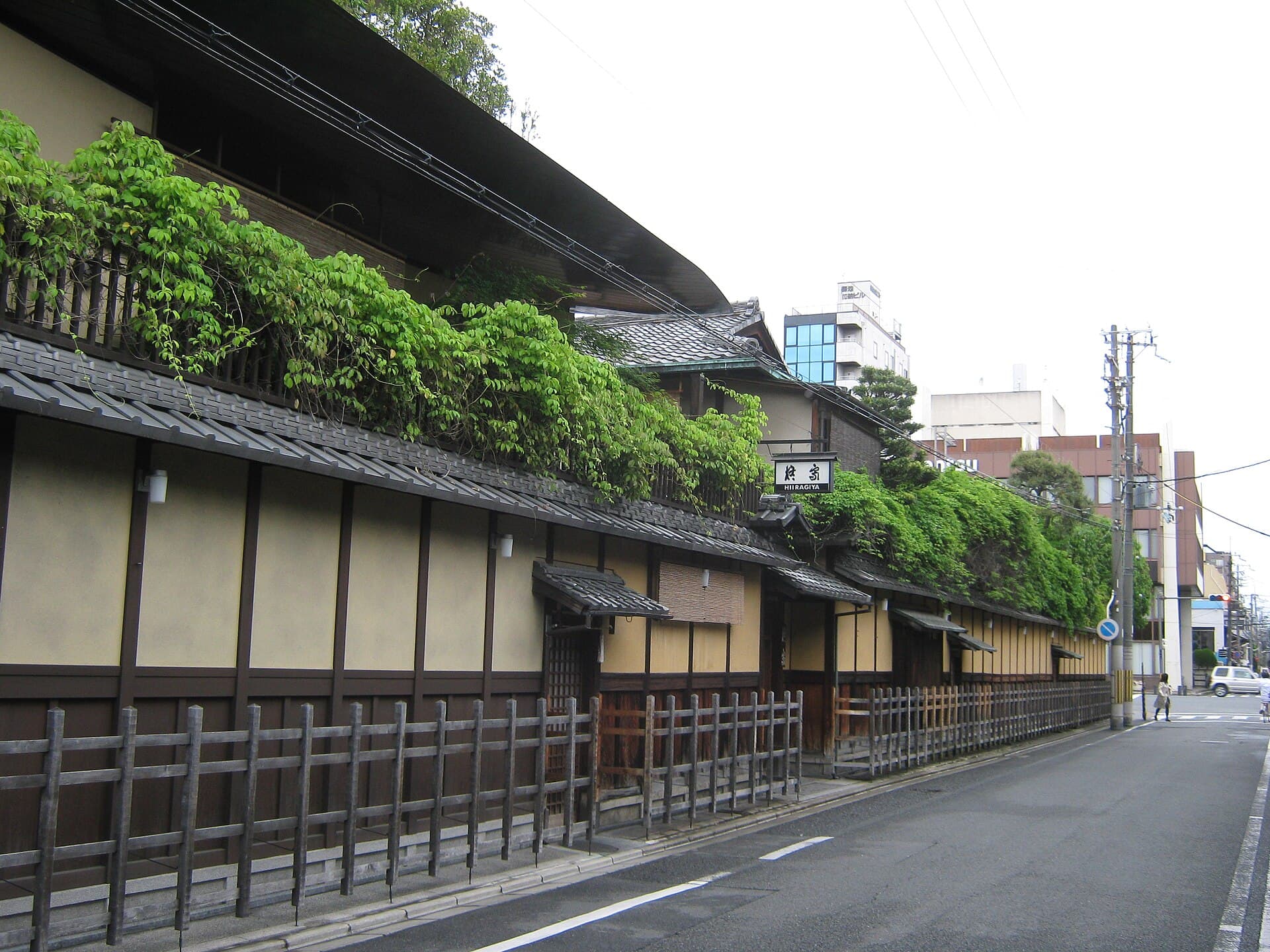
Hiiragiya
柊家
Kyoto's 1818 inn of writers and film stars — near-flawless service and kaiseki, koyamaki-wood baths, and no hot spring
- Historic Ryokan
- Destination Dining

Aizu-WakamatsuClassic
Higashiyama Onsen, Aizu-Wakamatsu, Fukushima — a wooden inn beside the Yukawa river, a minute from the Higashiyama Onsen bus stop
9 sources
Mukaitaki
会津東山温泉 向瀧
Japan's first registered-heritage inn: a former Aizu clan bath retreat with scalding free-flowing water, free private baths and carp dinners in your room — and a lot of stairs
- Historic Ryokan
Photo credits: Siebold-no-yu public bath, Ureshino Onsen, Saga · STA3816 / CC BY-SA 4.0 / Hiiragiya — the frontage on Anekoji-dori, Kyoto · Mariemon / CC BY 3.0 / Mukaitaki in the snow, Higashiyama Onsen, Aizu-Wakamatsu · Fumihiko Ueno / CC BY 3.0
Wataya Bessou
Compare rates across trusted booking partners · Affiliate disclosure