Ryokan Omuraya
旅館 大村屋
Area photo — not the ryokan itself · Siebold-no-yu public bath, Ureshino Onsen, Saga · STA3816 / CC BY-SA 4.0
Ureshino's oldest inn, reinvented around records and books, with silky 'beauty' water and a breakfast of tofu melted in hot-spring water — great value in the renovated rooms, less so in the old washitsu
Omuraya traces its founding to 1830 — a paving stone bears the date, since a 1922 fire destroyed most records — and is said to have served as a secondary official inn on the Nagasaki Kaidō; the calligrapher Nakabayashi Gochiku made it his regular inn. The 15th-generation owner has turned it into an 'inn for enjoying music and books after your bath': a lounge with thousands of records, a library, a music bar, record players in some rooms, and bathing music for the large baths composed by Shigeru Kishida of Quruli. The water comes from the inn's own 92.5°C well, a sodium bicarbonate-chloride spring that leaves skin silky. Japanese guests rate it 4.60 across 511 reviews on one major site and 4.5 across 1,328 on another, with service and baths highest. Breakfast is the famous Ureshino onsen-yudōfu — tofu simmered in spring water until it melts — and dinner centres on tea-shabu or Saga beef, finished with a much-loved milk pudding. The weak spots: the older washitsu rooms (stains, worn cushions, a toilet door that wouldn't close), cleaning lapses, a bar that isn't open every night, private baths that now cost ¥4,400 per 50 minutes, and an indoor large bath that is recirculated. Weekday stays start around ¥18,000 per person with two meals before tax.
Room Selection Guide
What the guests who stayed here actually recommendRecommended
Ayame (菖蒲) — the open-air-bath room
The only room with a fully open-air bath of free-flowing spring water, plus a Simmons double bed, a record player and Tivoli audio (about 32㎡ with an 11㎡ terrace). Guests in 2026 rated it highly — one watched the moon from the tub — but others found the tap slow to fill the bath, hot water slow to reach the shower, and mosquitoes and ants in summer.
Renovated Japanese-Western rooms — Ran (蘭), Kiku (菊), Suisen/Yuri/Fuyō
Semi-open-air or indoor baths of spring water. Ran has a cypress tub and a hammock that children loved; Kiku has no steps, a wooden tub safe for children and a cave-like nook; Suisen, Yuri and Fuyō worked well for guests with elderly parents. Expect about ¥23,000–24,000 per person including tax.
Request To Avoid
Plain washitsu rooms, especially for three or more
The cheapest rooms have no onsen bath, and several 2025–2026 reviews describe them as old: wall stains, worn cushions, a tiny washroom, a toilet door that wouldn't close in a room sold for six, thin futons. A 2025 blogger, by contrast, found a standard washitsu 'far more stylish than expected', with a CD player. The barrier-free Kikyō room (connected to Hamayū) is the only accessible option.
Know which room you want?
Check live rates and availability for Ryokan Omuraya.
We may earn a commission if you book through these links, at no extra cost to you. Affiliate disclosure
Dining Deep Dive
Breakfast Consensus
4.4/5Ureshino onsen-yudōfu — tofu simmered in hot-spring water until it melts — which nearly every guest praises ('I drank every drop of the broth'), though side dishes are ordinary
Check the music bar's opening days on the official site before you go — it's closed some nights. The lounge has free coffee and Ureshino tea. Take the milk pudding home: it's sold in boxes of six and made on Wednesdays.
Dinner Insights
4.2/5Served in semi-private dining rooms, with a monthly menu: the standard 'original Ureshino tea-shabu' course (meat dipped in tea broth and wrapped in Ariake seaweed — wagyu on the official menu, though one 2026 guest had pork), a Saga wagyu steak course and a top Saga-beef course, all ending in the pudding one guest called 'the best I've ever had'. Guests praise the delicate seasoning, the rice and reasonably priced sake. Critics found it overpriced for what it was, servers who didn't know the dishes, cold miso soup, and too little Saga seafood.
Onsen & Wellness Realities
A sodium bicarbonate-chloride spring (pH 8.2) from the inn's own 92.5°C well, colourless and silky. The private baths and in-room baths are free-flowing; in the large baths the semi-open-air tub is free-flowing and the indoor tub recirculated. Because the source is so hot, water is added to cool it.
Two riverside large baths, renovated in 2024 (women's Uruwashi-no-yu, men's Tsukikage-no-yu), deep enough to sit shoulder-deep, with a summer-only lukewarm tub some loved and others found too cool. Four private baths renovated in November 2025 — one with a private electric sauna and cold plunge — cost staying guests ¥4,400 per 50 minutes (¥8,800 per 90 for the sauna bath), by booking; in 2022 they cost ¥550. Day visitors use the large baths 15:00–22:00.
No official policy. One 2026 blogger was told small tattoos that can be covered with a towel were fine for staying guests — confirm with the inn. In-room and private baths avoid the issue.
Local Warnings & Nuances
- 01
Getting there: about 5 minutes by car from Ureshino-Onsen Station (Nishi-Kyushu Shinkansen) or Ureshino IC. Shuttle information conflicts — one 2026 guest complained of no station pickup — so ask when booking. Free parking for 40 cars.
- 02
Check-in 15:00, check-out 10:00 (12:00 on retreat and sauna plans).
- 03
Rates from ¥18,000 per person with two meals on weekdays, ¥23,000 on Saturdays and ¥25,000 at peak times (before tax). Children with a children's menu pay 60%.
- 04
The music bar (17:00–24:00) opens only on set days, and the lounge can be full because outside guests are allowed in.
- 05
Recent reviews mention cleaning lapses, weak Wi-Fi and loud frogs on summer nights. The smoking area is outside in the car park.
Sources
The real blog posts and stay reports this article draws on
More Consensus Reports
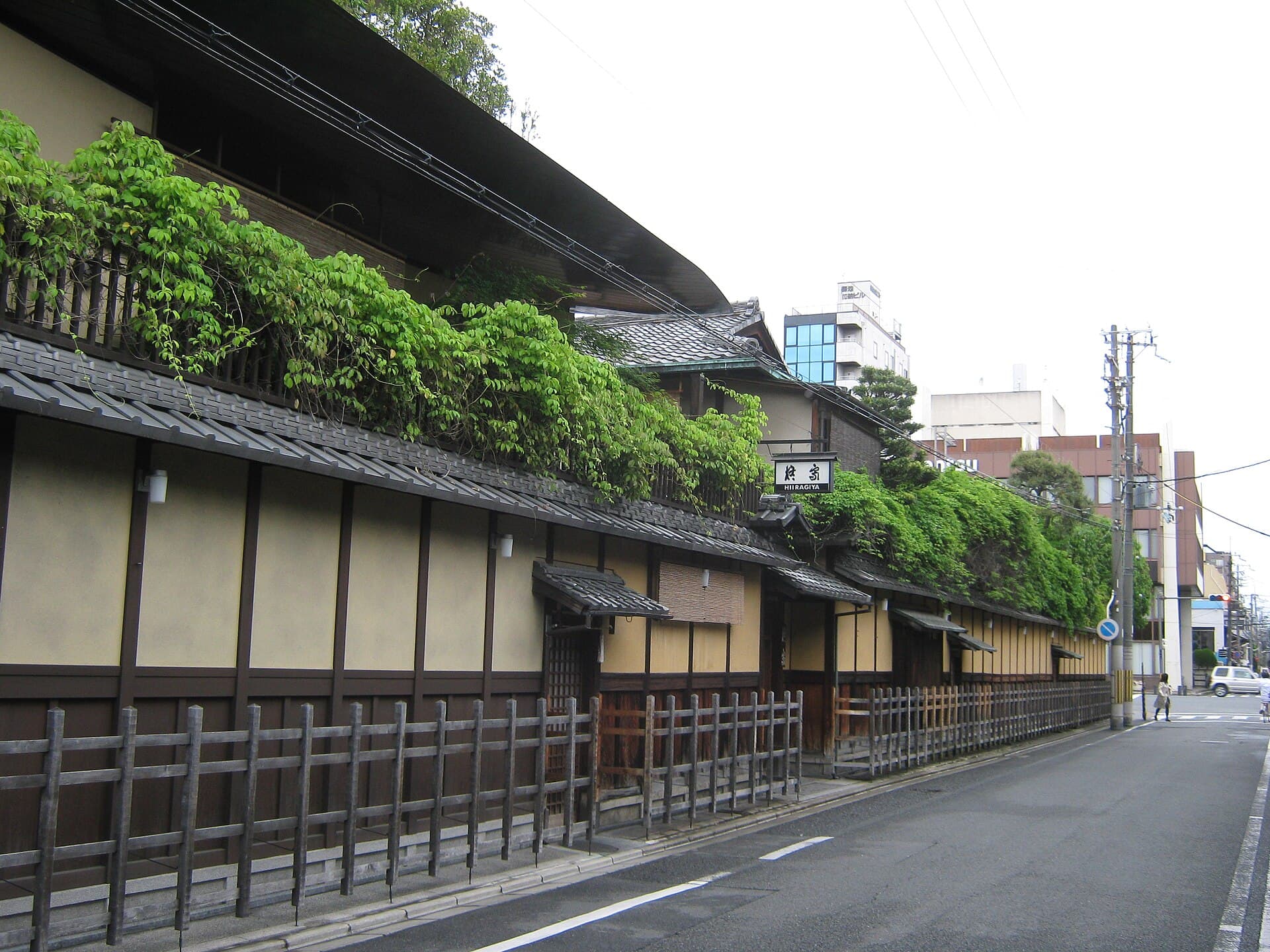
KyotoLuxury
Fuyacho-Anekoji, Nakagyo, Kyoto — in the city centre, a short walk from Kyoto City Hall
8 sources
Hiiragiya
柊家
Kyoto's 1818 inn of writers and film stars — near-flawless service and kaiseki, koyamaki-wood baths, and no hot spring
- Historic Ryokan
- Destination Dining

Aizu-WakamatsuClassic
Higashiyama Onsen, Aizu-Wakamatsu, Fukushima — a wooden inn beside the Yukawa river, a minute from the Higashiyama Onsen bus stop
9 sources
Mukaitaki
会津東山温泉 向瀧
Japan's first registered-heritage inn: a former Aizu clan bath retreat with scalding free-flowing water, free private baths and carp dinners in your room — and a lot of stairs
- Historic Ryokan

Kinosaki OnsenClassic
Yushima, Kinosaki, Toyooka, Hyogo — in the heart of the onsen town, two minutes from Goshonoyu
9 sources
Mikiya
城崎温泉 三木屋
Shiga Naoya's inn, rebuilt in wood in 1927 — some of Kinosaki's warmest service and two free private baths, though winter crab doesn't always live up to the price
- Historic Ryokan
Photo credits: Hiiragiya — the frontage on Anekoji-dori, Kyoto · Mariemon / CC BY 3.0 / Mukaitaki in the snow, Higashiyama Onsen, Aizu-Wakamatsu · Fumihiko Ueno / CC BY 3.0 / Mikiya — the wooden main building, Kinosaki · Ippukucho / CC BY 3.0
Ryokan Omuraya
Compare rates across trusted booking partners · Affiliate disclosure