Shiga Naoya's inn, rebuilt in wood in 1927 — some of Kinosaki's warmest service and two free private baths, though winter crab doesn't always live up to the price
Mikiya is the Kinosaki inn where the writer Shiga Naoya stayed, and his favourite room, No. 26, is still kept as it was — you can't sleep in it, but the okami will show you round and tell you about him. The wooden building went up in 1927 after the 1925 earthquake, including a rare three-storey wooden east wing, and was fully renovated in 2013; it is a registered cultural property. Japanese guests adore it: 4.9 across 295 reviews on one major booking site and 4.80 across 248 on another, with cleanliness and service near perfect. Reviewers single out small kindnesses — staff noticing left-handed guests and turning their chopsticks, a ground-floor room found for an elderly parent. Baths are modest by design: two indoor baths that swap between men and women, two free private baths that need no booking, and free passes to all seven of Kinosaki's public bathhouses, two of them a two-minute walk away. The complaints are about food and the old building: 'creative' dishes that don't suit everyone, watery frozen crab served out of season in 2026, cold corridors in winter, rattling sliding doors, and a wooden building where you hear the neighbours — which the inn itself warns about.
Room Selection Guide
What the guests who stayed here actually recommendRecommended
Garden-view rooms (8–10 tatami, some with an anteroom)
The rooms that sum up Mikiya: tatami rooms looking onto the 300-tsubo Japanese garden. A 2022 guest in Room 7 had 'two connected, spacious tatami rooms', and a 2025 guest in the smallest 8-mat room still found it roomy thanks to the sunroom. On one Japanese booking site, garden-view kaiseki plans started at ¥68,200 for two.
Special Room 22
The only room with its own bath — a hiba-wood tub and a steam sauna — plus a bedroom. Worth it if you want to bathe privately at any hour, though one 2026 guest here was disappointed by dinner.
Request To Avoid
Any room, if you are a light sleeper
The inn itself warns that, in a traditional wooden building, noise from below and next door can be noticeable. A 2025 guest was kept awake by rattling fusuma and shoji. There is no lift and the early-Showa stairs are steep; ground-floor rooms are available on request.
Know which room you want?
Check live rates and availability for Mikiya.
We may earn a commission if you book through these links, at no extra cost to you. Affiliate disclosure
Dining Deep Dive
Breakfast Consensus
4.5/5A Japanese breakfast in the dining room that scores about 4.8 out of 5 on two major sites
Ask the okami for a look at Room 26, Shiga Naoya's favourite — guests are routinely shown it after breakfast. Note that futons may be cleared while you are at breakfast; one 2026 guest disliked staff entering the room.
Dinner Insights
4.1/5All meals are served in the dining room, Heihachiro — there is no in-room dining — with partitions between tables, starting at 18:00 or 18:30. Expect ayu and Tajima beef year-round and Tsuiyama tagged snow crab in winter. Food is the weakest point in reviews: some found the 'creative' dishes not to their taste, the meat too fatty or the yuba hard, and in 2026 one guest was served 'watery frozen crab' out of season. In crab season, one reviewer wished the shells had been cut more for easier eating.
Onsen & Wellness Realities
Kinosaki's shared sodium-calcium chloride spring, about 42°C. Japanese booking sites list the inn's baths as having water added and being recirculated or heated — not free-flowing.
No outdoor bath. Two indoor baths, Tsutsuji-no-yu and Hiiragi-no-yu (the latter in a former guest room under an open-beamed ceiling), swap between men and women during the evening and morning. Two private baths — Futami-no-yu in granite and Kurubi-no-yu in Aomori hiba — are free and need no booking (15:00–24:00 and 6:00–10:00). You also get free passes to all seven Kinosaki soto-yu for your whole stay; Goshonoyu and Mandarayu are two minutes away.
No policy stated for the inn's own baths — ask the inn. Kinosaki's tourism body says all seven public bathhouses accept tattoos of any size without covering, and the inn's free private baths let you bathe alone.
Local Warnings & Nuances
- 01
Prices seen on one Japanese booking site, for two with dinner and breakfast, tax included: from ¥63,800 (seasonal kaiseki, 8-mat room), from ¥68,200 (garden-view rooms) and from ¥90,200 (crab-sukiyaki plan).
- 02
Pre-school children cannot stay; the inn accepts primary-school age and up.
- 03
Check-in from 15:00 (last arrival around 18:00–18:30, sources differ) and check-out 11:00. The station is about a 15-minute walk, and a free inn-association shuttle meets afternoon arrivals. Free parking for 16 cars.
- 04
Winter corridors, stairs and toilets can be cold, according to several 2024–2025 reviews.
- 05
The soto-yu get busy around 20:00, a 2022 guest noted — go earlier or later.
Sources
The real blog posts and stay reports this article draws on
More Consensus Reports

Kinosaki OnsenPremium
Kinosaki Onsen, Toyooka, Hyogo
5 sources
Nishimuraya Honkan
西村屋本館
Kinosaki's grand old ryokan wins on service and crab — just know the private baths aren't onsen
- Historic Ryokan
- Destination Dining
KyotoLuxury
Fuyacho-Anekoji, Nakagyo, Kyoto — in the city centre, a short walk from Kyoto City Hall
8 sources
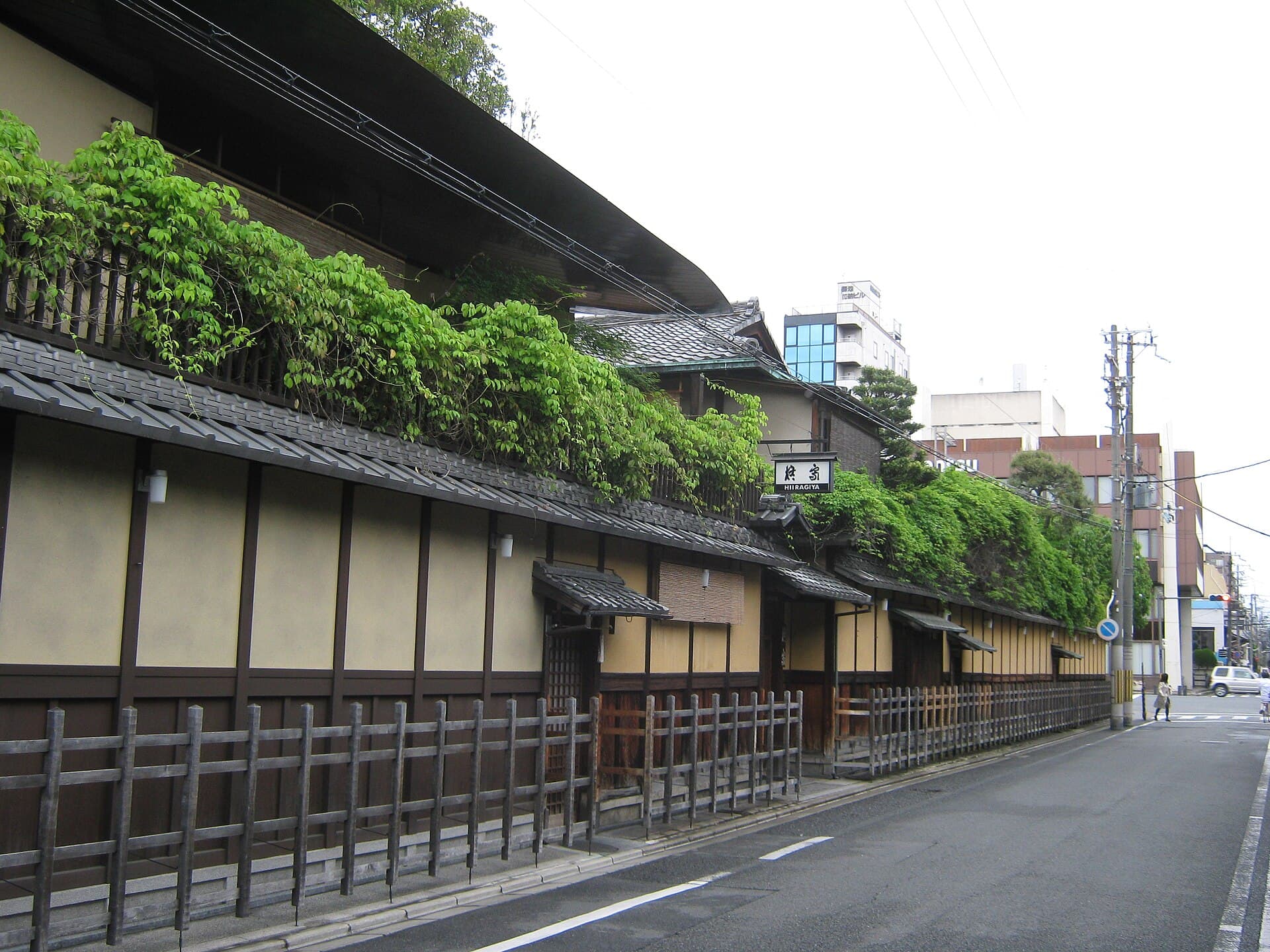
Hiiragiya
柊家
Kyoto's 1818 inn of writers and film stars — near-flawless service and kaiseki, koyamaki-wood baths, and no hot spring
- Historic Ryokan
- Destination Dining

Aizu-WakamatsuClassic
Higashiyama Onsen, Aizu-Wakamatsu, Fukushima — a wooden inn beside the Yukawa river, a minute from the Higashiyama Onsen bus stop
9 sources
Mukaitaki
会津東山温泉 向瀧
Japan's first registered-heritage inn: a former Aizu clan bath retreat with scalding free-flowing water, free private baths and carp dinners in your room — and a lot of stairs
- Historic Ryokan
Photo credits: Nishimuraya Honkan — the gate in snow, Kinosaki · Asturio Cantabrio / CC BY-SA 4.0 / Hiiragiya — the frontage on Anekoji-dori, Kyoto · Mariemon / CC BY 3.0 / Mukaitaki in the snow, Higashiyama Onsen, Aizu-Wakamatsu · Fumihiko Ueno / CC BY 3.0
Mikiya
Compare rates across trusted booking partners · Affiliate disclosure