Itamuro Onsen Daikokuya
板室温泉 大黒屋
Area photo — not the ryokan itself · Autumn colours in Nasushiobara, Tochigi · Raita Futo / CC BY 2.0
A hot-spring inn founded in 1551 that doubles as a contemporary-art museum, with silky alkaline water flowing through every bath — calm and unusual, but rooms are old and the baths small
Daikokuya has been an inn at Itamuro since 1551 and calls itself an inn 'for rest and art'. Under its former head it built a long relationship with the artist Kishio Suga: since 1991 his works have filled the grounds, a warehouse museum of about 300 pieces opened in 2008, and the salon hosts a new exhibition every month, with a daily guided tour at 10:00 (Japanese only). The inn has 31 rooms in three buildings, all south-facing with floor heating, and meals come to your room — daily-changing Japanese cooking built on sesame, beans and kelp with no chemical seasonings, local river fish and Nasu wagyu. All baths are 100% free-flowing alkaline simple spring (pH around 9.4) with no added water, recirculation or chlorine; bloggers report some tubs are warmed in winter. There's an hinoki open-air bath renewed in 2023 and a 40°C clay 'Ataraxia' room for long, low-temperature soaks. Japanese guests rate it 4.70 across 215 reviews on one major site and 4.7 across 512 on another. The complaints: ageing buildings with thin walls, creaking corridors and a musty smell in places, stink bugs in spring and autumn, baths small for the inn's size with no private bath, simple rather than lavish food, minimal amenities and a few service slips. Official rates run about ¥26,400–33,000 per person with two meals.
Room Selection Guide
What the guests who stayed here actually recommendRecommended
Matsu building (松の館) singles and twins
Renovated in 2013 with clay walls and wooden floors; the upstairs singles are spacious with big windows ('a superb view', a June 2026 guest wrote), and the ground-floor twins are step-free and near the hinoki bath — the inn recommends them for guests with limited mobility. A blogger who stayed in room 203 in 2022 and 2023 loved the cherry-blossom view and the Nasu woodworker's furniture.
Take building (竹の館) and Ume building (梅の館)
Take's larger rooms look out over Suga's garden work Ten no Tenkei and suit families; Ume is the quietest building, with balconies on the ground floor and mountain-and-river views upstairs. A Take Japanese room cost ¥25,300 per adult with two meals in February 2024.
Request To Avoid
Any room, if you're a light sleeper
The buildings are old: one 2024 blogger found the Take room 'looks much better in the website photos', others report creaking corridors, loud sliding doors next door at night, thin walls and a musty smell in part of a corridor. Wi-Fi is weak or missing in some Take rooms, and no room has its own bath.
Know which room you want?
Check live rates and availability for Itamuro Onsen Daikokuya.
We may earn a commission if you book through these links, at no extra cost to you. Affiliate disclosure
Dining Deep Dive
Breakfast Consensus
4.3/5A one-tray Japanese breakfast in your room — dried fugu is a regular
Join the 10:00 museum and garden tour (about 50 minutes, ¥500–770), and bring your own skincare — the inn itself says amenities are minimal. Drinks you bring are fine: every room has an empty fridge.
Dinner Insights
4.2/5Dinner is served in your room (18:00–19:30) in a couple of batches, and changes daily: wild-vegetable shabu-shabu, iwana and wild yellowtail sashimi, Nasu wagyu on a ceramic plate, grilled Naka river ayu in summer and a hotpot in winter, with rice in an ohitsu. Guests praise the gentle seasoning and sensible portions. Critics call it 'plain, with no lavish main dish' or 'safe but forgettable'; one March 2026 guest had a late, cold dinner and an unordered drink on the bill.
Onsen & Wellness Realities
An alkaline simple spring (about pH 9.3–9.7 depending on the source) blended from two wells; the inn says every bath is 100% free-flowing, with no added water, recirculation or chlorine. Bloggers report some tubs are warmed by heat exchange in winter.
Three baths open 24 hours (one closes for cleaning around midday): the hinoki open-air bath renewed in 2023, facing the river and mountains; the Taiyō-no-yu of stone and granite, just under 40°C and easy for limited mobility; and the small, dim Hinoki-no-yu with a hot and a lukewarm tub — plus Ataraxia, a 40°C clay room for slow soaking. There are no private baths and no in-room baths (except in the phone-only Hoyō annex). Guests find the baths small for the inn and Ataraxia often full.
No policy found on the official site or Japanese booking sites — contact the inn.
Local Warnings & Nuances
- 01
Getting there: a paid shared taxi from Nasushiobara Station (13:35 for ¥1,650 or 16:35 for ¥2,750 per person; book by the day before), or about 17km by car from Kuroiso-Itamuro IC. Snow tyres or chains are required December–March.
- 02
Check-in 14:00–17:00, check-out 10:30.
- 03
No room attendant: staff come in only to show you to the room and to serve meals. Day-trip bathing isn't offered.
- 04
Stink bugs and ladybirds are a recurring complaint in spring and autumn.
- 05
Children are welcome, with reduced rates and children's books in the library; vegetarian meals are possible (the bonito dashi stays).
Sources
The real blog posts and stay reports this article draws on
More Consensus Reports
KyotoLuxury
Fuyacho-Anekoji, Nakagyo, Kyoto — in the city centre, a short walk from Kyoto City Hall
8 sources
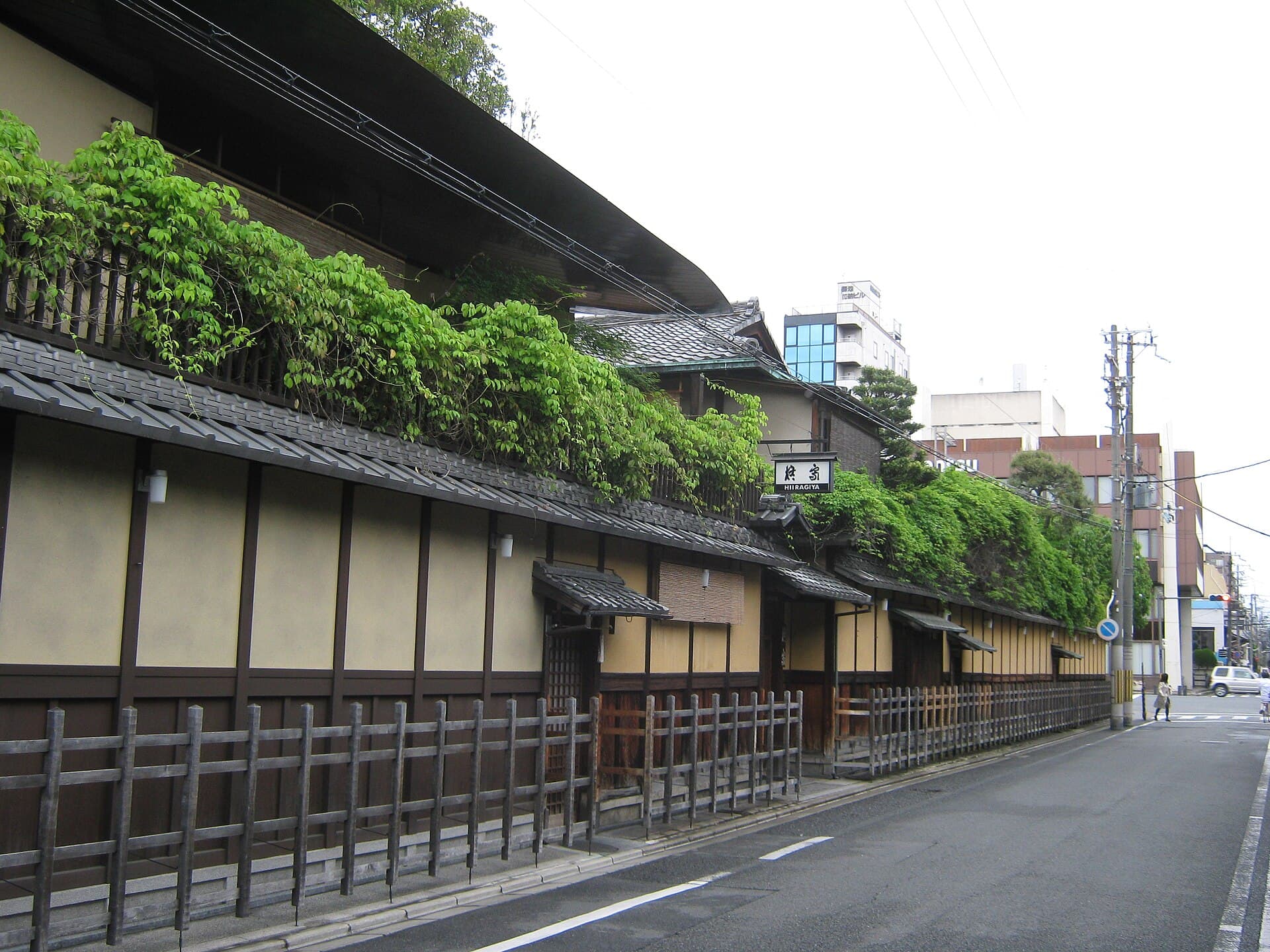
Hiiragiya
柊家
Kyoto's 1818 inn of writers and film stars — near-flawless service and kaiseki, koyamaki-wood baths, and no hot spring
- Historic Ryokan
- Destination Dining

Aizu-WakamatsuClassic
Higashiyama Onsen, Aizu-Wakamatsu, Fukushima — a wooden inn beside the Yukawa river, a minute from the Higashiyama Onsen bus stop
9 sources
Mukaitaki
会津東山温泉 向瀧
Japan's first registered-heritage inn: a former Aizu clan bath retreat with scalding free-flowing water, free private baths and carp dinners in your room — and a lot of stairs
- Historic Ryokan

Kinosaki OnsenClassic
Yushima, Kinosaki, Toyooka, Hyogo — in the heart of the onsen town, two minutes from Goshonoyu
9 sources
Mikiya
城崎温泉 三木屋
Shiga Naoya's inn, rebuilt in wood in 1927 — some of Kinosaki's warmest service and two free private baths, though winter crab doesn't always live up to the price
- Historic Ryokan
Photo credits: Hiiragiya — the frontage on Anekoji-dori, Kyoto · Mariemon / CC BY 3.0 / Mukaitaki in the snow, Higashiyama Onsen, Aizu-Wakamatsu · Fumihiko Ueno / CC BY 3.0 / Mikiya — the wooden main building, Kinosaki · Ippukucho / CC BY 3.0
Itamuro Onsen Daikokuya
Compare rates across trusted booking partners · Affiliate disclosure