Buying a Japanese kitchen knife in Japan: where to shop and how to get it home legally
Want a Japanese kitchen knife as a souvenir? Where to shop (Kappabashi in Tokyo, Nishiki Market in Kyoto, the knife towns of Sakai and Seki), what gyuto, santoku, nakiri and petty knives are for, Japan's rules on carrying a knife, why it must go in your checked bag, home customs pointers, and having the knife sent to your ryokan or home instead of carrying it.
Updated Oct 20, 2026
A Japanese kitchen knife is one of the most useful things you can take home from a trip, and Japan makes buying one easy: whole streets of kitchenware shops in Tokyo, knife stalls in Kyoto's food market, and towns such as Sakai and Seki that have made blades for centuries. What catches visitors out is everything after the sale. Japan has strict rules on carrying knives in public, airlines won't let one into the cabin, and your own country decides what comes through its border.
This guide covers where to shop and what the main knife shapes are for, then the rules: carrying a knife in Japan, taking it on trains and planes, tax-free shopping, and customs at home. It also covers the simplest option of all — having the shop, or Amazon.co.jp or Rakuten, send the knife to your hotel, ryokan or home address (see our guide to delivery to your ryokan for how hotel delivery works in general). Every rule comes from the official pages listed in the sources; the shopping links are general product categories, not recommendations of particular products. Rules change, so check the linked page before you rely on a number.
Where to shop in Tokyo and Kyoto: Kappabashi and Nishiki Market

Kappabashi Dougu Street in Tokyo is a shopping street of around 170 shops, about 800 metres from north to south, between Asakusa and Ueno. According to its traders' association, it began in the early Taishō era (the 1910s) when dealers in second-hand tools set up shop along the Shinborikawa, a waterway dug in the Edo period, and food-related shops gathered after the 1923 Great Kantō Earthquake; it now supplies the restaurant trade. You don't need to be in the trade: the association's FAQ says almost all shops sell to individual customers.
Plan the day of the week. The street itself is always open, but each shop sets its own holidays: the association says most are open on Saturdays and about 30% on Sundays too. It's about five minutes' walk from Tawaramachi Station on the Tokyo Metro Ginza Line, or from Asakusa Station on the Tsukuba Express. Some shops also sell online; the association's store pages list their websites.
In Kyoto, Nishiki Market is a 390-metre covered market with some 400 years of history, known as 'Kyoto's Kitchen'. Most of its stalls sell food, but its shop directory has a cooking-gear category, which includes a long-established shop selling handmade knives and other cooking utensils. The market asks visitors not to eat while walking.
Shopping in the city means carrying the knife back to your hotel. Read the section on carrying knives in Japan before you go, and consider buying on your last stop of the day — or having the shop send it.
Search in Japanese shops
- Japanese-style kitchen knivesAmazon.co.jpRakuten
- Kitchen knife setsAmazon.co.jpRakuten

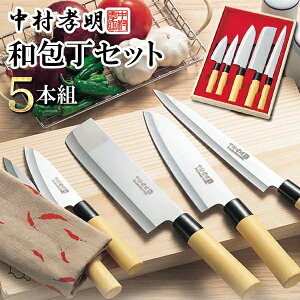


Rakuten prices as of Oct 19, 2026 — check the shop for current price and stock. Supported by Rakuten Developers Rakuten links are affiliate links: we may earn a commission at no extra cost to you. As an Amazon Associate, OKU earns from qualifying purchases.
Going to the source: the knife towns of Sakai and Seki

Sakai, just south of Osaka, traces its knives to the 16th century, when tobacco arrived from Portugal and local smiths began making knives to cut the leaves. Sakai City says the Edo shogunate later let these knives be sold with a 'Sakai kiwame' seal of approval, and the craft spread into single-edged kitchen knives. The work is still split between specialists — forging, sharpening and fitting the handle — and the city says forging alone takes 10 to 15 years or more to master. Sakai's hand-forged knives were designated a national traditional craft in 1982.
Sakai Traditional Crafts Museum (Sakai Denshokan), run by the city's industrial promotion foundation, is the easiest place to compare makers: its shop stocks knives from 24 Sakai knife businesses, Sakai knife businesses take turns on the shop floor to help customers choose, and it says English-speaking staff are on hand. Admission is free; it opens 10:00–17:00 and closes on the third Tuesday of the month (the next day if that's a holiday) and from 29 December to 3 January. Sharpening demonstrations run on Fridays from 13:30 to 15:00, and the museum offers a paid resharpening service from ¥1,600 per knife.
Seki, in Gifu Prefecture, calls itself a knife town with more than 700 years of tradition. Its biggest event, the Hamono Matsuri (knife festival), takes place every year on the Saturday and Sunday before Sports Day in October, with a large knife sale on Honmachi-dori and demonstrations of traditional sword forging. Gifu's official tourism site says the town's knife hall (Hamono Kaikan) stocks more than 2,000 knives, scissors and other blades and opens daily from 9:00 to 17:00.
If you're planning a visit to Seki for its sword heritage, note that the city's Seki Kaji Denshokan museum is closed for renovation from 7 September 2026 to 31 March 2027 (dates may change).
Search in Japanese shops
- Sakai kitchen knivesAmazon.co.jpRakuten
- Seki kitchen knivesAmazon.co.jpRakuten
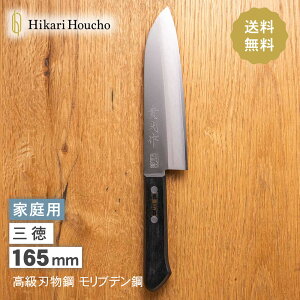


Rakuten prices as of Oct 19, 2026 — check the shop for current price and stock. Supported by Rakuten Developers Rakuten links are affiliate links: we may earn a commission at no extra cost to you. As an Amazon Associate, OKU earns from qualifying purchases.
Gyuto, santoku, nakiri, petty: what the main shapes are for

Sakai Traditional Crafts Museum's knife guide starts with the edge. Double-edged knives (ryōba) are sharpened symmetrically on both sides; the museum calls them easy to handle and suited to beginners and home cooks, cutting vegetables, meat and fish. Single-edged knives (kataba) are sharpened on one side for a very sharp edge and clean cuts, and suit people who cook fish or Japanese cuisine seriously. Each type of knife is made one way or the other.
Among double-edged knives, the museum describes the santoku as an all-purpose knife that handles meat, fish and vegetables, and suggests it as a first knife. The nakiri is specialised for vegetables, with an edge that runs straight to the tip, suited to fine shredding. The gyuto is an all-purpose knife that cuts blocks of meat and large ingredients smoothly, and suits people who cook Western dishes often. The Sakai cutlery federation describes the small petty knife as used for peeling vegetables and fruit, fine work and garnishing.
The classic single-edged knives are the deba, for filleting fish and cutting through bone, and the yanagiba, for slicing sashimi, according to the same museum guide.
Material matters as much as shape. The museum's guide says stainless steel resists rust and is easy to look after; carbon steel (hagane) is very sharp and keeps its edge but needs regular care; and clad knives (warikomi) aim to combine sharpness with rust resistance. It also lists right- or left-handed versions among the choices, so say if you're left-handed.
Search in Japanese shops
- Santoku knivesAmazon.co.jpRakuten
- Gyuto (chef's knives)Amazon.co.jpRakuten
- Nakiri vegetable knivesAmazon.co.jpRakuten
- Petty knivesAmazon.co.jpRakuten


Rakuten prices as of Oct 19, 2026 — check the shop for current price and stock. Supported by Rakuten Developers Rakuten links are affiliate links: we may earn a commission at no extra cost to you. As an Amazon Associate, OKU earns from qualifying purchases.
Carrying a knife in Japan: what the law says
Japan's Swords and Firearms Control Law says that no one may carry a knife with a blade longer than 6 cm, except for work or another legitimate reason. (Scissors and folding knives with blades of 8 cm or less are excepted if they meet set conditions; kitchen knives are almost always longer.) Breaking this rule can bring up to two years' imprisonment or a fine of up to ¥300,000.
What counts as a legitimate reason? Kagoshima Prefectural Police give two examples: a cook taking knives to work, and someone who has bought a knife taking it home. Separately, the Minor Offences Act penalises carrying a knife concealed without a legitimate reason, and the police note that this can apply even to blades of 6 cm or less. They ask people not to carry knives or tool knives casually, for instance as an accessory.
In practice: keep the knife in the shop's box or packaging, take it straight back to where you're staying, and don't take it out in public. The police example is about taking a new knife home, so the simplest plan is to buy at the end of the day — or have the shop send it.
Trains have their own rule. After an attack on a Shinkansen in June 2018, Japan's transport ministry clarified that knives may be taken on trains only if they're packed so they can't be taken out and used straight away. Its guideline gives examples: the blade in a sheath or case (or its edge covered with cardboard), the whole knife wrapped in newspaper or similar, inside a sturdy bag, box or case — or still in the packaging it was sold in. Ceramic knives count too, and railway staff may check how a knife is packed.
Search in Japanese shops
- Knife casesAmazon.co.jpRakuten
- Knife sheaths (saya)Amazon.co.jpRakuten


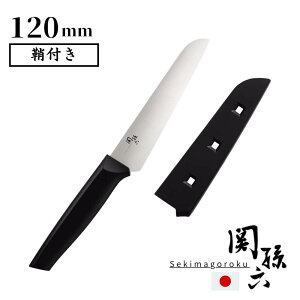
Rakuten prices as of Oct 19, 2026 — check the shop for current price and stock. Supported by Rakuten Developers Rakuten links are affiliate links: we may earn a commission at no extra cost to you. As an Amazon Associate, OKU earns from qualifying purchases.
Flying home: checked bag only, tax-free paperwork first
Knives can't go in your cabin bag. Japan's transport ministry (MLIT) list of restricted items, updated in April 2026, marks knives as not allowed in the cabin but allowed in checked baggage. MLIT adds that airlines may have stricter rules of their own and that foreign authorities may restrict items on international flights. ANA, for example, says it accepts no bladed items of any kind in the cabin on international flights, and warns that carrying them on board breaks Japan's Civil Aeronautics Act, with penalties of up to two years' imprisonment or a ¥1 million fine.
So pack the knife, sheathed and well wrapped, in the suitcase you check in, and check your airline's page if you're unsure.
If you buy tax-free, the order at the airport matters. For purchases from 1 November 2026, Japan uses a refund system: purchases of ¥5,000 or more (excluding tax) per store per day qualify, and within 90 days of purchase you present your passport at a tax-free terminal in the international departure lobby, before baggage check-in, with all your tax-free goods in your possession. The Japan Tourism Agency says you can't complete the procedure after checking in your luggage, and checked luggage can't be retrieved to do it. Do the terminal first, then check in the bag with the knife. Tax-free goods must also be ones you personally carry out of Japan, so a knife you post home doesn't qualify.
Then check your own country's rules. In the UK, GOV.UK lists the knives it is illegal to bring in — among them butterfly knives, flick and gravity knives, disguised knives and zombie knives, and curved swords over 50 cm with some exceptions; ordinary kitchen knives aren't on that list, but the final decision rests with HMRC when they see the item. In Canada, the CBSA's import memorandum treats knives whose blade opens automatically by gravity, centrifugal force or a button as prohibited weapons. Look up your own customs authority before you fly.
Search in Japanese shops
- Blade guardsAmazon.co.jpRakuten
- Bubble wrapAmazon.co.jpRakuten
Rakuten links are affiliate links: we may earn a commission at no extra cost to you. As an Amazon Associate, OKU earns from qualifying purchases.
Easier still: have the knife sent to your ryokan or home
Shipping the knife means you never carry it on the street, on a train or through the airport. Japan Post accepts knives in the post (domestic and international) as long as they're packed safely: the blade protected by a sturdy sheath or case (or a strong wooden or plastic cover), the whole knife wrapped in cushioning so it can't move, inside a strong box with the gaps filled. It warns that the shop's packaging alone isn't enough, and that it will refuse parcels that don't meet these conditions; for international mail, the sender may have to pay for any damage caused.
Some shops can do this for you. Sakai Traditional Crafts Museum, for example, says its shop handles shipping within Japan, though its online shop delivers within Japan only. Ask at the counter whether a shop can send your purchase to your next hotel or ryokan, or to the place you'll stay on your last night, so it's waiting there to go straight into your suitcase.
Ordering online works the same way. You can search Amazon.co.jp and Rakuten for the knife categories linked in this guide and have the parcel delivered to your inn — see our guide to delivery to your ryokan for payment and pickup details. Ask the inn first: Yamato Transport says it delivers to a hotel or ryokan only if the inn is willing to accept the parcel, that it should be sent at least two days before check-in (three for longer distances), and that delivery times can't be specified. At a remote mountain inn, allow extra time and tell the front desk what's coming.
Shipping to your home country is possible too, but your country's import rules then apply to the parcel — see the section above — and goods you post home don't count as tax-free.
Search in Japanese shops
- Long cardboard boxesAmazon.co.jpRakuten
- Packing tapeAmazon.co.jpRakuten
Rakuten links are affiliate links: we may earn a commission at no extra cost to you. As an Amazon Associate, OKU earns from qualifying purchases.
Looking after a Japanese knife
Sakai Traditional Crafts Museum gives three basic care tips: after use, wash off any food and dry the knife thoroughly; with carbon-steel knives in particular, a thin coat of oil after use helps prevent rust; and a wooden or other soft chopping board helps the edge last longer.
Knives also need regular resharpening to keep their original sharpness, the museum says. Its resharpening service accepts knives bought elsewhere as well as its own, usually returns weekend drop-offs the same day (weekday drop-offs are collected later), and can replace a worn handle when a knife is sent for sharpening. Its knife shop sells whetstones alongside knives, and it runs paid classes in how to sharpen a knife.
Search in Japanese shops
- WhetstonesAmazon.co.jpRakuten
- Whetstone holdersAmazon.co.jpRakuten
- Wooden chopping boardsAmazon.co.jpRakuten

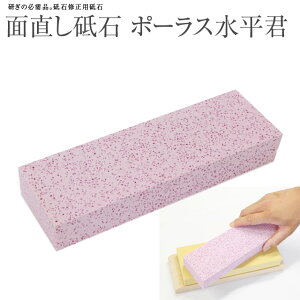


Rakuten prices as of Oct 19, 2026 — check the shop for current price and stock. Supported by Rakuten Developers Rakuten links are affiliate links: we may earn a commission at no extra cost to you. As an Amazon Associate, OKU earns from qualifying purchases.
Sources
- e-Gov法令検索: 銃砲刀剣類所持等取締法(昭和三十三年法律第六号)
- e-Gov法令検索: 軽犯罪法(昭和二十三年法律第三十九号)
- 鹿児島県警察: 正当な理由なく刃物を携帯するのはやめましょう
- 国土交通省鉄道局: 刃物を鉄道車内に持ち込む際の梱包方法についてのガイドライン (PDF)
- 国土交通省: 機内への持込み又はお預け手荷物に制限がある品目の代表例 (PDF, 2026年4月24日更新)
- ANA: 機内持ち込みができないもの(国際線)
- Japan Tourism Agency: Tax-free shopping, Refund Method (for travellers)
- GOV.UK: Guns, knives, swords and other offensive weapons: UK border control
- Canada Border Services Agency: Memorandum D19-13-2, Importing and exporting firearms, weapons and devices
- 日本郵便: 刃物を送る場合はどのように梱包すればよいですか?
- 日本郵便 国際郵便: 刃物等を内容とする郵便物の包装について
- Yamato Transport FAQ: Can I send parcels to a hotel or ryokan?
- かっぱ橋道具街: ごあいさつ
- Kappabashi Dougu Street: FAQ
- Kappabashi Dougu Street: Access
- かっぱ橋道具街: かっぱ橋の歴史
- Kyoto Nishiki Market
- Kyoto Nishiki Market: Cooking gear stores
- 堺市: 堺打刃物
- 大阪府: 堺打刃物(経済産業大臣指定伝統的工芸品)
- 堺刃物商工業協同組合連合会: 刃物の種類
- 堺伝匠館: 包丁の選び方
- 堺伝匠館: 堺伝匠館の特色
- 堺伝匠館: よくあるご質問
- 関市: 刃物まつり
- 関市: 関鍛冶伝承館
- 岐阜の旅ガイド(岐阜県観光連盟): 関の刃物
Photo credits
- Kappabashi-dori, Taito, Tokyo · Basile Morin / CC BY-SA 4.0
- Gifu Prefecture Knife Hall, Seki, Gifu · Hide-sp / CC BY-SA 3.0
- Nishiki Market, Nakagyo, Kyoto · EverJean / CC BY 2.0