Okamotoya Ryokan
岡本屋旅館
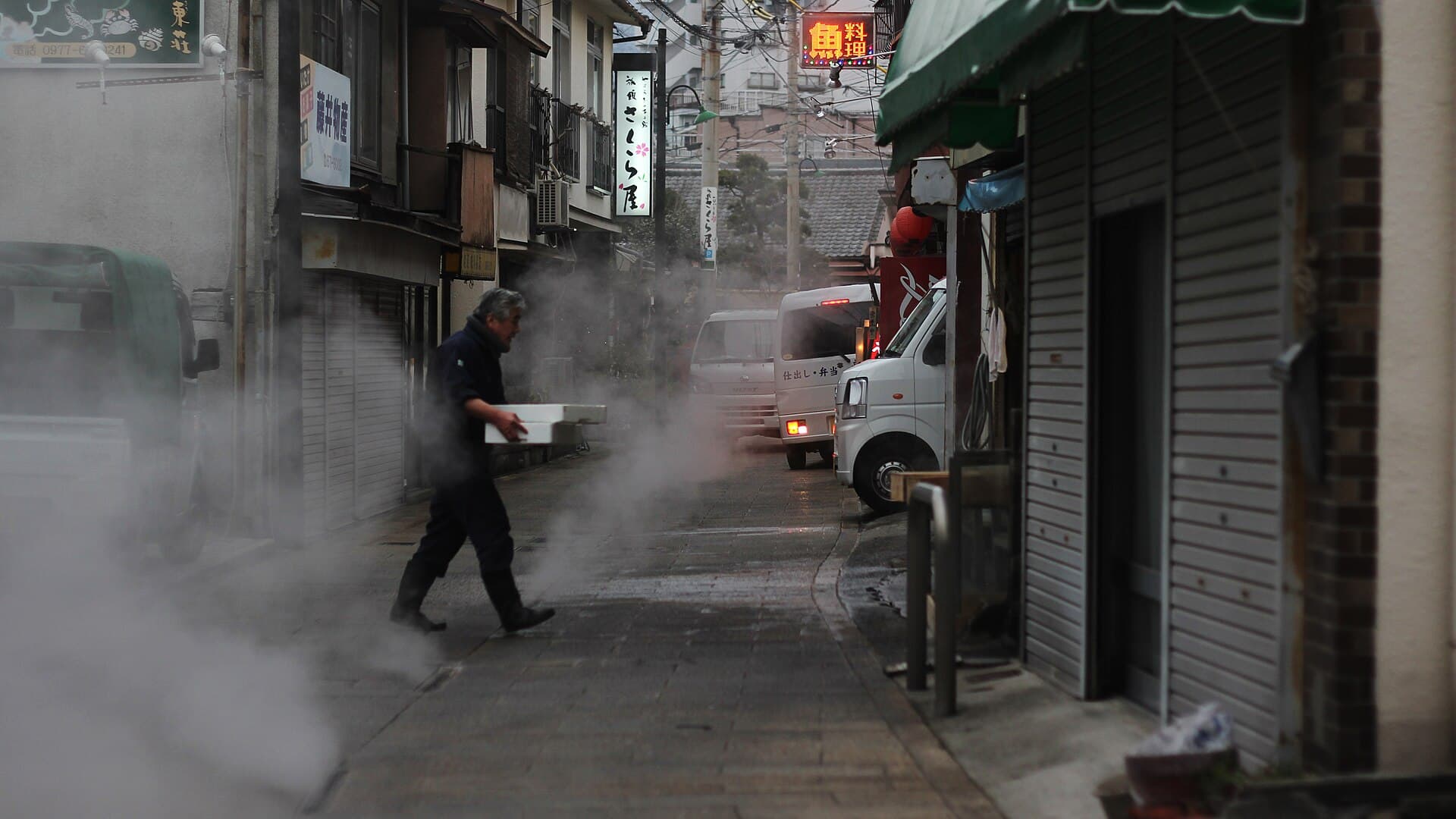
Area photo — not the ryokan itself · Beppu city and its hot-spring steam, Oita · Japanexperterna / CC BY-SA 3.0
A 150-year-old wooden inn in Beppu's sulphur-steam hamlet of Myoban, with a free-flowing milky-blue spring, Oita kaiseki and the original jigoku-mushi pudding — but only three of its 15 rooms have their own bath, the stairs are steep, and a renovated room disappointed in 2026
Okamotoya was opened in 1875 by a family that had been sent to Myoban to oversee its sulphur and alum works; the third generation turned the area's yunohana crystals into a bath product in 1884, and the inn's shop has sold its famous jigoku-mushi pudding since 1988. Today it is a 15-room wooden house above the Myoban Bridge, and the draw is the water: the inn's own self-flowing acidic sulphur spring, 100% free-flowing with no water or heating added, which turns from pale blue to milky white depending on light and season. Japanese guests rate it 4.74 across 43 reviews on one booking site (baths 4.91, food 4.86), 4.59 across 501 on another and 4.4 across 563 on a third, where rooms score lowest at 4.0. Bloggers who stayed from 2023 to 2025 praised the spotless baths, a spacious lukewarm open-air pool, Oita sashimi and wagyu, steamed sea bream, dango-jiru breakfasts and the pudding served for dessert; 2026 reviewers add attentive staff and a view over Beppu Bay from the dining room. The building shows its age: creaking, steep stairs, a sloping approach to the open-air bath with one awkward handrail (2025), hard futons, a cold first-night rice and soup, and a lantern with a loose contact (2026). One April 2026 couple scored a renovated room 2 out of 5 — low lights and sink, no door to block corridor and toilet noise. Room-only stays start around ¥41,800 for two; with two meals, most 2026 reviewers paid over ¥30,000 per person.
Room Selection Guide
What the guests who stayed here actually recommendRecommended
The three rooms with a free-flowing in-room bath — the special room Bōkai (望海, 51㎡), the deluxe Nogiku (野菊, 48㎡) and Botan (牡丹, 30㎡)
All on the ground floor. Bōkai (8 + 6 tatami, bay view) cost two people ¥71,060 in February 2025 with two meals after points on one booking site; the bath smelled strongly of sulphur and was slightly lukewarm, so they could soak at length. Nogiku, renovated in July 2025 with twin beds and windows facing Beppu Bay, Takasakiyama and the Myoban Bridge, won over a June 2026 guest, whose milky in-room bath clouded with yunohana when stirred. Botan has twin Simmons beds.
The 6-tatami rooms (20㎡) and the solo room (18㎡), for budget and solo stays
The rooms most 2025–2026 reviewers booked. Solo travellers in February, June and August 2026 found them the right size, with renovated sinks and views of Beppu Bay, and one was seated at a bay-view counter for meals. All are on the first floor up, reached by stairs.
Request To Avoid
Renovated wa-modern rooms (27㎡, room not assignable), and anyone unsteady on stairs
An April 2026 couple in a renovated room hit their heads on low lighting, found the mirror and sink too low, heard corridor and toilet noise through an open anteroom, and had nowhere to hang clothes; a guest in the wa-modern room Mutsuki in May 2026 was happy with it. The inn itself warns that its Meiji-era building has many high, steep stairs, and the 65㎡ two-room Matsu suite is also upstairs.
Know which room you want?
Check live rates and availability for Okamotoya Ryokan.
We may earn a commission if you book through these links, at no extra cost to you. Affiliate disclosure
Dining Deep Dive
Breakfast Consensus
4.5/5A Japanese set built around Oita's dango-jiru dumpling soup, with ryūkyū marinated fish, homemade tofu, grilled shiitake, an onsen egg, jigoku-steamed vegetables and kabosu jelly — praised by every blogger from 2023 to 2025 as gentle and local
There are no shops or convenience stores near the inn (the nearest is about 20 minutes on foot), so stock up on the way and book with meals. A May 2024 blogger was given tickets at check-in for steamed eggs at the inn's shop and a visit to the yunohana huts, and a May 2025 blogger got into the inn's Myoban Jigoku for free. Parking is free but limited to eight cars and must be booked.
Dinner Insights
4.5/5Kaiseki at tables in the dining room overlooking the Myoban Bridge and Beppu, with plans built around a jigoku-steamed sea-bream head, a steamed seafood platter or Oita wagyu fillet; private dining or in-room meals cost extra. Bloggers described fresh sashimi (flounder, Spanish mackerel and mackerel in February 2025), Oita beef hotpot, Himeshima prawns, Bungo chicken and Oita-grown rice, always ending with the rich jigoku-mushi pudding. Reviewers in 2026 found it 'not like the usual ryokan course'; one found the rice and soup a little cold on the first night and tables close together.
Onsen & Wellness Realities
The inn's own self-flowing acidic sulphur spring (acidic sulphur-bearing simple spring, hydrogen sulphide type). The official site states it is 100% free-flowing with no water or heating added; the three rooms with baths are also described as free-flowing.
Two sides, each with indoor tubs and a garden open-air bath: the men's side has a large open-air bath, a rock bath and a main bath; the women's an open-air bath, a hinoki bath and a rock bath (15:00–23:00 and 6:00–9:30). The men's open-air bath is the larger. Bloggers found the changing rooms spotless and often had the baths to themselves; one found the open-air water lukewarm enough to stay in for ages, but a 2025 visitor found it whiter and less blue than expected. Midges came by day in February 2026. The inn takes no day visitors. For a private bath, the sister facility Myoban Yama-no-yu (3 minutes' walk) rents a view bath for ¥1,500 an hour, closed Tuesdays.
According to one Japanese booking site, tattoos are in principle not allowed in the baths; a small single tattoo is accepted if covered with a sticker. The three rooms with their own bath avoid the issue.
Local Warnings & Nuances
- 01
Check-in 15:00 (last arrival 18:00), check-out 10:00; the gate closes at 23:00. Bath tax is ¥250 per person.
- 02
Children below primary-school age are not accepted, and groups of seven or more are generally not taken.
- 03
A Meiji-era wooden building with many high, steep stairs, including down to the open-air bath; the inn asks older guests to bathe with a companion.
- 04
Cancellation: free up to 4 days before, 30% from 3 days before, 50% the day before, 100% on the day.
- 05
The inn's shop and café on the same hillside draw day-trippers for the jigoku-mushi pudding — its reviews describe the shop, not the stay.
Sources
The real blog posts and stay reports this article draws on
- 2025年2月 ふぐを食べに大分へ「別府明礬温泉 岡本屋旅館」「JR九州ホテルブラッサム大分」 (4travel.jp)
- さんふらわあ「昼のカジュアルクルーズ」で行く別府・湯布院 3/4 青磁の湯岡本屋旅館 (4travel.jp)
- 時計をはずしてのんびり別府 二日目宿まで (4travel.jp)
- 驚きの泉質 ミルキー青磁色な明礬温泉 岡本屋泊 別府温泉2泊3日ドライブ旅③2023.8.11 (4travel.jp)
- 大分県は別府、明礬温泉。寒い日の温泉に勝てるものある? (4travel.jp)
- 別府明礬温泉 岡本屋旅館 - クチコミ・評判 (一休.com)
- 青磁色の湯 岡本屋旅館のクチコミ・評判 (じゃらんnet)
- 青磁色の湯 岡本屋旅館 宿泊予約 (じゃらんnet)
- 別府明礬温泉 岡本屋旅館 クチコミ・感想 (楽天トラベル)
- 岡本屋【公式】別府 明礬温泉|ミルキーブルーの湯と美食の宿
More Consensus Reports
 Area photo
BeppuClassic
Kitahama, Beppu, Oita — on the Beppu Bay seafront in the city centre, about 10 minutes on foot from JR Beppu Station or 10 minutes by car from the Beppu IC
10 sources
KAI Beppu
界 別府
Kengo Kuma's bayfront 'onsen town under one roof': sea views from all 68 rooms and a festival in the lobby every night — but a small shared bath, shower-only standard rooms and uneven 2026 dinners
- Design-Led
KyotoLuxury
Fuyacho-Anekoji, Nakagyo, Kyoto — in the city centre, a short walk from Kyoto City Hall
9 sources
Hiiragiya
柊家
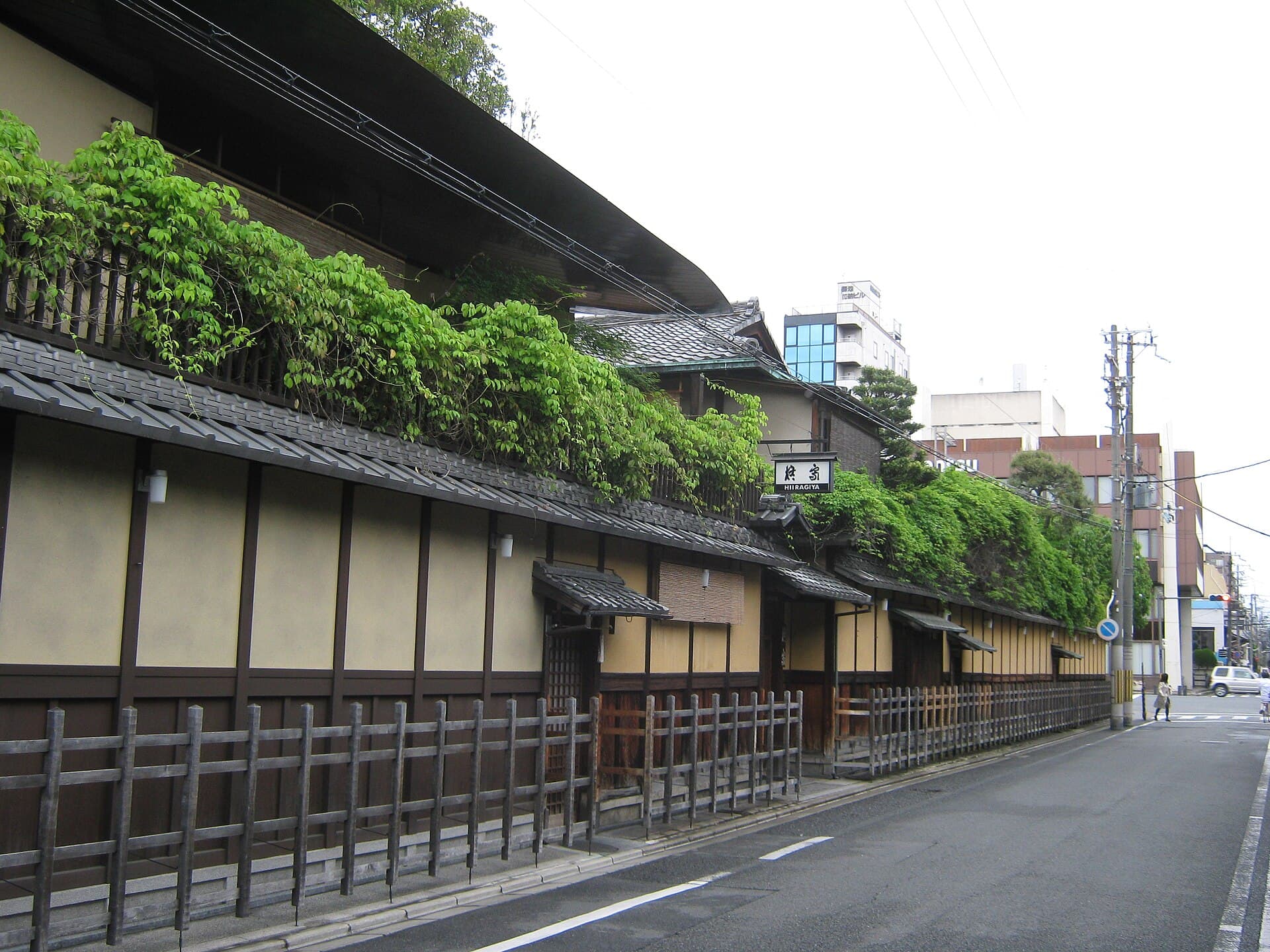
Kyoto's 1818 inn of writers and film stars — near-flawless service and kaiseki, koyamaki-wood baths, and no hot spring
- Historic Ryokan
- Destination Dining

Aizu-WakamatsuClassic
Higashiyama Onsen, Aizu-Wakamatsu, Fukushima — a wooden inn beside the Yukawa river, a minute from the Higashiyama Onsen bus stop
12 sources
Mukaitaki
会津東山温泉 向瀧
Japan's first registered-heritage inn: a former Aizu clan bath retreat with scalding free-flowing water, free private baths and carp dinners in your room — and a lot of stairs
- Historic Ryokan
Photo credits: Beppu city and its hot-spring steam, Oita · Japanexperterna / CC BY-SA 3.0 / Hiiragiya — the frontage on Anekoji-dori, Kyoto · Mariemon / CC BY 3.0 / Mukaitaki in the snow, Higashiyama Onsen, Aizu-Wakamatsu · Fumihiko Ueno / CC BY 3.0
Okamotoya Ryokan
Compare rates across trusted booking partners · Affiliate disclosure